Earth Day Ecology Coloring Pages Bookmarks Craft Bundle Cute Kawaii Kids

$3.96 $5.65 (1)

Christmas in July Meets Conservation: A 12-Day Creative Challenge for Endangered Animals
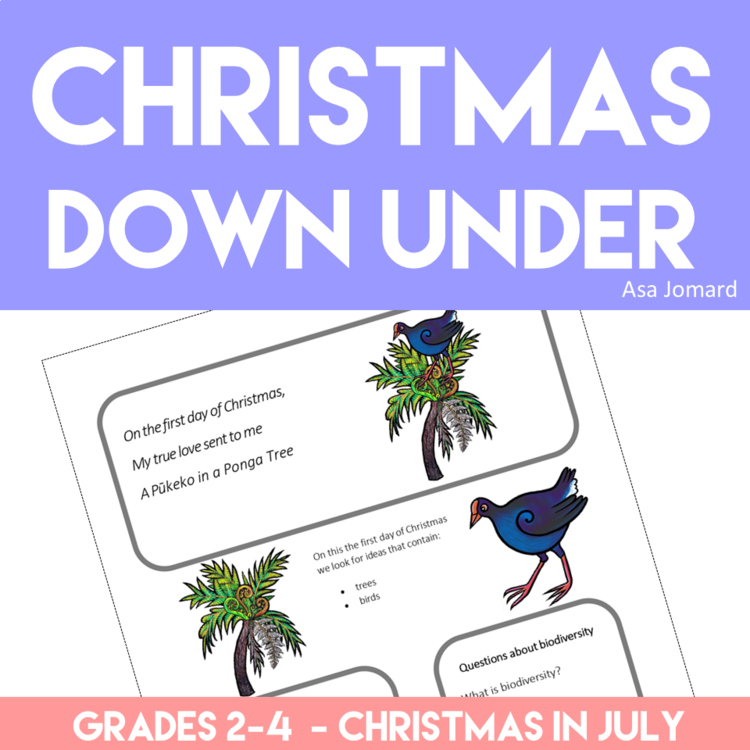
Transform a beloved holiday carol into a powerful conservation curriculum! This innovative 12-day challenge reimagines "The Twelve Days of Christmas" through Australian and New Zealand versions, turning festive fun into meaningful action for endangered species. Students don't just learn about animals—they design solutions, create awareness campaigns, and become advocates for biodiversity.
Why This Resource is Unique
Creativity Meets Conservation This isn't a depressing doom-and-gloom endangered species unit. Instead, it focuses on "exploring possibilities and solutions," using creative thinking as a tool for hope and action. Students learn that they can make a difference through innovation, awareness-raising, and thoughtful design.
Cultural Richness Through Song Variations By comparing the traditional English carol with Australian ("Four koalas cuddling, three kookaburras laughing") and New Zealand ("A Pūkeko in a Ponga Tree") versions, students gain:
Geographic and cultural awareness
Understanding of regional biodiversity
Appreciation for how different cultures celebrate
Exposure to Māori symbolism (koru, Aboriginal animal names)
Biomimicry as Conservation Strategy Students discover that protecting animals isn't just about saving cute creatures—it's about preserving nature's genius problem-solvers whose adaptations inspire human innovation. From Pūkeko legs inspiring flood-resistant buildings to parrot beak adaptations teaching climate resilience, every animal becomes a mentor.
The 12-Day Journey (Complete Breakdown)
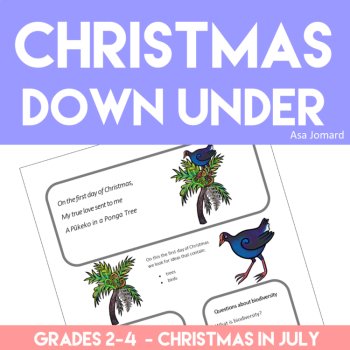
Day 1: Pūkeko in a Ponga Tree – Flood-Resistant Design
Focus: Trees, birds, wetland adaptations
Challenge: Design cities with flood-resistant buildings inspired by Pūkeko's wading abilities
Cultural Connection: Learn about ponga tree koru (Māori symbol of growth) and its applications in architecture
Biomimicry Application: Long legs + stable feet = resilient foundations for flood-prone areas
Includes: Biodiversity discussion prompts, "My City" design template
Day 2: Two Spotted Turtle Doves – Love & Advocacy
Focus: Symbols of love, faithfulness, and partnership
Challenge: Create awareness posters encouraging action to save endangered European Turtle Doves (or choose Kākāpō, Gouldian Finches)
Emotional Connection: "I love Spotted Turtle Doves because..." prompts help students articulate personal connections
Social Action: Transform feelings into advocacy through poster design
Includes: Poster template, alternative endangered bird options
Day 3: Three French Hens – Climate Adaptation Thinking
Focus: Foxes, parrots, climate change impacts
Challenge: Imagine how parrots could adapt to climate change (inspired by actual beak size increases)
Literary Connection: Roald Dahl's "Fantastic Mr. Fox" as entry point
Creative Speculation: "Before and After Changes" visual thinking
Includes: Ptarmigan adaptation example, before/after comparison template
Day 4: Four Koalas/Emus – Local Conservation Awareness
Focus: Australian animals, local biodiversity
Challenge: Identify local endangered animals and create short slogans to raise awareness
Skills: Research, persuasive writing, distilling complex problems into memorable messages
Includes: Fact-gathering organizer, slogan design space
Day 5: Five Golden Rings – Frog Prince Connection
Focus: Frogs, fairy tales, biodiversity importance
Challenge: Create "COOL facts" lists to help people fall in love with frogs
Why It Matters: Addresses the challenge that many don't realize frog importance
Creative Hook: Frog Prince fairy tale makes amphibian conservation engaging
Includes: "Frogs are awesome because..." brainstorming template
Day 6: Six Huhu Grubs – Decomposition & Sustainability
Focus: New Zealand beetles, wood decomposition, waste management
Challenge: Explore how huhu grubs' wood-eating abilities could inspire waste management solutions
STEM Connection: Decomposition processes, soil health, circular economy concepts
Includes: Research prompts about grub feeding habits and applications
Day 7: Seven Possums Playing – Game Design
Focus: Playful learning, game-based education
Challenge: Invent games (board games, jigsaws, etc.) where players learn about endangered animals
Skills: Game design, rule creation, educational content integration
Meta-Learning: Students create learning tools for others
Includes: Open-ended design space
Day 8: Eight Maids a Milking – Farm Animal Biodiversity
Focus: Rare cattle, sheep, pigs, hens, goats
Expanded Perspective: Conservation isn't just for wild animals—domesticated breeds face extinction too
Challenge: Draw and research rare farm animal breeds no longer suitable for contemporary farming
Includes: Drawing space, fact-gathering prompts
Day 9: Nine Wombats Working – Culinary Conservation
Focus: Hairy-nosed wombats, Wombat Day (May 11)
Challenge: Design candies/truffles named after endangered species (using Aboriginal names like Yaminon, Goolung)
Cross-Curricular: Math (measurements), literacy (naming), art (design), cultural studies
Includes: "My Endangered Animal Treat" design template
Day 10: Ten Lizards Leaping – Festive Food Design
Focus: Gulbaru Gecko, color-themed animals (red, green, white)
Challenge: Create festive treats (cupcakes, etc.) highlighting endangered animals
Creative Constraint: Match animals/plants to holiday color schemes
Includes: "My Endangered Animal or Plant Dish" planning sheet
Day 11: Eleven Numbats Nagging – Positive Action Over Nagging
Focus: Effective advocacy strategies
Challenge: Identify alternatives to nagging (performance, volunteering, animal adoption)
SEL Connection: Understanding how nagging feels vs. how inspiration works
Empowerment: "Instead of nagging, I can..." action planning
Includes: Reflection prompts, alternative action brainstorming
Day 12: Twelve Drummers Drumming – Rewriting the Carol
Focus: Creative synthesis of entire unit
Challenge: Rewrite "The Twelve Days of Christmas" with saved endangered animals
Example: "On the first day of January, we saved one gentle swimming dugong..."
Celebration: Public performance or display of new carols
Includes: Endangered animal list-making template, rewriting framework
Bonus: Smart Skyscraper Biomimicry Extensions
Seed-Dispersing Architecture
Design buildings covered with wild plants that use wind to spread seeds
Pear-shaped skyscrapers with sensors that release appropriate seeds when detecting specific birds
Hexagonal windows inspired by beehives
Algae-powered facades (blue and green coloring)
Rooftop gardens for biodiversity
Hands-On Making: Classroom examples using recycled materials, mosses, twigs, acorns to create architectural models
What's Included (30+ Pages)
Core Challenge Materials:
12 daily challenge worksheets (one per "day of Christmas")
Cultural variations comparison framework
Biodiversity discussion prompts throughout
Design Templates:
"My City" flood-resistant architecture planner
Poster creation template for turtle dove advocacy
Before/After climate adaptation comparison sheets
Slogan development organizer
Game design planning space
Culinary creation design sheets (treats, cupcakes)
Carol rewriting template
Educational Support:
Introduction explaining challenge philosophy
Biomimicry connection explanations for each animal
Cultural context (Māori symbols, Aboriginal names)
Real-world animal adaptation facts (Pūkeko wetland legs, parrot beak changes, wombat habitat needs)
Inspiration Gallery:
Smart skyscraper examples with photos
Student work samples
"If you love, you have to act" turtle poster example
Blog links for extended learning
Educational Philosophy
Flexible Thinking as a Teachable Skill "Learning to be flexible and viewing problems from different angles is a valuable skill. And skills can be taught." This resource explicitly teaches creative thinking as a learnable competency, not an innate gift.
Hope-Centered Conservation Rather than overwhelming students with extinction statistics, this approach asks: "What possibilities exist? What solutions can we create?" Students build agency and optimism alongside awareness.
Concept Application for New Insights Students practice applying a single concept (the carol structure) across multiple contexts, developing cognitive flexibility and creative transfer skills.
Why Teachers Choose This Resource
Interdisciplinary Richness
Science: Animal adaptations, climate change, biodiversity, ecosystems
Geography: Australia, New Zealand, global conservation
Cultural Studies: Māori culture, Aboriginal naming, regional celebrations
Literacy: Persuasive writing, slogan creation, carol rewriting, research
Art: Poster design, architectural drawing, food design, visual communication
Music: Song comparison, performance, creative rewriting
SEL: Empathy, advocacy strategies, emotional connections to nature
Design Thinking: Problem identification, solution prototyping, biomimicry application
Differentiation Built-In Open-ended challenges accommodate various abilities. Students can:
Draw or build
Write slogans or full posters
Research local or distant animals
Work independently or collaboratively
Create simple or complex designs
Display-Ready Outcomes "The completed work can be displayed on a bulletin board, allowing everyone to see the ideas and admire the artworks." Built-in celebration of student thinking creates classroom community.
Perfect For
Christmas in July themed events
December/Holiday programming
Earth Day or conservation weeks
STEAM/STEM integration units
Endangered species awareness campaigns
Cultural studies exploring Australian/New Zealand traditions
Biomimicry introductory units
Project-based learning extended investigations
Maker education design challenges
Music integration units
Cross-Curricular Connections
Music Class:
Compare carol versions
Perform rewritten versions
Explore cultural variations in holiday music
Science Class:
Deep dive into specific endangered species
Study biomimicry and animal adaptations
Investigate climate change impacts
Art Class:
Poster design and visual communication
Architectural model-making
Food art and presentation
Social Studies:
Map animal habitats globally
Study Australian and New Zealand cultures
Explore conservation movements
Library/Research:
Endangered species investigation
Source evaluation and fact-checking
Aboriginal and Māori cultural research
Digital-Ready & Flexible
Easy Digital Implementation: Pre-selected slides ready for digital devices—simply insert text boxes and assign to students via:
Hybrid-Friendly: Works equally well for:
In-person collaborative projects
Remote independent work
Hybrid synchronous/asynchronous formats
Printed workbook format
Accessible Format: US Letter size (A4 and alternate spellings available upon request)
Why This Approach Works
Emotional + Intellectual Engagement "If you love, you have to act." The resource builds emotional connections FIRST (Day 2's "I love turtle doves because..."), then channels those feelings into action (poster creation, game design, advocacy).
Cultural Respect & Inclusion Incorporates Māori symbolism, Aboriginal naming traditions, and regional variations respectfully, exposing students to Indigenous knowledge systems.
Real-World Relevance
Actual climate adaptations (parrot beaks increasing)
Real conservation dates (Wombat Day)
Genuine architectural inspiration (seed-dispersing buildings)
Authentic biomimicry applications
Growth Mindset Embedded "Have fun and add a touch of seriousness if you'd like." Teachers control the depth, students control the creativity, everyone can succeed.
Learning Extensions
Week 1-2: Complete Days 1-6 (design challenges) Week 3: Complete Days 7-9 (games, food, advocacy) Week 4: Complete Days 10-12 + performances/displays
Alternative Pacing:
One challenge per week over 12 weeks
Concentrated 3-day intensive (select 3 favorite challenges)
Choose Your Own Adventure (students select 5 of 12)
Assessment Opportunities
Process-Based:
Observation of creative problem-solving
Design thinking documentation
Research quality and source use
Product-Based:
Final designs (posters, games, buildings, food)
Written components (slogans, facts, carol rewrites)
Oral presentations (performances, explanations)
Reflection-Based:
Self-assessment of learning
Peer feedback on designs
Action planning for real-world conservation
Comprehensive Analysis
Unique Strengths
Novel Framework: Using carol structure to organize conservation unit is brilliant—familiar + novel = engagement
Hope-Centered Approach: Focuses on solutions rather than guilt/despair
Cultural Inclusivity: Australian/New Zealand versions broaden perspective beyond Eurocentric traditions
Action Orientation: Every challenge ends with something students CREATE, not just learn
Flexible Seriousness: "Have fun and add a touch of seriousness if you'd like" empowers teacher agency
Emotional Intelligence: Day 11's nagging reflection shows sophisticated SEL integration
Educational Innovation
Concept Transfer Practice: Students apply the same framework (carol structure) across 12 different contexts, building cognitive flexibility—a high-level thinking skill rarely explicitly taught in elementary grades.
Biomimicry as Conservation Tool: Connects animal preservation to human innovation, giving students practical reasons (beyond ethical ones) to care about biodiversity.
Cultural Knowledge Integration: Māori symbolism (koru representing growth) and Aboriginal naming traditions aren't tokenized but integrated meaningfully into design challenges.
Cultural Sensitivity: Teachers should research Māori and Aboriginal contexts to present information respectfully, especially regarding sacred symbols like the koru.
Competitive Advantages
Utterly Unique Angle: No other resource combines Christmas carols + endangered species + biomimicry + cultural variations
12-Day Structure: Built-in pacing and variety prevents monotony
Multiple Entry Points: Music, art, science, culture—every student finds connection
Positive Framing: Solutions-focused rather than problem-focused
Scalability: Works for single day or extended unit
Think Dive is built on a simple idea: a handful of curiosity + a bucket of imagination = learning that sticks. Every resource is designed to spark original thinking in young minds.
Format: PDF (US Letter size — A4 available upon request).
Questions or requests? Contact: maliasa@live.com
Generative AI was used during the creation of this product.
#EndangeredSpecies #ConservationEducation #ChristmasInJuly #BiomimicryEducation #STEAMActivities #EnvironmentalEducation #ProjectBasedLearning #CreativeThinking #ElementarySTEM #AnimalConservation #AustralianChristmas #NewZealandEducation #MāoriCulture #AboriginalEducation #DownUnderChristmas #SouthernHemisphere #CulturalStudies #GlobalLearning #CrossCultural #IndigenousKnowledge #MusicEducation #ChristmasCarols #ChristmasMusic #ArtIntegration #ScienceAndArt #BiodiversityEducation #ClimateEducation #DesignThinking #GameBasedLearning #PosterDesign
#WildlifeConservation #Pukeko #Wombat #Numbat #TurtleDoves #KoalaConservation #FrogConservation #BiodiversityMatters #SaveOurSpecies #ExtinctionPrevention
Report this resource to Linked Through Learning
Reported resources will be reviewed by our team. Report this resource to let us know if this resource breaks our rules.
No questions yet.
Meet the Seller
Creative resurces for curious students and playful thinkers
Discover exciting & unique science, math and writing activities designed for Kindergarten-Grade 6. My store includes Environmental Activities focusing on Looking for Solutions to Problems, Nature Design Biomimicry Challenges, Math Journal Prompts, Algebra and Creative Writing Activities.
United Kingdom
$32.50 $50.00 (398)
$22.50 $33.25 (161)
$22.50 $34.50 (169)
$24.50 $34.00 (158)

$22.50 $33.25 (100)