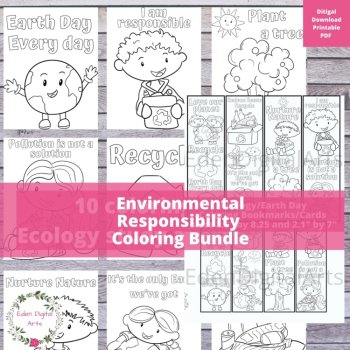
Earth Day Ecology Coloring Pages Bookmarks Craft Bundle Cute Kawaii Kids

$3.96 $5.65 (1)

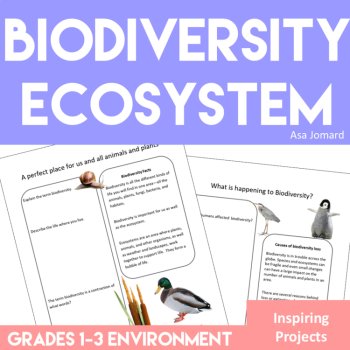
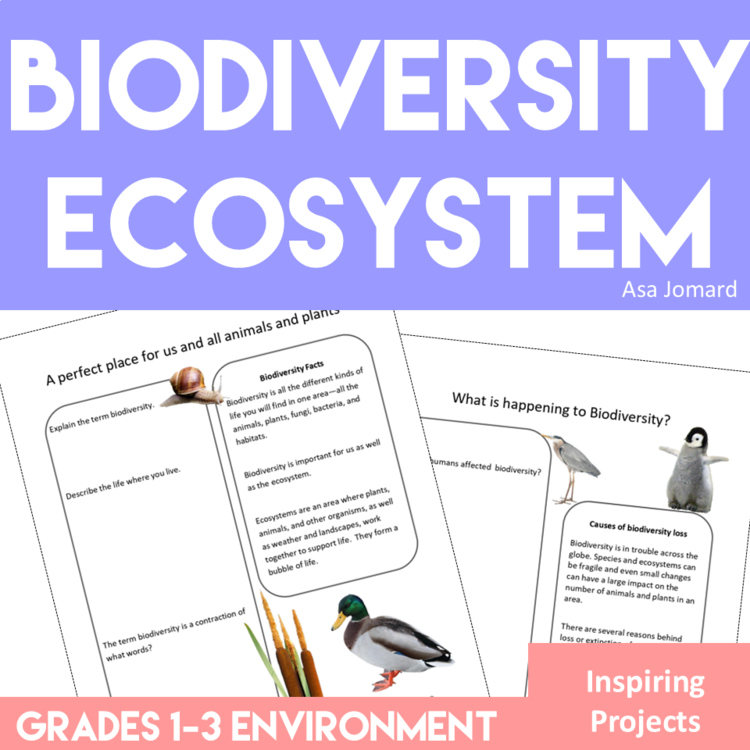
Biodiversity & Ecosystems: Project-Based Learning for Grades 1-3
Need an engaging way to help your 1st-3rd graders understand ecosystems, conservation, and environmental problem-solving? This comprehensive biodiversity project-based learning resource makes science meaningful and empowering while teaching students how they can protect nature!
What if your students could design solutions to protect endangered species in their own neighborhood? What if they understood why every butterfly, beetle, and blade of grass matters? This resource transforms students into conservation scientists and ecosystem designers who see themselves as environmental problem-solvers who can make real change!
This resource includes:
Foundation Building Activities
"A Perfect Place" introduction to biodiversity concepts
5-Minute Biodiversity Challenge (quick engagement activity!)
"My Biodiversity Dictionary" visual vocabulary builder (sustainability, species richness, etc.)
Critical thinking questions: Why do humans need nature? Why does biodiversity matter?
Understanding biodiversity as all the different kinds of life in one area—animals, plants, fungi, bacteria, habitats
Investigation & Research Tools
Species Richness Analysis: Compare biodiverse rainforests vs. deserts
"What's Happening to Biodiversity?" investigation worksheets
Causes of species loss exploration (habitat conversion, climate change, overfishing, urbanization)
Locally extinct species research activities for your region
Invasive species case studies (like rabbits in Australia) + local identification activities
Design Challenges & Action Planning
Complete Biodiversity Challenge framework: Design plans for improving diversity in school grounds, homes, or communities
Natural & technological solution brainstorming worksheets
Species selection activities with justification prompts
Monitoring system design for tracking local species
"How to Help" action planning sheets
Invention ideas organizer for conservation tools
Mind Mapping & Creative Tools
Describe your favorite ecosystem
List local places that are homes for nature
Brainstorm ideas to support variety of life (bee-friendly plants, bird feeders, etc.)
Design word challenges and creative thinking prompts
Communication & Promotion Materials
Poster creation templates for sharing biodiversity plans
Campaign organizers to promote environmental messages
Persuasive writing frameworks
Teacher Support
Implementation guide for science, geography, and design integration
Differentiation strategies from basic understanding to complex solution design
Cross-curricular connection suggestions (math, language arts, social studies)
How It Helps:
Your students will love designing real solutions to protect nature in their communities, and you'll love how this complete 2-3 week unit balances honest environmental challenges with hope and empowerment—no doom-and-gloom, just practical action!
From Understanding to Action: Students don't just learn what biodiversity means—they investigate causes of species loss, explore natural and technological solutions, and design their own biodiversity improvement plans they can actually implement.
Hope-Centered Approach: While addressing serious challenges like habitat loss and extinction, this resource emphasizes solutions students can create. From planting bee-friendly gardens to monitoring local species, every activity shows children they have the power to make a difference.
Real-World Skills Embedded: Problem-solving, creativity, teamwork, research, and critical thinking are woven throughout. Students use reading, writing, and math to gather information, interpret data, and communicate environmental messages.
Why This Approach Works: Instead of overwhelming students with environmental problems, this resource balances challenge with empowerment. Students learn about serious issues while discovering that solutions exist—and that they can be part of creating them.
Cross-Curricular Integration:
Science: Living things, habitats, ecosystems, species interactions, conservation biology
Geography: Habitat mapping, local vs. global ecosystems, human impact on landscapes
Design & Technology: Creating solutions, inventing monitoring tools, habitat design
Language Arts: Research skills, vocabulary development, persuasive poster creation
Math: Species counting, data collection, monitoring, measurement, graphing
Social Studies: Human impact on environment, community action, global citizenship
Flexible Implementation:
Complete 2-3 week integrated environmental education unit
Rotating science stations on different biodiversity topics
Culminating design challenge with real-world application
Hands-on extensions: school garden projects, local habitat surveys, species monitoring
Community connections: invite conservation experts, visit nature reserves, implement student plans
Think Dive is built on a simple idea: a handful of curiosity + a bucket of imagination = learning that sticks. Every resource is designed to spark original thinking in young minds.
Format: PDF (US Letter size — A4 available upon request).
Questions or requests? Contact: maliasa@live.com
#biodiversity #ecosystems #conservationeducation #environmentalscience #habitatprotection #invasivespecies #endangeredspecies #sustainability #ecologyforkids #environmentalstewardship #projectbasedlearning #designthinking #grade1 #grade2 #grade3 #elementaryscience #STEAMactivities #problemsolving #solutionoriented #environmentalaction #speciesrichness #conservationscience #earlyelementary
Report this resource to Linked Through Learning
Reported resources will be reviewed by our team. Report this resource to let us know if this resource breaks our rules.
“This is a great Science resource for critical thinking skills! Just what I needed to challenge my students in Science! Love love love!”
“What a great addition to our curriculum! This was fun to use after testing as well. Thanks!”
For Unique STEAM Robot Activities | Inspiring Biomimicry Design Projects
If it's a robot, kids will love it. They enjoyed creatign their own.
Terri M.
Grades taught: 3rd, 4th, 5th
For Fun and Engaging Math Journal Prompts FREEBIE | Common Core Aligned
These were a great way to get kids thinking at the beginning of a lesson or in my groups.
Jennifer E.
Grades taught: 1st
For Unique STEAM Robot Activities | Inspiring Biomimicry Design Projects
This was a great project based learning activity for 1st grade students! Thank you!
Mary's L.
Grades taught: 1st
For Engaging Squirrel Life Cycle FREEBIE
This is a fun resource, student friendly, def worth having.
Alea C.
Grades taught: PreK, K, 1st, 2nd
For Seashells Project | Biomimicry Design Activities with Craft
Helps student understand sea shell designs and biomimicry
Miraj T.
Grades taught: 9th, 10th, 11th, 12th
For Explore Woodland Animals | Climate Change and Environment | Design Home
This was a fun and creative learning activity that my students really enjoyed. I loved seeing students get so involved in their learning.
Reply from Asa Jomard
Thank you so much for taking to time to leave a review. Glad that hear that your students were involved in the learning.
Lindsay A.
Grades taught: 4th
For Engaging STEAM Giraffes Activities | Freebie | Unique Biomimicry Adventures
Thank you for this resource! It was very useful and helpful!
Emma C.
Grades taught: K, 1st, 2nd
For Engaging STEAM Giraffes Activities | Freebie | Unique Biomimicry Adventures
We're really enjoying your STEAM activities, I really appreciate your sharing these for free, thanks!
Lively C.
Grades taught: 9th, 10th, 11th, 12th, 8th, 7th, 6th, 5th, 4th, 3rd, 2nd, 1st
For Engaging STEAM Groundhog Activities | Freebie | Unique Biomimicry Adventures
Thanks so much for sharing this great STEAM freebie, I really appreciate it. It's very popular with my kiddos!
Lively C.
Grades taught: 9th, 10th, 11th, 12th, 8th, 7th, 6th, 5th, 4th, 3rd, 2nd, 1st
For Endangered Animals Research | Nonfiction | Biomimicry Design Project | Activity
Great resource to teach two expectations. Well organized and developed. Very good explanation. Students loved completing.
sarah K.
Grades taught: 4th, 5th
For Engaging STEAM Giraffes Activities | Freebie | Unique Biomimicry Adventures
Great resource! Engaging, easy to follow and thought provoking.
Reply from Asa Jomard
Thanks for taking time to write feedback. Glad to hear that it inspiried your students to think!
Traci G.
Grades taught: 1st
For Design a Plant of the Future | Climate Change Science Activity | Grades 2-4
My students loved using this resource and was very user friendly.
Beth M.
Grades taught: 4th
For Endangered Animals Research | Nonfiction | Biomimicry Design Project | Activity
Thank you; this was well-made and has made my life so much easier. It made sure I was organised and that students had the best experience.
Jillian G.
For Explore Patterns & Shapes in Nature | Engaging Activities Inspired by Biomimicry
I used this resource while student teaching in 3rd grade class. This aligned perfectly with my unit and allowed for students to use science, reading, and math!
Taylor A.
Grades taught: 3rd
For Engaging Architecture and Design Projects | Creative Biomimicry Adventures
I used this resource as an introduction to our biomimicry science unit! I love how students were encouraged to come up with designs while also learning about new organisms.
Reply from Asa Jomard
Thanks for taking the time to write a review. So pleased that your students enjoyed the activities.
Caitlin T.
Grades taught: 3rd
For Engaging Architecture and Design Projects | Creative Biomimicry Adventures
This is a wonderful resource! My students were very engaged with the different activities. Thank you!
Dennisse S.
Grades taught: 1st
For Design a Plant of the Future | Climate Change Science Activity | Grades 2-4
I recently explored the "Unique Plant Activities | Changes Climate & Environment | Creative Science" and found them to be incredibly engaging and educational! The activities are well-thought-out and provide a creative approach to learning about plants, climate change, and environmental science. My students were fascinated by the hands-on experiments and interactive lessons, which made complex topics more accessible and fun. This resource is perfect for sparking curiosity and encouraging critical thinking about our environment. Highly recommend for any teacher looking to bring science to life in the classroom!
Reply from Asa Jomard
Thank you so much for taking the time to write a review. So lovely to hear that your students liked the activities.
FrazierFocus
Grades taught: 3rd
For Engaging Aye-Aye Activities | Write an Animal Superpower Report
Most of my GT students had not heard of this animal, and this was a great resource to talk about how our unique features make us special.
N B.
Grades taught: 4th, 5th, 6th
For Engaging STEAM Groundhog Activities | Freebie | Unique Biomimicry Adventures
Cute and fun little project to help with our Science lesson at home. Thank you for providing it!
kimberly G.
Grades taught: 5th
For Inspiring STEAM Snowflakes Life Cycle Activities with Craft
This is a nice addition to a snow unit that is in progress.
Sharon R.
Grades taught: 1st
For Woodland Animals & Plants Project | Biomimicry Design Activities
I used these activities as extension for my science unit. My students had a productive time. Thank you!
Laura L.
Grades taught: 2nd
For Inspiring Halloween Math Journal | Multiplication Skip Counting Writing Prompts
These prompts were perfect for our Halloween day. The kiddos got to practice and had fun. Thank you!
Laura L.
Grades taught: 2nd, 3rd
For Inspiring Halloween Math Journal | Multiplication Skip Counting Writing Prompts
Excellent way to have my students self reflect on their math thinking. I was able to integrate my writing and math into one lesson. Highly recommend for your classroom!
Louise S.
Grades taught: 2nd
For Woodland Animals & Plants Project | Biomimicry Design Activities
Wow! This resource is packed full of fun and engaging activities! Love it!
Allison T.
Grades taught: 2nd
For Inspiring Halloween Math Journal | Multiplication Skip Counting Writing Prompts
These math journal activities were just what I needed to keep my students engaged during this time of year!
Allison T.
Grades taught: 3rd
For Woodland Animals & Plants Project | Biomimicry Design Activities
My students loved these! A nice way to cover our NGSS and a great addition to my lessons. Thank you!
Louise S.
Grades taught: 2nd
For Engaging STEAM Platypus Activities | Life Cycle | Inspiring Biomimicry Adventure
This is a fun activity for learning about life cycles! It was a great addition to my Science lessons!
Michelle D.
Grades taught: 3rd
For Inspiring Fall Activities | Engaging Math Writing and Biomimicry Challenges
This resource has a variety of activities to use for Halloween! My students loved them all! Thank you!
Michelle D.
Grades taught: 3rd
For Engaging STEAM Rabbit Activities | Unique Biomimicry Design Adventures
We have a class bunny and this was a wonderful resource to use to teach my kiddos all about rabbits!
Kari M.
Grades taught: 1st, 2nd
For Engaging STEAM Platypus Activities | Life Cycle | Inspiring Biomimicry Adventure
I bought this for my daugther to work at home. She had to do a research on interesting animals, and she wanted to do it on platypus. She enjoyed learning about platypus using the different activities included.
Camila N.
Grades taught: 3rd
No questions yet.
Meet the Seller
Creative resurces for curious students and playful thinkers
Discover exciting & unique science, math and writing activities designed for Kindergarten-Grade 6. My store includes Environmental Activities focusing on Looking for Solutions to Problems, Nature Design Biomimicry Challenges, Math Journal Prompts, Algebra and Creative Writing Activities.
United Kingdom
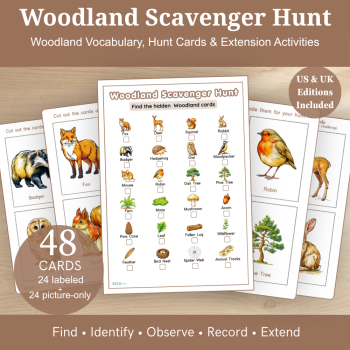
AI Generated
AI-generated illustrations were used for the woodland picture cards and visual elements. These illustrations were incorporated into the printable scavenger hunt and accompanying learning activities.
$3.50
$32.50 $50.00 (398)
$22.50 $34.50 (169)