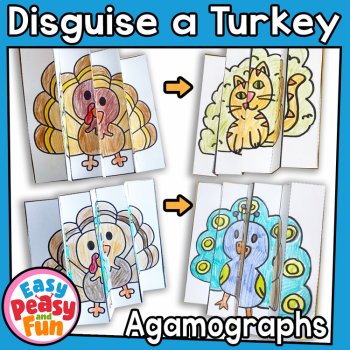
Disguise a Turkey in Disguise Craft, Thanksgiving Project Writing Craftivity
$3.00 (2)

What If Your Students Could Solve a 10,000-Year-Old Mystery?
A frozen mammoth is discovered in Siberia, perfectly preserved in ice. Cave paintings reveal ancient artists who witnessed these giants firsthand. Fossilised bones tell stories of sabre-toothed cats, giant sloths, and a world where glaciers covered entire continents.
Welcome to the Ice Age—where science meets mystery, palaeontology meets creative writing, and your students become the researchers, artists, and storytellers of Earth's most fascinating prehistoric period.
This comprehensive resource transforms your classroom into an Ice Age research station, seamlessly blending earth science, palaeontology, literacy, and art. Perfect for grades 2-4, it's the cross-curricular unit that makes ancient history come alive.
What You'll Get: Ice Age Adventures
Introduction & Foundation:
Introduction - What we know and what we want to know
Two full-color posters: Ice Age and Ice Age Animals (plus black and white versions)
What I know about the Ice Age
Ways to find out about the Ice Age
Understanding the Ice Age:
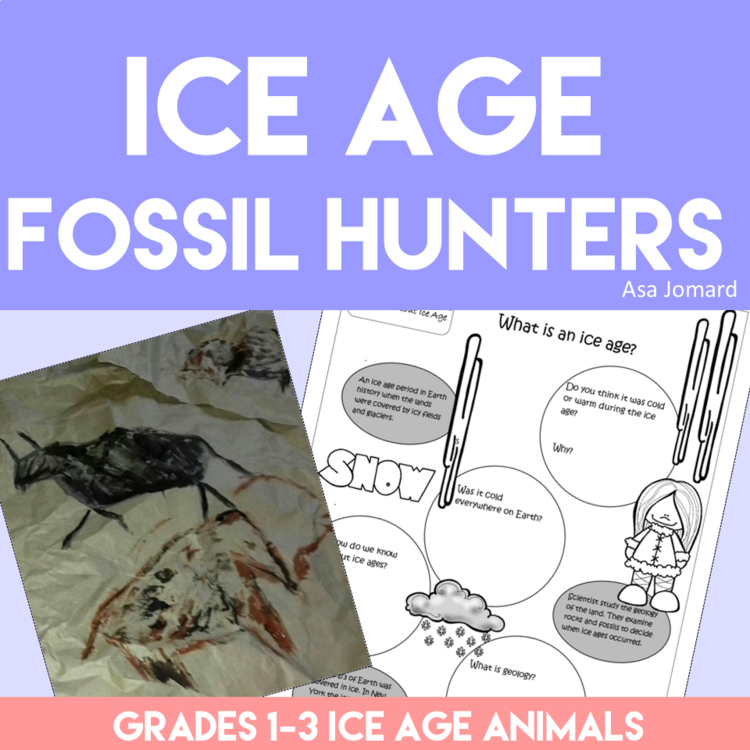
What is an Ice Age?
Facts about the Ice Age
Why does the Ice Age happen?
Compare and Contrast – Glacial and Interglacial
Tricky but cool words (vocabulary building)
Palaeontology & Fossil Discovery:
Ask the Ice Age Hunter questions about the Ice Age
Ice Age Hunter vs Me
Fossil Frenzy: What if I found a bone?
How do we know mammoths existed?
Digging for bones
Ice Age animal or not an Ice Age animal - What do you think?
Ice Age Animals:
My Gallery of Ice Age Animals - Mammoth
My Gallery of Ice Age Animals (additional species)
Ice Age Art – What did they look like?
Bring Back the Woolly Mammoth (de-extinction debate)
Creative Writing & Storytelling:
What if you could travel back in time
Story writing prompt
Story writing planning - Ice Age Mystery
Write an Ice Age Mystery
What if story writing prompt
Shape poem
Synthesis & Reflection:
Mind mapping
Some interesting things that I have learned
Cave art example (create your own prehistoric art!)
Why This Resource Is Different
Science + Literacy Integration: Most Ice Age resources focus purely on facts. This one develops research skills, critical thinking, AND creative writing—making it perfect for teachers who need cross-curricular connections.
Inquiry-Based Learning: Students don't just read about the Ice Age—they formulate questions, analyze evidence, compare theories, and draw conclusions like real palaeontologists.
Multiple Entry Points for Learning:
Visual learners: Full-color posters, animal galleries, cave art
Analytical thinkers: Compare/contrast activities, evidence analysis, climate science
Creative minds: Mystery stories, poetry, time travel scenarios, artistic expression
Kinesthetic learners: Fossil hunting simulations, art projects, role-play activities
Addresses Fascinating Questions:
Why did the Ice Age happen? (Climate science)
How do we know extinct animals existed? (Evidence and palaeontology)
What if we could bring back the woolly mammoth? (Ethics and de-extinction)
What was life like for Ice Age humans? (Historical empathy)
Perfect For:
Elementary science teachers covering earth science, climate, or extinction
Literacy teachers seeking high-interest informational text and creative writing topics
Integrated curriculum classrooms needing cross-curricular units
Gifted programs exploring palaeontology and scientific inquiry
Homeschool families wanting engaging prehistoric studies
Museum educators preparing field trip units
Summer learning programs seeking engaging STEAM content
Critical Thinking:
Evaluating evidence
Forming and supporting hypotheses
Understanding cause and effect
Ethical reasoning (de-extinction debate)
Historical perspective-taking
High-Interest Content: Woolly mammoths, sabre-toothed cats, giant ground sloths, and cave-dwelling humans capture imaginations instantly.
Mystery and Discovery: The Ice Age Hunter interview, fossil frenzy, and mystery writing activities frame learning as detective work.
Creative Expression: Students don't just learn facts—they write stories, create poetry, design cave art, and imagine time travel scenarios.
Real Science Connections: From actual cave art examples to current de-extinction debates, this connects ancient history to modern science.
Differentiation Built-In:
Grades 2-3: Focus on animal galleries, basic facts, creative writing prompts
Grades 3-4: Tackle climate science, compare/contrast, ethical debates, complex mysteries
How to Use This Resource:
As a Complete Unit: 2-3 weeks of integrated science and literacy instruction exploring Earth's prehistoric past
In Learning Stations:
Science Station: Climate, glaciers, fossil analysis
Research Station: Information gathering, Ice Age Hunter Q&A
Writing Station: Mystery stories, poetry, time travel scenarios
Art Station: Animal galleries, cave art, creative expression
Real Learning Connections
Climate Science: Understanding glacial and interglacial periods provides context for current climate discussions
Palaeontology: Students learn how scientists piece together ancient ecosystems from limited evidence
Ethics & Technology: The "Bring Back the Woolly Mammoth" activity introduces complex questions about de-extinction
Cultural History: Cave art examples connect science to prehistoric human creativity and expression
Critical Thinking: Distinguishing Ice Age from non-Ice Age animals requires analytical reasoning about adaptations and environments
Think Dive is built on a simple idea: a handful of curiosity + a bucket of imagination = learning that sticks. Every resource is designed to spark original thinking in young minds.
Format: PDF (US Letter size — A4 available upon request).
#mammoth #iceage #fossil #steam #stem #digitalactivities #grade2 #grade3 #grade4 #scienceandliteracy #paleontologyforkids #prehistoricanimals #woollymammoth #fossilactivities #earthscience #creativewriting or #scienceandliteracy #iceageunit #extinctanimals #iceageactivities #paleontologyforkids #fossilactivities #caveart
Report this resource to Linked Through Learning
Reported resources will be reviewed by our team. Report this resource to let us know if this resource breaks our rules.
“My students enjoyed learning about the Ice Age!! We followed the slides and students created a collage with the graphics.”
“This was a fun practice for learning more about the Ice Age with my students!”
My students enjoyed learning about the Ice Age!! We followed the slides and students created a collage with the graphics.
Bernadette F.
Grades taught: 5th
Great resource.
Jenna S.
Grades taught: 4th
This was a fun practice for learning more about the Ice Age with my students!
Amy K.
Grades taught: 4th
Great Resource!
Kate V.
Grades taught: 4th
This was very helpful for me to use as a supplement to our social studies curriculum. Easy to follow for my SWD.
DiDo's C.
Grades taught: 4th, 5th
Very engaging, promoted independent work and looked great when completed. Awesome!
Reply from Asa Jomard
So glad your students liked the activities. Thank you so much for the feedback!
Janet R.
Grades taught: 3rd
A fabulous resource which is challenging the children to investigate and explore our class topic Ice Age. I use this alongside a literacy resource based on Mammoth to the Rescue by Mary Pope Osbourne and the combination gives the children a balanced approach to their learning.
Reply from Asa Jomard
So glad you liked it. Thanks for the feedback and for the book tips. I have looked at it and it looks like a great book filled with exciting adventures.
Lynda H.
My students LOVE this so much. Thank you!
Reply from Asa Jomard
Thank you so much for the feedback. Glad your students liked it.
Sockmonkey S.
The ice age affected the land around my school. This is a great resource to teach my young students about this period. Thanks!
Reply from Asa Jomard
Glad you found it useful. Thanks for the feedback.
Chuck's C.
What a great product! Very professional and the students will love it!
Gems G.
I love all of the investigations and activities you have included with this resource. Students will be busy and engaged. I also love the posters!
Amazing D.
What a fun way to learn about an interesting topic! Love it! Great teacher notes!
Pint L.
I think interesting and important science facts aren't presented in many science lessons today. Hands on and discovery are great, but there has to be the connection to scientific principals. This fits the bill! Great!
Margo G.
I'm sure the kids will find this an interesting topic and it will encourage lots of thinking and discussion. Thanks for including such a great variety of activities!
Resource R.
This is such a detailed resource with a variety of activities. It’s adorable too. I love the clip art! Thank you.
Reply from Asa Jomard
Thanks for the lovely comments! Enjoy!
Write R.
I love the graphics and the different question starters. This is always a difficult concept for young students so I like how this activity will help guide them in the correct direction.
Reply from Asa Jomard
Thanks for the lovely comments! Enjoy!
Teacher's H.
No questions yet.
Meet the Seller
Creative resurces for curious students and playful thinkers
Discover exciting & unique science, math and writing activities designed for Kindergarten-Grade 6. My store includes Environmental Activities focusing on Looking for Solutions to Problems, Nature Design Biomimicry Challenges, Math Journal Prompts, Algebra and Creative Writing Activities.
United Kingdom
AI Assisted
I used AI to brainstorm ideas and also to check grammar and spelling.
$5.00