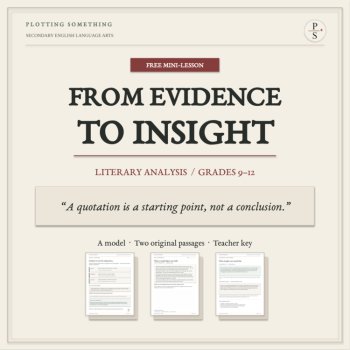
Students can find a quotation—but can they explain why it matters? This free, 30-minute literary analysis mini-lesson helps students in grades 9–12 move beyond plot summary and develop commentary grounded in specific textual details.
Students work with a short model and two original literary passages. First, they see the difference between retelling a passage and interpreting an author’s choices. Then they practice noticing a revealing detail, explaining what it suggests, and connecting that interpretation to a larger idea.
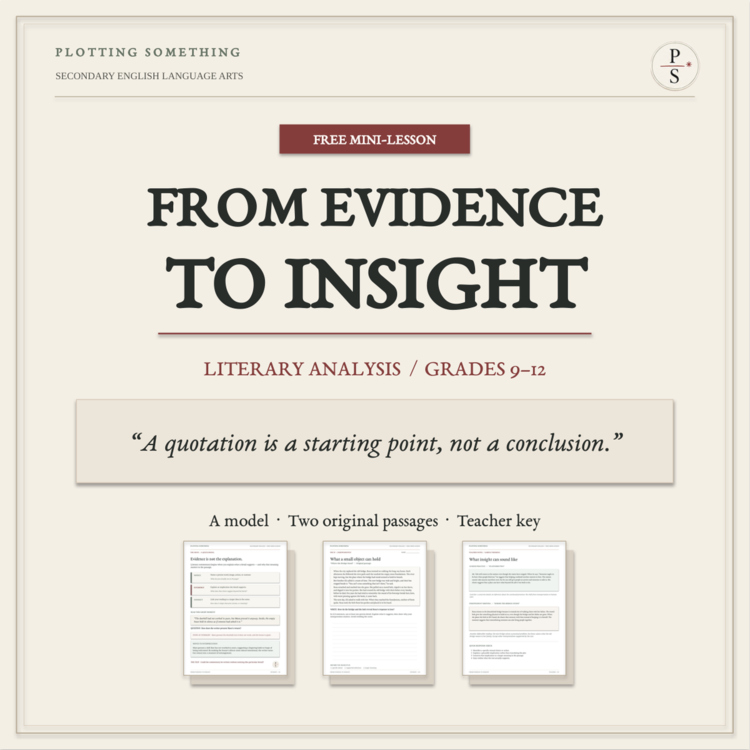
WHAT’S INCLUDED
• A student-friendly model that contrasts summary with interpretation
• “Platform Two,” an original short passage for guided practice
• “Where the Bridge Stood,” an original short passage for independent analysis
• A 4–6 sentence independent writing task
• A suggested 30-minute lesson sequence
• Sample responses and a quick response check for teachers
• A separate student-only printable PDF
• An editable PowerPoint version of the complete resource
HOW TO USE IT
Use the model to introduce what literary commentary actually does, discuss the guided passage with students, and finish with a short independent written response. The lesson works on its own—no separate novel or story is required.
AT A GLANCE
Grades: 9–12
Subject: Secondary English language arts / literary analysis
Time: Approximately 30 minutes
Format: PDF and editable PowerPoint in one ZIP download
Length: 7-page complete resource; 3-page student-only PDF
This is a full, free classroom resource—not a sample or an excerpt from a paid lesson.
Created by Plotting Something | Secondary ELA resources built around meaningful reading, purposeful questions, and authentic student thinking.