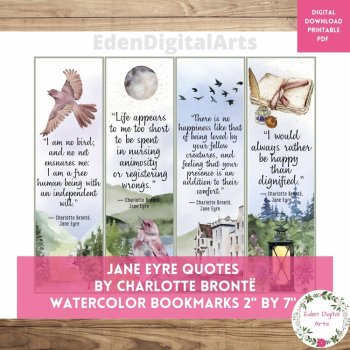
Jane Eyre Quotes Bookmarks, Charlotte Bronte Watercolor Book Club Cards Gift

$2.40

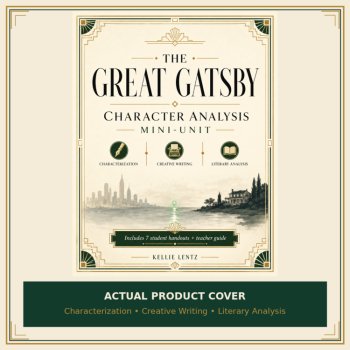
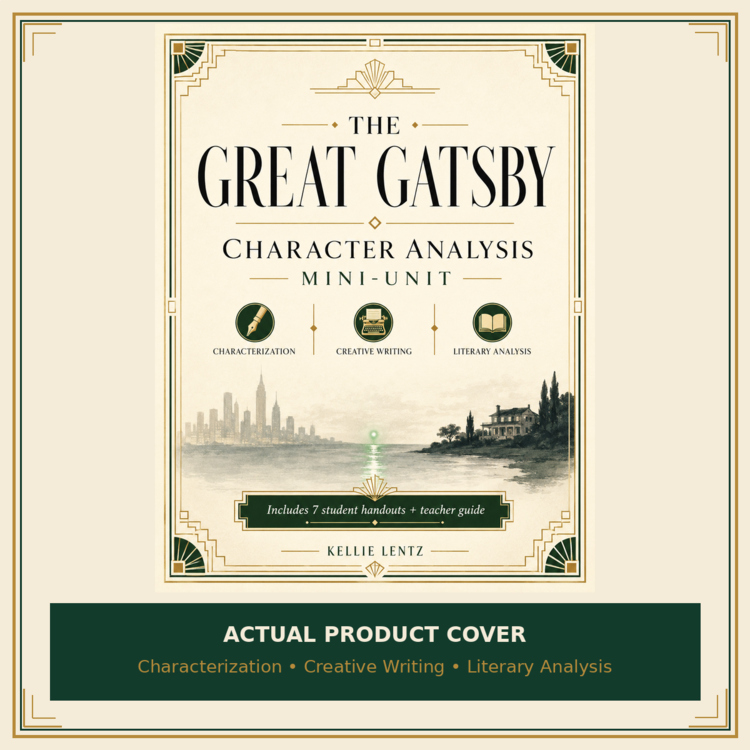
Once students know the characters well enough to move beyond first impressions, this mini-unit helps them turn what they notice into literary analysis.
Students choose one major character—Jay Gatsby, Daisy Buchanan, Tom Buchanan, Jordan Baker, Myrtle Wilson, or George Wilson—and look closely at motivations, relationships, contradictions, choices, self-perception, and the pressures of the world around them.
The sequence moves from character study into interpretation and writing. Students first examine the character closely, then try writing from that character’s perspective. After that creative work, they return to the novel, find evidence for the ideas they developed, and build an analytical claim.
The included Nick Carraway model shows what that movement can look like without turning the poem into a substitute for analysis.
WHAT’S INCLUDED
• Characterization Quick Reference
• Character Analysis Organizer
• “I Am” Character Poem
• Nick Carraway Model Poem
• From Character Poem to Literary Analysis activity
• Character Analysis Writing Assignment
• Character Analysis Rubric
• Teacher Guide with sequence suggestions, timing, differentiation ideas, assessment options, and flexible ways to use the materials
36 pages total
WHAT STUDENTS WORK ON
• Direct and indirect characterization
• Character traits and motivation
• Relationships and perception
• Contradictions and complexity
• Static and dynamic characters
• Wealth, class, reputation, and social expectations
• Textual evidence
• Close reading and inference
• Analytical claims
• Evidence and commentary
• Literary analysis writing
• Connections between character and larger ideas in the novel
FLEXIBLE CLASSROOM USE
Use the complete sequence, or pull the pieces that fit what your class needs.
This can work as:
• an end-of-novel character study
• preparation for a literary analysis essay
• a creative + analytical character assignment
• post-reading review
• writing practice
• an alternative or supplement to a traditional Gatsby essay
The writing assignment does not require students to force their ideas into a rigid five-paragraph or three-part-thesis structure. Instead, students develop a supported interpretation and organize the essay around the ideas and evidence that best develop that claim.
WHEN TO USE IT
This resource works best late in or after reading The Great Gatsby, when students know enough of the novel to recognize patterns, contradictions, motivations, and the effects of wealth, class, reputation, and social expectations.
Suggested time: approximately 3–5 class periods, depending on which components you use and how much writing students complete in class.
STARTING THE NOVEL?
Begin with my The Great Gatsby Pre-Reading Activity | Social Class, Wealth & Status Simulation. Students navigate a fictional social system before they meet Gatsby, Daisy, Tom, East Egg, or West Egg, giving them a concrete starting point for later discussion of money, status, access, and belonging:
BEST FOR
Grades 9–12
Late-novel or post-reading character study
Literary analysis and writing
Students need access to a copy of The Great Gatsby
Plotting Something • Secondary ELA
Report this resource to Linked Through Learning
Reported resources will be reviewed by our team. Report this resource to let us know if this resource breaks our rules.
No questions yet.

Meet the Seller
Thoughtful Resources for Secondary ELA
Literature-rich lessons, engaging classroom activities, and thoughtfully designed teaching resources for secondary English teachers.
Pennsylvania