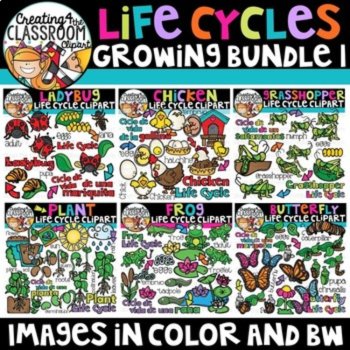
Life Cycles Clipart Bundle {Life Cycles Clipart}

$22.50 $34.75 (318)

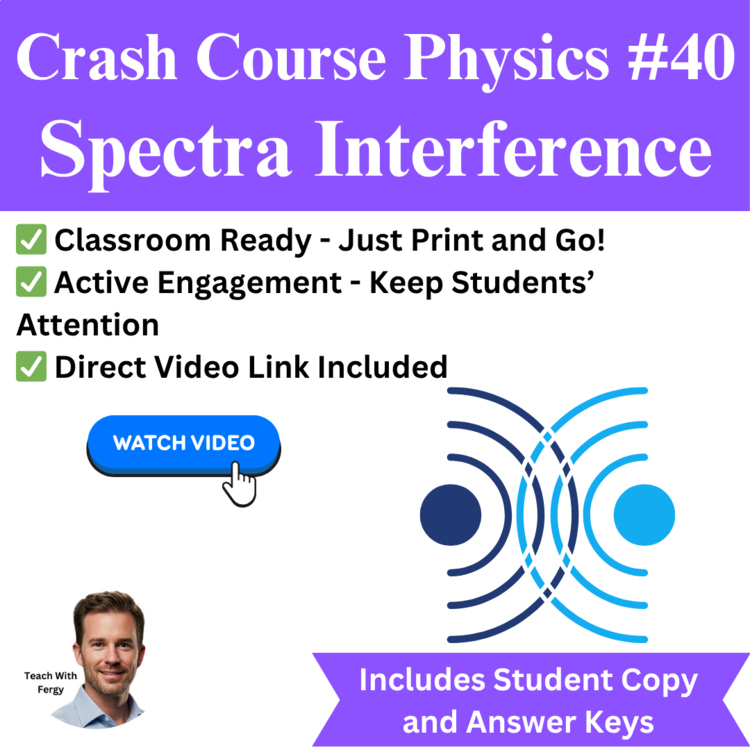
Crash Course PHYSICS #40: Spectra Interference | Video Worksheet | Diffraction
$2.47 $0.97
Add to cartCrash Course Physics #40 SPECTRA INTERFERENCE Video Worksheet. Whether you are introducing, reviewing, or leaving it as a sub plan, my Crash Course video worksheet is a terrific solution.
Your worksheet includes a direct YouTube video link! Just click and go.
Key Concepts Covered in the Video Worksheet:
You can get the entire Crash Course PHYSICS Bundle (46 video worksheets) for 85% off by CLICKING HERE.
How It Will Benefit Your Classroom
✅ Classroom Ready - This structured worksheet is ready-to-use and includes 15 questions, an answer key, and a direct link to the video on YouTube.
✅ Active Engagement – The worksheet will encourage your students to actively process the information instead of passively watching the video, leading to better retention and understanding.
✅ Reinforcement of Key Concepts – By answering questions, students reinforce important scientific ideas and terminology, improving comprehension.
✅ PDF and Word Versions Included
This video worksheet can be used to introduce a topic, review a concept, or be left as a sub plan if you're away.
This video worksheet is part of my Crash Course PHYSICS Collection:
Report this resource to Linked Through Learning
Reported resources will be reviewed by our team. Report this resource to let us know if this resource breaks our rules.
No questions yet.

Meet the Seller
Middle and High School Science Engaging Resources
I have been selling resources to middle and high school teachers for the last 15 years. During that time I've also been in the classroom so I know what works and what will help your students the most.
Canada
$22.50 $34.75 (318)
$22.50 $33.50 (190)
$22.50 $33.00 (128)
$21.50 $35.00 (221)
$21.50 $34.00 (218)
$21.50 $31.50 (173)