Science Posters- The Periodic Table-Brown Corduroy Design

$5.00 (1)

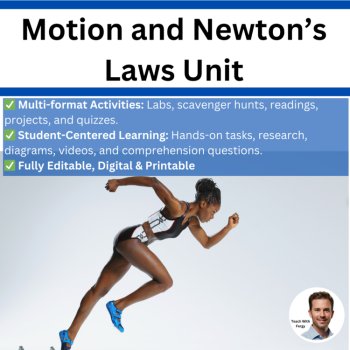
Bring motion and Newton’s laws to life in your middle‑school classroom with this comprehensive Motion & Newton’s Laws Unit! Designed for grades 6–8, this 6‑ to 7‑day sequence combines carefully structured lessons, interactive lab stations, a digital scavenger hunt and a creative engineering challenge to ensure students understand speed, velocity, displacement and the three laws of motion.
The unit includes 6 resources plus a daily teaching schedule so you know what to teach and when.
✅ Editable & Low-Prep Materials: Teacher slides, student notes, answer keys & planning outlines included.
✅ Student-Centered Learning: Hands-on tasks, research, diagrams, videos, and comprehension questions.
✅ Fully Editable, Digital & Printable
What’s Included:
Why Teachers Love This Unit:
Empower your middle‑school students to understand motion and forces through experiments, technology and creative design. This Motion & Newton’s Laws Unit provides everything you need to teach these fundamental concepts in a memorable and engaging way.
Report this resource to Linked Through Learning
Reported resources will be reviewed by our team. Report this resource to let us know if this resource breaks our rules.
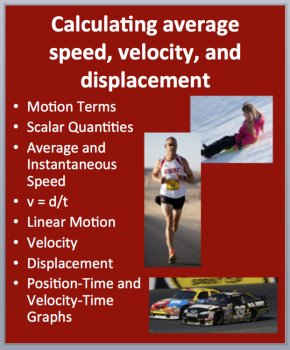
This 24-slide, physical science lesson package introduces and teaches the concepts of speed (instantaneous and average), velocity, and displacement using mathematical and graphical representations. The PowerPoint contains diagrams, examples, and explanations as well as multiple "Check Your Understan
This fully editable Lab Station Activity on Average Speed, Velocity, and Displacement is meant to get your students out of their seats and engaged in the content. This activity was designed for High School Biology students.✅ Includes Word and PDF version for each file✅ 7 Unique Lab Stations: Inclu...
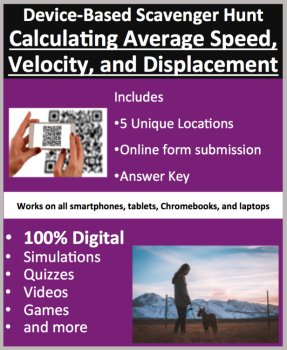
Calculating Average Speed, Velocity, and Displacement - A Digital, Device-Based resource that will get your kids out of their seats, engaged, utilizing technology, and collaborating to solve real problems and test their knowledge. This activity works well across grades as a means of assessment, revi
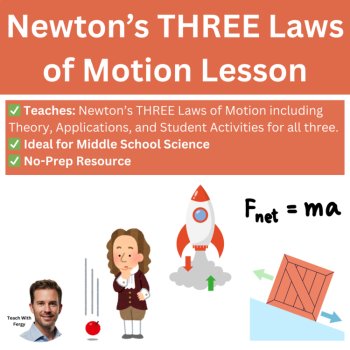
Newton's Laws of Motion Middle School Lesson - The lesson starts by describing forces and net force. It then covers each law while providing simple, practical examples of each along with simulation activities that are built right into your lesson. Your students will utilize the simulations to see th
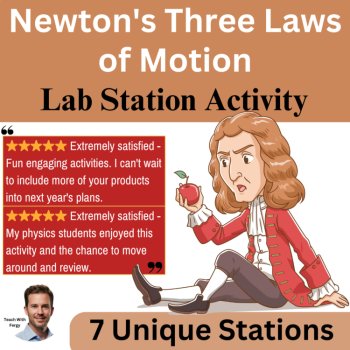
This fully editable Lab Station Activity on Newton's 1st, 2nd, and 3rd Law of Motion is meant to get your kids out of their seats and engaged in the content. Each station not only offers a unique opportunity to test your students' knowledge (offer an opinion, answer questions based on a video or rea
No questions yet.

Meet the Seller
Middle and High School Science Engaging Resources
I have been selling resources to middle and high school teachers for the last 15 years. During that time I've also been in the classroom so I know what works and what will help your students the most.
Canada