Science Posters- The Periodic Table-Brown Corduroy Design

$5.00 (1)

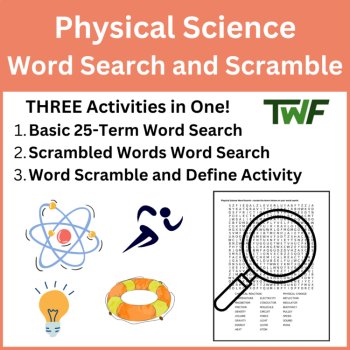
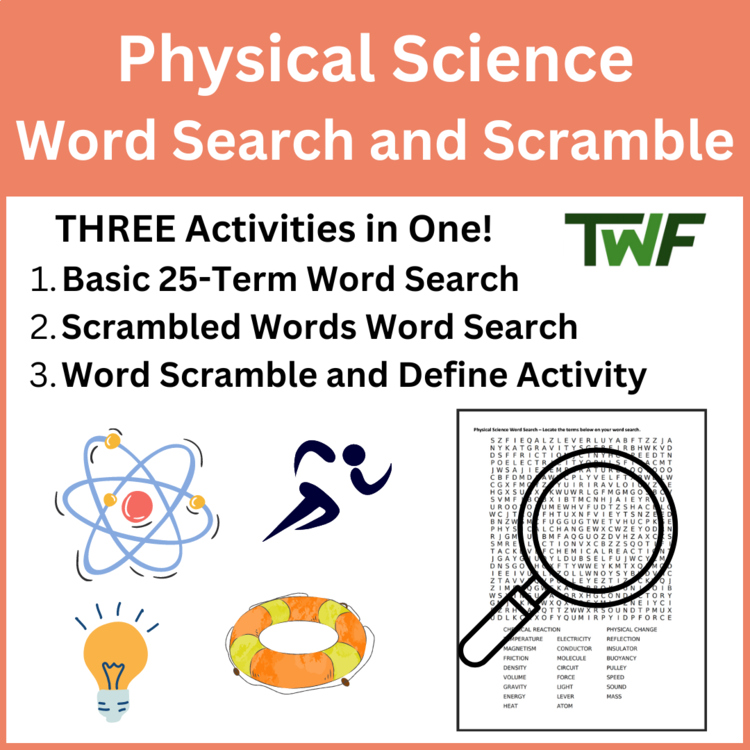
Word Search and Scramble - Physical Science. Ensure your students are challenged by selecting the correct level of difficulty.
What’s Inside:
Designed for students in middle school, this activity is actually three-in-one.
1) Simple Word Search Using 25 common Physical Science terms - see below.
2) Scramble Word Search - Students need to locate the 25 terms which are scrambled.
3) Word Scramble and Define - Students must unscramble the 25 terms and define them. There is also an easier version of this where students simply need to define the 25 terms which are listed for them.
A full answer key is included for each including all definitions.
You can find all of my Word Search and Scramble Activities by CLICKING HERE.
The following Terms are Included on the Word Search and Scramble:
How to Use:
Based on the level of your classroom, you can choose to simply provide the word search or you can have your students go deeper. To increase the difficulty you can:
Why You'll Love It:
I also have these Word Search and Scramble activities available in My Store:
General Science
Ecology
Biology
Space
Earth Systems
Chemistry
Physics
Energy
Formats:
The activity comes in ready-to-print Word and PDF formats.
This activity can be given as part of a review session, a break from traditional lectures, or as a complementary activity. It's flexible, easy to do, and guaranteed to make learning more enjoyable.
I also have a range of assignments and lessons/units from other grade levels at my store. Please CLICK HERE to have a look around and don’t forget to follow if you like what you see.
Also, please visit my blog Teach With Fergy for my thoughts on teaching, learning, and everything in between.
Report this resource to Linked Through Learning
Reported resources will be reviewed by our team. Report this resource to let us know if this resource breaks our rules.
No questions yet.

Meet the Seller
Middle and High School Science Engaging Resources
I have been selling resources to middle and high school teachers for the last 15 years. During that time I've also been in the classroom so I know what works and what will help your students the most.
Canada