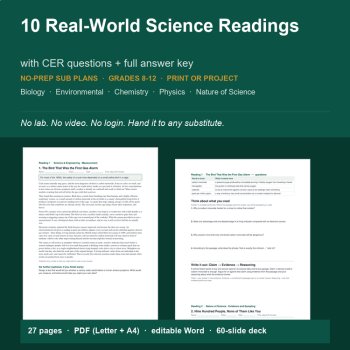
High School Science Sub Plans | 10 No-Prep Real-World Reading + CER Activities
$9.99

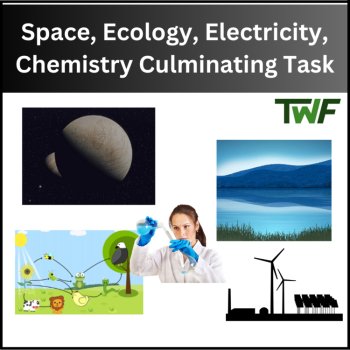
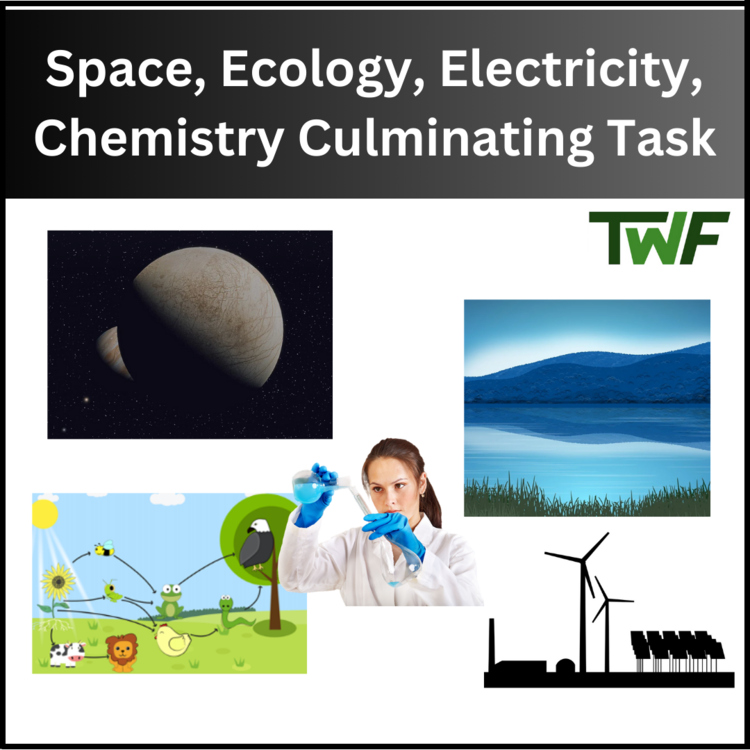
Students will embark on an interdisciplinary journey to design a sustainable human colony on a newly discovered exoplanet. This multi-phase project combines critical elements from four units of science—Space, Ecology, Electricity, and Chemistry—to challenge students' scientific knowledge, creativity, and problem-solving skills.
The project will guide students through evaluating exoplanet habitability, designing a functioning ecosystem, implementing renewable energy systems, and solving chemistry-based survival challenges. By the end, students will present their findings to a panel of "space agency experts" (classmates and teacher).
What Students Will Achieve:
This engaging project not only reinforces core science concepts but also prepares students with critical thinking and STEM skills needed for future academic and real-world challenges.
Benefits for Students:
Benefits for Teachers:
Project Quick Overview
1. Real-World Context:
Students are tasked with designing a sustainable human colony on a newly discovered exoplanet, combining creativity with real scientific principles.
2. Interdisciplinary Focus:
The project integrates four science units—Space, Ecology, Electricity, and Chemistry—ensuring comprehensive curriculum coverage.
3. Phase-Based Learning:
4. Emphasis on Problem-Solving:
Students analyze planetary challenges and propose solutions for sustainability and survival.
5. Hands-On Prototyping and Creativity:
Students design food webs, sketch diagrams, and create working prototypes of energy systems, fostering creativity and practical skills.
6. Research and Critical Thinking:
Students use credible resources (e.g., NASA exoplanet data) to make informed decisions and justify their solutions.
7. Team Collaboration:
The project encourages teamwork, group discussions, and division of tasks to mirror real-world scientific teams.
8. Final Presentation:
Students summarize their work in a handwritten report and a classroom presentation, showcasing research, designs, and prototypes.
9. Performance Assessment:
Includes a clear, detailed rubric for each phase, covering scientific reasoning, creativity, and communication skills.
10. Engagement and Flexibility:
The project is adaptable for diverse learning styles, balancing research, visuals, experimentation, and presentation to engage all students.
Report this resource to Linked Through Learning
Reported resources will be reviewed by our team. Report this resource to let us know if this resource breaks our rules.
No questions yet.

Meet the Seller
Middle and High School Science Engaging Resources
I have been selling resources to middle and high school teachers for the last 15 years. During that time I've also been in the classroom so I know what works and what will help your students the most.
Canada
$22.50 $34.75 (318)
$32.50 $50.00 (398)
$22.50 $33.50 (190)