Animal Habitats Clipart MEGA Bundle – 6 Sets

$32.50 $50.00 (398)

Species Protection Ecology Decision Challenge | Biodiversity, Keystone Species
$4.97 $2.97
Add to cartThis Species Protection Decision Challenge will help your students understand how biodiversity, habitat loss, keystone species, pollination, food webs, ecosystem stability, and conservation trade-offs are connected. This activity gives teachers an easy, NO PREP way to have students analyze ecology data, compare species protection options, and make an evidence-based decision about which species should receive conservation funding first.
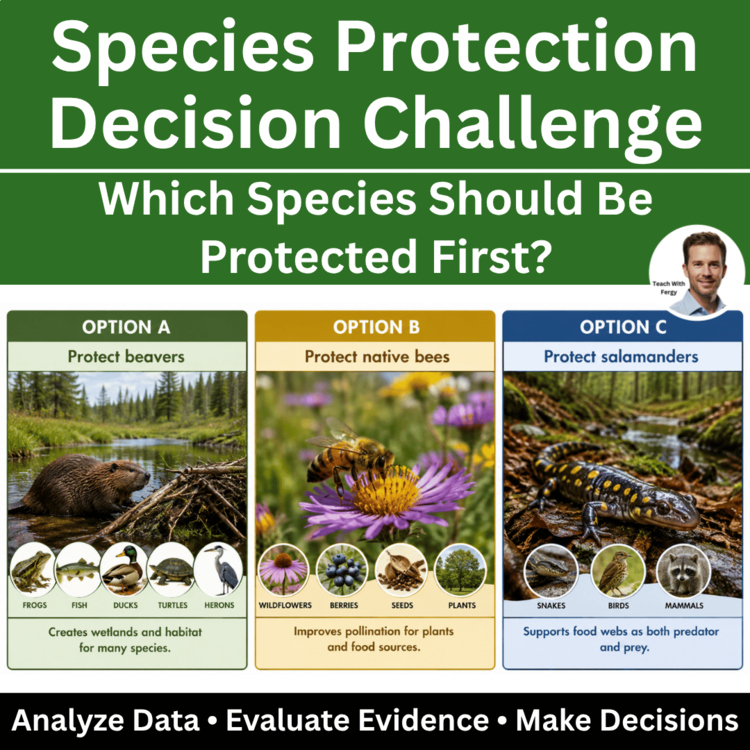
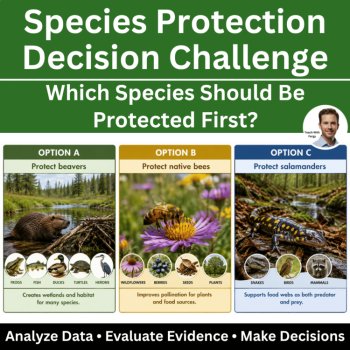
Students investigate a real-world style conservation problem in Clearwater Reserve, where several important species are declining and there is only enough funding to fully protect one species this year. Students analyze multiple Information/Data Sets related to species population trends, ecosystem roles, habitat loss, effects on other species, and conservation funding options. They then use the evidence to decide whether wetland beavers, native bees, or spotted salamanders should receive protection funding first.
Students answer the question:
Which species should receive protection funding first?
Students choose between three possible recommendations using information in the activity:
Option A: Protect the wetland beaver population first.
Option B: Protect the native bee population first.
Option C: Protect the spotted salamander population first.
Click here to download my Mosquito Control Ecology Decision Challenge Activity for FREE
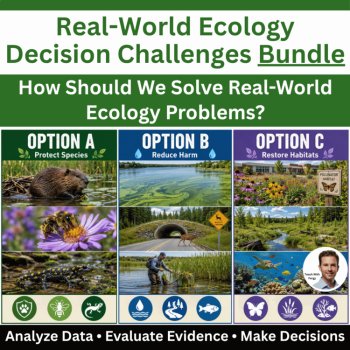
You can find this challenge as well as all my other Ecology Challenges in my Real-World Ecology Decision Challenges Bundle. Click here to see the included topics and learn more.
How It Works
Students use the provided background reading and evidence sets to:
This activity moves students from background reading → data analysis → evidence comparison → final decision writing.
Topics Students Explore
What’s Included
✅ Complete Species Protection Decision Challenge activity
✅ Student background reading
✅ Multiple Information/Data Sets
✅ Evidence analysis questions
✅ Final decision writing task
✅ Early finisher extension activities
✅ Complete answer key
✅ Grading rubric
✅ DIGITAL and PRINT ready versions
✅ Fully editable file
Perfect for:
Teacher-Friendly Features
This activity is a great way to help students practice analyzing evidence, comparing environmental risk factors, and making a science-based decision about which ecosystem should receive conservation support first.
Report this resource to Linked Through Learning
Reported resources will be reviewed by our team. Report this resource to let us know if this resource breaks our rules.
No questions yet.

Meet the Seller
Middle and High School Science Engaging Resources
I have been selling resources to middle and high school teachers for the last 15 years. During that time I've also been in the classroom so I know what works and what will help your students the most.
Canada
$32.50 $50.00 (398)
$22.50 $34.50 (169)