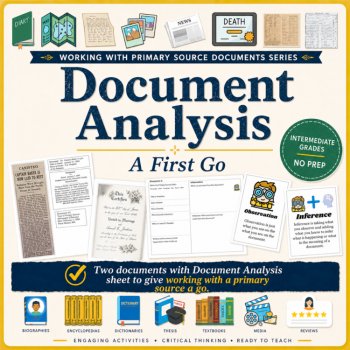
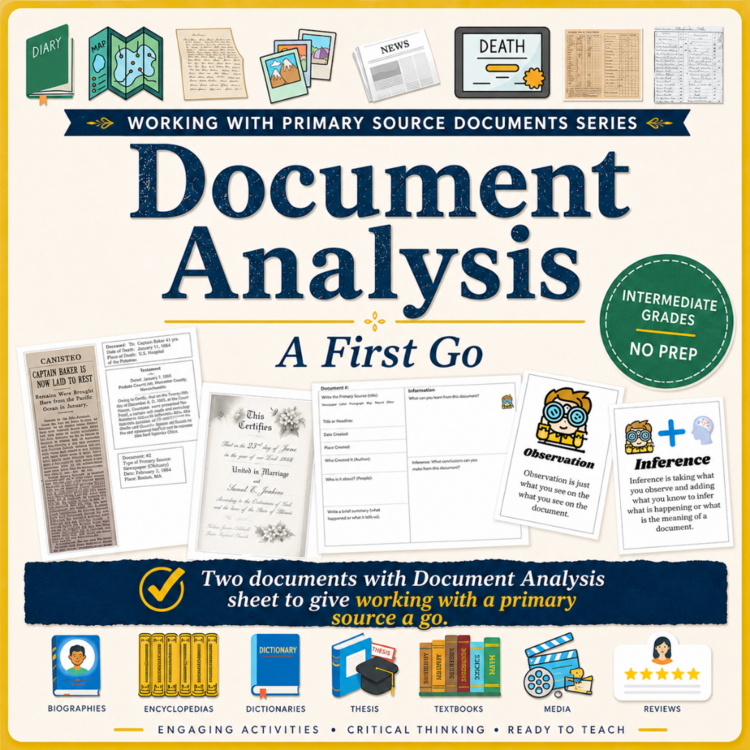
Primary Source Document Analysis Lesson | Document Analysis Activity | Primary Sources Upper Elementary Give your students a meaningful first experience with primary source document analysis using this engaging, scaffolded lesson designed for upper elementary learners. This resource is perfect for introducing how to analyze primary sources while building essential historical thinking and research skills.
“Document Analysis: A First Go” walks students step-by-step through analyzing real primary source documents, helping them learn how to observe, infer, and interpret historical evidence like real historians.
✅ Students will learn to:
Analyze primary source documents using a structured document analysis sheet
Identify key details through observation and inference
Understand purpose, audience, and context of historical documents
Practice critical thinking and evidence-based reasoning
Build foundational social studies research and analysis skills
Working with primary sources helps students evaluate evidence, ask questions, and think like historians while building deeper understanding of historical events.
📦 What’s Included in This Primary Source Analysis Lesson:
2 authentic primary source documents with clear transcriptions for easy reading
Blank document analysis worksheet
Answer keys / completed analysis sheets for both documents
Vocabulary posters to support student learning
🎯 Skills & Concepts Covered:
Primary source analysis
Document analysis strategies
Observation vs inference
Historical inquiry and evidence
Critical thinking in social studies
Introduction to DBQ-style thinking (document-based questions)
📍 Perfect For:
Upper elementary (grades 3–5)
Project Based Learning skills
Social studies and history units
Introduction to primary sources and document analysis
Building research and analysis skills
Review or enrichment activities
⭐ Why Teachers Love This Resource:
Clear, scaffolded introduction to document analysis
Real primary sources with accessible text
Ready-to-use worksheets and answer keys
Builds essential critical thinking skills
Low prep, high engagement