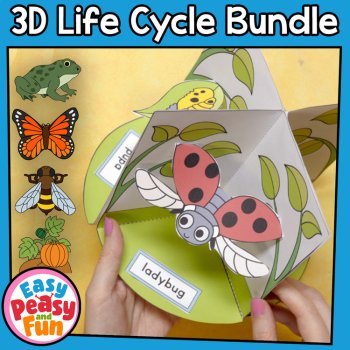
3D Life Cycles Bundle | Diorama Craft - Life Cycle of a Butterfly, Frog, Bee...

$9.99 $17.00 (18)

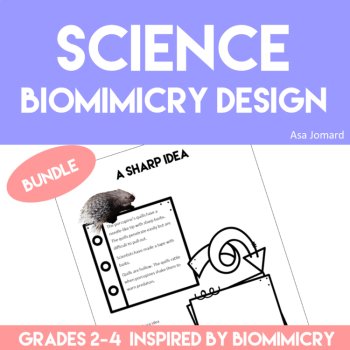
Transform Halloween Science with Spider Biomimicry: Where Nature's Engineers Meet Innovative Design!
Turn your students' spider fascination into a powerful STEAM learning experience! This engaging project-based resource teaches biomimicry through one of nature's most incredible innovators—the jumping spider—and challenges students to design toys inspired by real spider superpowers.
Why Jumping Spiders Are Perfect for Biomimicry:
Jumping spiders are nature's tiny engineers with amazing abilities:
Super vision: 8 eyes with 360-degree awareness
Hydraulic jumping: Leap 50x their body length without muscles!
Precision hunting: Calculate distance and trajectory like mathematicians
Sticky silk safety lines: Built-in bungee cords for exploration
Water-walking: Some species create diving bells to breathe underwater
These aren't just cool facts—they're inspiration for real inventions students will design!
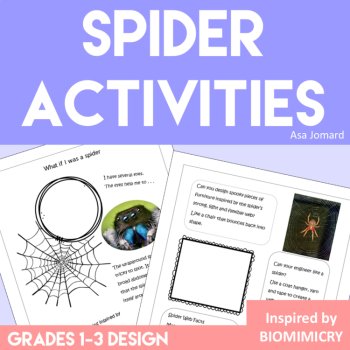
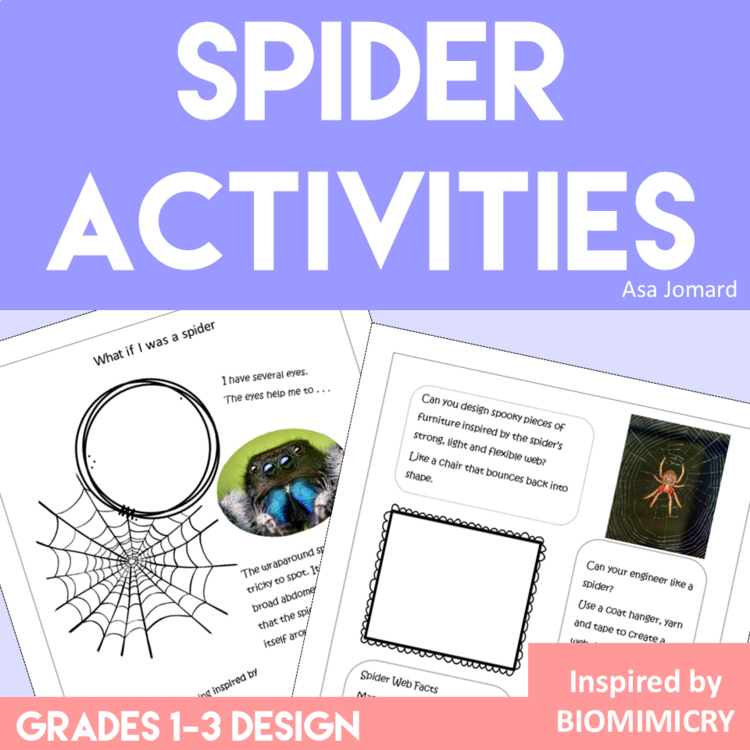
What's Included: (9 Comprehensive Activities)
Foundation Building:
Why Teach Biomimicry - Introduction for teachers and students explaining how nature inspires innovation
Getting Started Guide - Step-by-step implementation instructions with discussion prompts
Spider Exploration Activities:
Spiders Are Spooky Because... - Addressing fears and misconceptions with facts
A Spider Has, Can, Is - Observation framework for identifying spider adaptations
What If I Was a Spider? Jumping Spider Edition - Perspective-taking activity exploring spider abilities
Jumping Spider Dance - Kinesthetic learning about spider movement and hunting behavior
Biomimicry Design Challenges:
Spooky Spider-Web Furniture - Design challenge inspired by silk strength and structure
Walking on Water: Diving Bell Spiders - Engineering challenge based on underwater breathing adaptations
How to Use Biomimicry in the Classroom - Inspiration guide with multiple design pathways
Learning Objectives:
Students will:
Observe and document spider characteristics and behaviors
Identify specific adaptations that solve survival challenges
Apply biomimicry principles to design innovative toys/products
Create prototypes inspired by jumping spider abilities
Explain how their designs mirror nature's solutions
Develop scientific vocabulary related to adaptations
Practice design thinking and iterative problem-solving
Real-World Connection:
This isn't just about spiders—it's about innovation! Students learn the same process used by engineers who developed:
Velcro (inspired by burrs)
Bullet trains (inspired by kingfisher beaks)
Strong, lightweight materials (inspired by spider silk)
Skills Students Develop:
Science:
Making detailed observations
Identifying patterns in nature
Understanding form and function
Animal adaptations and habitats
Engineering:
Design thinking process
Problem identification and solution design
Prototyping and testing
Iteration based on feedback
Critical Thinking:
Asking investigative questions
Analyzing spider behaviors for patterns
Transferring natural solutions to human problems
Evaluating design effectiveness
Creativity:
Brainstorming multiple solutions
Combining ideas in novel ways
Visual representation of concepts
Storytelling through design
Teacher Benefits:
Step-by-step lesson flow eliminates guesswork
Discussion prompts keep students engaged
Connects to Next Generation Science Standards (Life Science, Engineering Design)
Addresses Common Core literacy through science writing
Perfect for substitute teachers—clear and complete
Extension activities for early finishers
Example Design Challenges Students Tackle:
The Super-Vision Toy - How can we create a toy that "sees" in multiple directions like a jumping spider?
The Hydraulic Jumper - Can we design a toy that jumps without traditional springs or motors?
The Silk Safety Line - What toy could use a retractable safety cord inspired by spider silk?
The Water Walker - How could we make a toy that works underwater using spider diving bell principles?
Beyond October: Year-Round Applications
While perfect for Halloween, this resource works anytime:
Spring units on insects and arachnids
Biomimicry studies any season
Introduction to engineering design
Nature observation projects
Think Dive is built on a simple idea: a handful of curiosity + a bucket of imagination = learning that sticks. Every resource is designed to spark original thinking in young minds.
Format: PDF (US Letter size — A4 available upon request).
Questions or requests? Contact: maliasa@live.com
#SpiderScience #BiomimicryActivities #HalloweenSTEM #FallScience #JumpingSpiders #ProjectBasedLearning #STEAMEducation #EngineeringDesign #NatureInspiredDesign #ElementarySTEM #PrimaryScience #BiomimicryForKids #OctoberActivities #AnimalAdaptations #InnovationInNature #MakerEducation #DesignThinking #Grade1Science #Grade2Science
Report this resource to Linked Through Learning
Reported resources will be reviewed by our team. Report this resource to let us know if this resource breaks our rules.
“This was a fun and helpful addition to our bug unit. Thank you!”
“Our kindergarten students loved working to solve the problem presented in this unit.”
For Unique STEAM Robot Activities | Inspiring Biomimicry Design Projects
If it's a robot, kids will love it. They enjoyed creatign their own.
Terri M.
Grades taught: 3rd, 4th, 5th
For Fun and Engaging Math Journal Prompts FREEBIE | Common Core Aligned
These were a great way to get kids thinking at the beginning of a lesson or in my groups.
Jennifer E.
Grades taught: 1st
For Unique STEAM Robot Activities | Inspiring Biomimicry Design Projects
This was a great project based learning activity for 1st grade students! Thank you!
Mary's L.
Grades taught: 1st
For Engaging Squirrel Life Cycle FREEBIE
This is a fun resource, student friendly, def worth having.
Alea C.
Grades taught: PreK, K, 1st, 2nd
For Seashells Project | Biomimicry Design Activities with Craft
Helps student understand sea shell designs and biomimicry
Miraj T.
Grades taught: 9th, 10th, 11th, 12th
For Explore Woodland Animals | Climate Change and Environment | Design Home
This was a fun and creative learning activity that my students really enjoyed. I loved seeing students get so involved in their learning.
Reply from Asa Jomard
Thank you so much for taking to time to leave a review. Glad that hear that your students were involved in the learning.
Lindsay A.
Grades taught: 4th
For Engaging STEAM Giraffes Activities | Freebie | Unique Biomimicry Adventures
Thank you for this resource! It was very useful and helpful!
Emma C.
Grades taught: K, 1st, 2nd
For Engaging STEAM Giraffes Activities | Freebie | Unique Biomimicry Adventures
We're really enjoying your STEAM activities, I really appreciate your sharing these for free, thanks!
Lively C.
Grades taught: 9th, 10th, 11th, 12th, 8th, 7th, 6th, 5th, 4th, 3rd, 2nd, 1st
For Engaging STEAM Groundhog Activities | Freebie | Unique Biomimicry Adventures
Thanks so much for sharing this great STEAM freebie, I really appreciate it. It's very popular with my kiddos!
Lively C.
Grades taught: 9th, 10th, 11th, 12th, 8th, 7th, 6th, 5th, 4th, 3rd, 2nd, 1st
For Endangered Animals Research | Nonfiction | Biomimicry Design Project | Activity
Great resource to teach two expectations. Well organized and developed. Very good explanation. Students loved completing.
sarah K.
Grades taught: 4th, 5th
No questions yet.
Meet the Seller
Creative resurces for curious students and playful thinkers
Discover exciting & unique science, math and writing activities designed for Kindergarten-Grade 6. My store includes Environmental Activities focusing on Looking for Solutions to Problems, Nature Design Biomimicry Challenges, Math Journal Prompts, Algebra and Creative Writing Activities.
United Kingdom