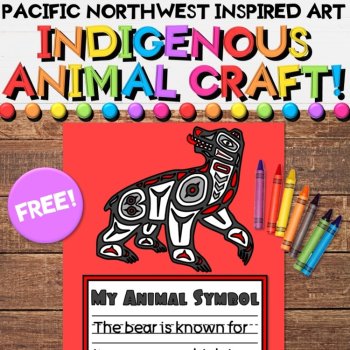
FREE Indigenous Animal Craft & Writing Activities | Native American Art Project

Free (9)

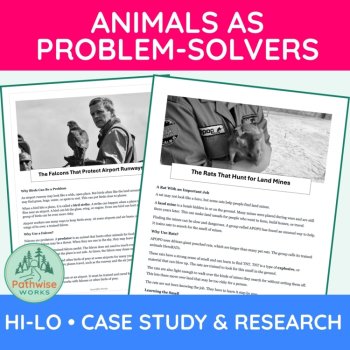
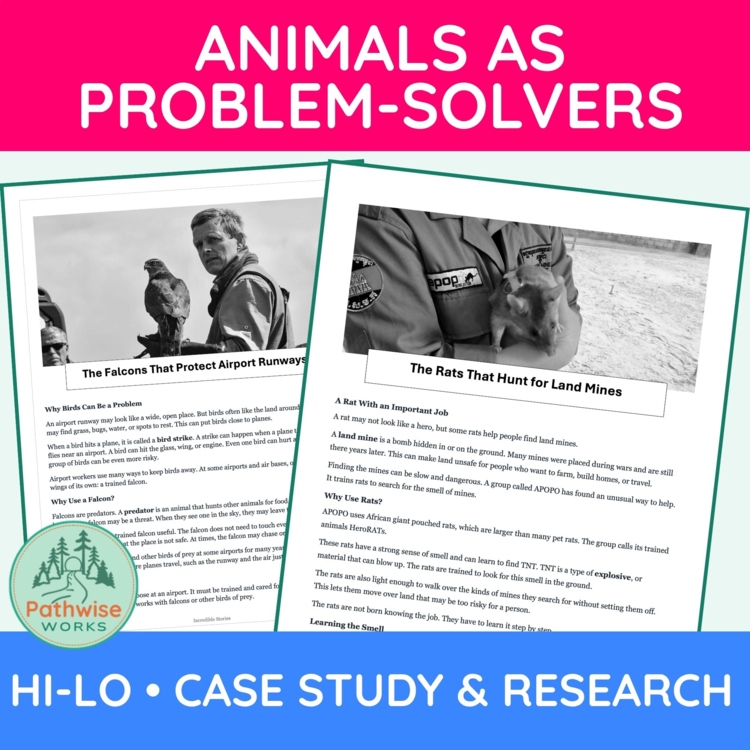
Looking for a high-interest research project for older struggling readers that keeps the texts accessible while asking students to do deeper thinking? Animals as Problem-Solvers is a comparative case study and research project built around unusual real-world examples of humans using animals to solve problems.
Students work with accessible texts while comparing evidence across multiple cases and developing broader conclusions.
Students begin with two shared cases, The Beavers That Fell From the Sky and Could a Pigeon Guide a Machine? Then choose a third case focused on mine-detecting rats, search-and-rescue dogs, or falcons used to protect airport runways. They identify patterns and decide what humans should consider before using animals to solve problems.
What's Included
5 high-interest animal case studies
Student choice of third research case
Three-case comparison graphic organizer
Evidence gathering across multiple texts
Synthesis activity that moves students from examples to broader criteria
One-page Animal Problem-Solving Decision Guide final product
Flexible independent, partner, or small-group options
Teacher guide with suggested sequence and discussion questions
The project guides students from reading and gathering evidence to comparing, synthesizing, and applying what they learned. Students examine the human problem, the animal’s useful ability, the role of training or human design, evidence that the solution worked, and possible risks or limitations.
The culminating task asks students to move beyond retelling. They identify patterns across all three cases and create an Animal Problem-Solving Decision Guide explaining what people should consider before choosing an animal-based solution, supported with evidence from all three cases.
Use it for reading intervention, special education reading support, small-group instruction, cross-text comprehension, or a short research project. The full project can be completed in approximately 3–5 class periods after students have read the two shared passages.
Report this resource to Linked Through Learning
Reported resources will be reviewed by our team. Report this resource to let us know if this resource breaks our rules.
No questions yet.
$1.00 (154)
$3.25 (36)