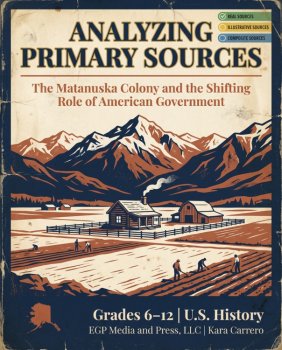
Analyzing Primary Sources: Alaska's Matanuska Colony & U.S. Government

$5.00

Teaching the college essay can be frustrating. Students often think they need a dramatic story, choose a prompt before they have anything meaningful to say, or end up writing the same version of “this experience taught me to never give up.”
This unit takes a different approach.
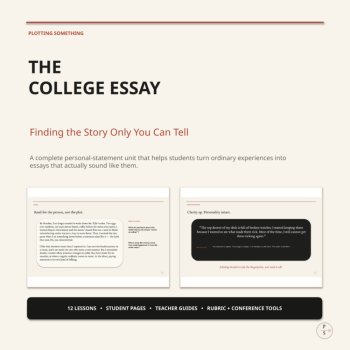
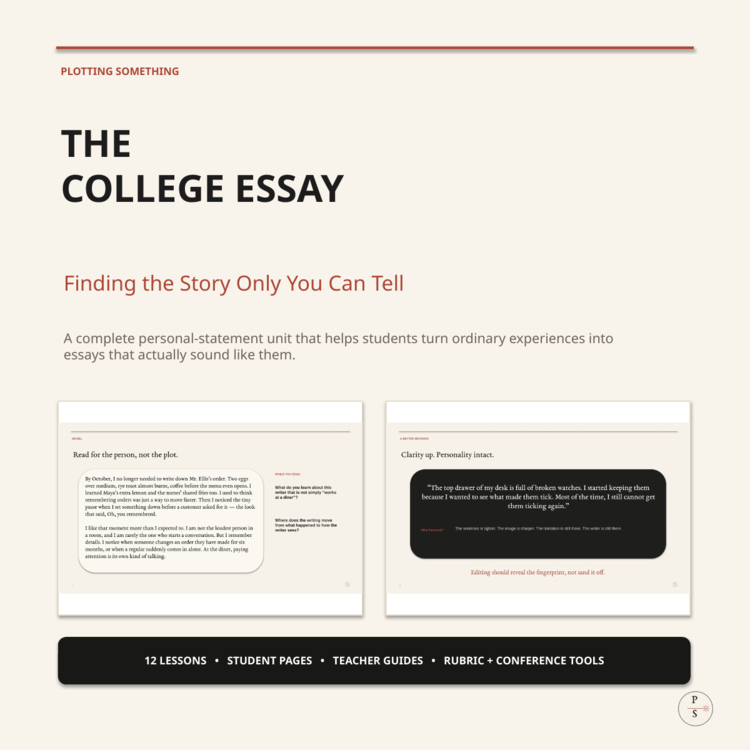
The College Essay: Finding the Story Only You Can Tell helps students move from ordinary experiences to personal essays that are specific, reflective, and still sound like them.
Students begin by finding possible stories before they ever look at the Common App prompts. From there, they learn how to move beyond simply telling what happened, recognize generic writing, develop reflection without forcing a life lesson, protect their natural voice, choose the prompt that actually fits, draft with purpose, and revise a complete essay.
The unit does not ask students to manufacture trauma or pretend one experience completely changed their lives. Sports, family, work, friendships, routines, hobbies, mistakes, responsibilities, and other familiar topics can all work when the writing reveals something specific about the person telling the story.
This complete unit includes:
· 12 instructional PowerPoints
· 48 student-facing workbook pages
· 12 teacher guides
· unit overview and pacing guide
· 100-point college essay rubric
· teacher conference sheet
· guided brainstorming and story-finding activities
· story vs. reflection instruction
· generic essay and specificity checks
· voice and over-polishing revision activities
· Common App prompt-fit lesson
· drafting and structure work
· beginnings and endings lesson
· 650-word revision lesson
· final-read and submission checklist
Lesson 1: The Event Is Not the Essay
Students learn that the experience itself is not enough; the essay needs to reveal the person telling it.
Lesson 2: Nothing Important Has Ever Happened to Me
Students generate possible essay material from ordinary places, routines, objects, habits, skills, people, and recurring moments.
Lesson 3: What Does This Story Give Us Access To?
Students explore what a story might reveal about how they think, what they notice, or what they value.
Lesson 4: The Generic Essay Test
Students learn to recognize résumé writing, event-heavy drafts, generic reflection, and forced life lessons.
Lesson 5: Story Is Not Enough
Students practice weaving brief reflection into a scene instead of saving all of the meaning for the final paragraph.
Lesson 6: Sound Like a Person
Students examine voice, over-polishing, and revision choices that can make a personal essay sound less personal.
Lesson 7: Now Look at the Prompts
Only after students have possible stories do they examine the Common App prompts and choose the one that fits without forcing the essay.
Lesson 8: Drafting the Shape
Students make a simple plan for the essay and decide which moments deserve space.
Lesson 9: Beginnings & Endings
Students practice starting naturally and ending without explaining the lesson one more time.
Lesson 10: Could Anyone Else Have Written This?
Students revise generic sentences and details so the essay becomes more specific to them.
Lesson 11: The 650-Word Cut
Students cut repetition, unnecessary background, and wordy phrasing without cutting the details that give the essay personality.
Lesson 12: The Final Read
Students complete a whole-draft check for voice, reflection, prompt fit, revision choices, mechanics, and readiness to submit.
Each lesson is designed for approximately one 40-minute class period, with about 35 minutes of usable instructional time. Teachers can easily add drafting days, individual conferences, or homework between later lessons.
The materials are designed for high school juniors and seniors, especially students working on college application essays or personal statements.
This is not an AI-detection unit.
Students are taught to pay attention to authorship during revision: Do they understand the wording? Would they actually choose those words? Did outside help make the sentence clearer, or simply make it sound less like them?
Polished writing is not treated as proof of AI use.
The prompt lesson is updated for the 2026–27 Common App application cycle. Because Common App prompts and requirements can change, teachers should verify the current prompts before using the resource in future application cycles.
Need Only the Brainstorming and Story-Finding Lessons?
The first four lessons from this complete unit are also available separately in College Essay Brainstorming Mini-Unit | Find Your Story.
That mini-unit is a good fit if you only need help getting students from “nothing important has ever happened to me” to a workable essay idea before they begin drafting.
If you own the complete College Essay Unit, you already have these four lessons.
Need Help with Just the Drafting Stage?
Lessons 5–9 from this complete unit are also available separately in College Essay Drafting Workshop | Personal Statement Voice & Structure.
This five-lesson workshop is designed for students who already have a story idea and need help developing reflection, keeping a natural voice, choosing the prompt that fits, shaping the draft, and writing stronger beginnings and endings.
If you own the complete College Essay Unit, you already have these five lessons.
Need Only the Revision Portion?
The final three lessons from this complete unit are also available separately in College Essay Revision Workshop | Personal Statement Editing.
That workshop is designed for students who already have a complete or nearly complete draft and need help with specificity, cutting to the word limit, and completing a final read before submission.
If you own the complete College Essay Unit, you already have these three revision lessons, the rubric, and the teacher conference sheet.
· College essay units
· College application writing
· Personal narrative and personal statement writing
· Senior English
· AP English Language or Literature enrichment
· College and career readiness
· Writing workshop
· Beginning-of-year senior writing
· College counseling support
Report this resource to Linked Through Learning
Reported resources will be reviewed by our team. Report this resource to let us know if this resource breaks our rules.
No questions yet.

Meet the Seller
Thoughtful Resources for Secondary ELA
Literature-rich lessons, engaging classroom activities, and thoughtfully designed teaching resources for secondary English teachers.
Pennsylvania
AI Assisted
I develop the ideas, plan the activities, and guide the creation of all resources. AI tools assist with writing, illustrations, and design. Every resource is reviewed, edited, and refined using my teaching experience to ensure quality, accuracy, and meaningful real-world learning.
$7.20 $9.00
AI Assisted
The seller says AI was used in making this resource, but didn't add details.
$4.75
AI Assisted
I develop the ideas, plan the activities, and guide the creation of all resources. AI tools assist with writing, illustrations, and design. Every resource is reviewed, edited, and refined using my teaching experience to ensure quality, accuracy, and meaningful real-world learning.
$6.38 $7.98
AI Assisted
I develop the ideas, plan the activities, and guide the creation of all resources. AI tools assist with writing, illustrations, and design. Every resource is reviewed, edited, and refined using my teaching experience to ensure quality, accuracy, and meaningful real-world learning.
$7.60 $9.50