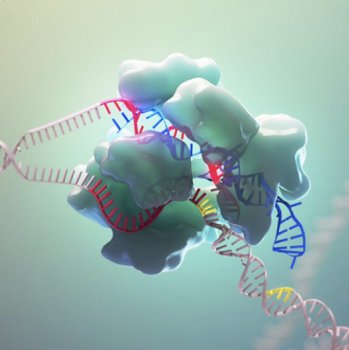
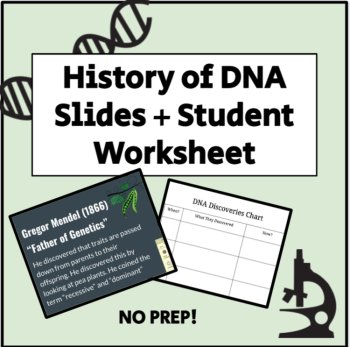
History of DNA Slides + Student Worksheet
 Ms Kiaras Science Teacher Shoppe
$4.00

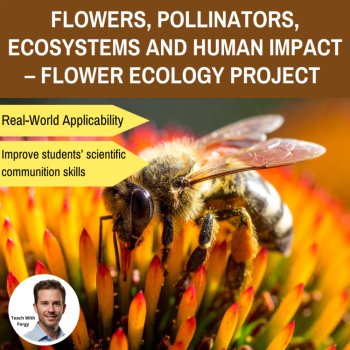
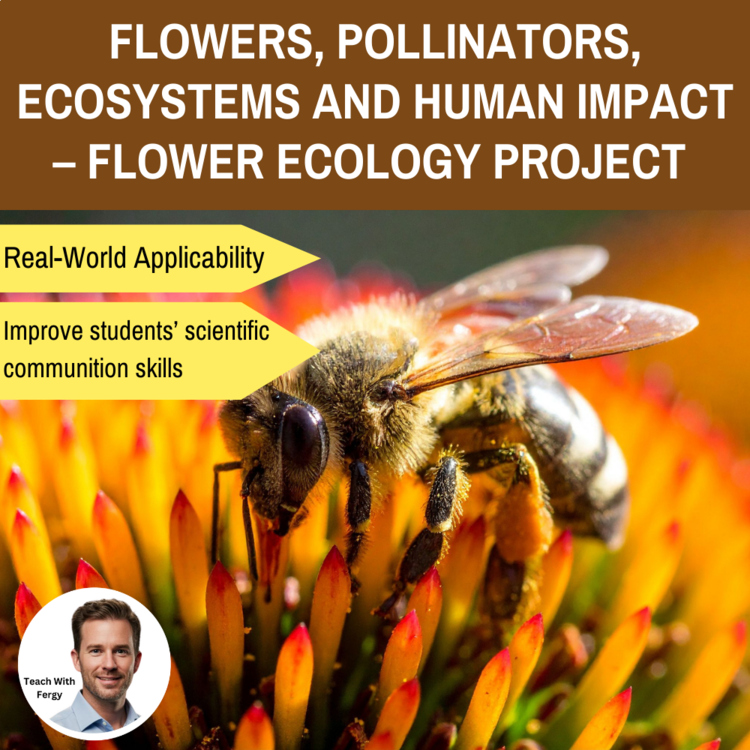
In this project, your students will explore how flowering plants depend on pollinators and healthy ecosystems, and how human activities affect the survival of pollinators and the plants—and foods—people rely on every day. Students will investigate how pollination works, why pollinators are essential to ecosystems and food production, and how threats such as habitat loss, pesticide use, invasive species, and climate change are disrupting these critical relationships.
It covers NGSS standard MS-LS2-4 (Ecosystems: Interactions, Energy, and Dynamics – effects of changes to ecosystems) by focusing on how changes to biological and physical components of ecosystems impact populations of plants and pollinators.
Students will demonstrate their understanding by creating a learning artifact such as an infographic, persuasive letter, public service announcement (PSA), action plan, or gallery walk exhibit that explains the science of pollination, ecosystem connections, and human impact. Using evidence from the reading and additional research, students communicate how pollinators support plant reproduction and why protecting pollinators protects ecosystems and people.
Students then share their work and explain how human choices—such as land use decisions, pesticide practices, gardening choices, and climate-related actions—directly influence pollinator populations and ecosystem health.
Flower Ecology Project Highlights
✅ Real-World Science Connection: Students investigate pollinators, flowers, and food systems to understand ecosystems and human impact.
✅ Choice-Based Project Formats: Multiple creative output options support differentiation, student voice, and varied learning styles.
✅ Cause-and-Effect Focus: Emphasizes how habitat loss, pesticides, and climate change affect pollinators and flowering plants.
✅ Science Communication: Students explain scientific ideas using evidence through visuals, writing, and presentations.
✅ Standards-Aligned: Directly supports NGSS MS-LS2-4 with argumentation and evidence-based reasoning.
Key Topics Explored
This project offers an engaging, hands-on way for middle school students to deepen their understanding of ecosystems and human impact using a topic they see in everyday life—flowers, food, and pollinators. It promotes inquiry, creativity, and critical thinking while reinforcing core life and Earth science concepts through reading, research, and evidence-based explanations.
The project is fully adaptable for different classroom settings and includes clear directions, required content checklists, student exemplars, and detailed rubrics for multiple project formats. Students build both scientific understanding and communication skills while working on a meaningful, standards-based task.
NGSS Ready
MS-LS2-4 – Construct an argument supported by empirical evidence that changes to physical or biological components of an ecosystem affect populations.
Report this resource to Linked Through Learning
Reported resources will be reviewed by our team. Report this resource to let us know if this resource breaks our rules.
No questions yet.

Meet the Seller
Middle and High School Science Engaging Resources
I have been selling resources to middle and high school teachers for the last 15 years. During that time I've also been in the classroom so I know what works and what will help your students the most.
Canada
$22.50 $34.75 (318)
$32.50 $50.00 (398)