High School Science Sub Plans | 10 No-Prep Real-World Reading + CER Activities

$9.99

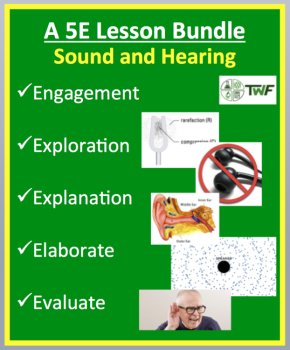
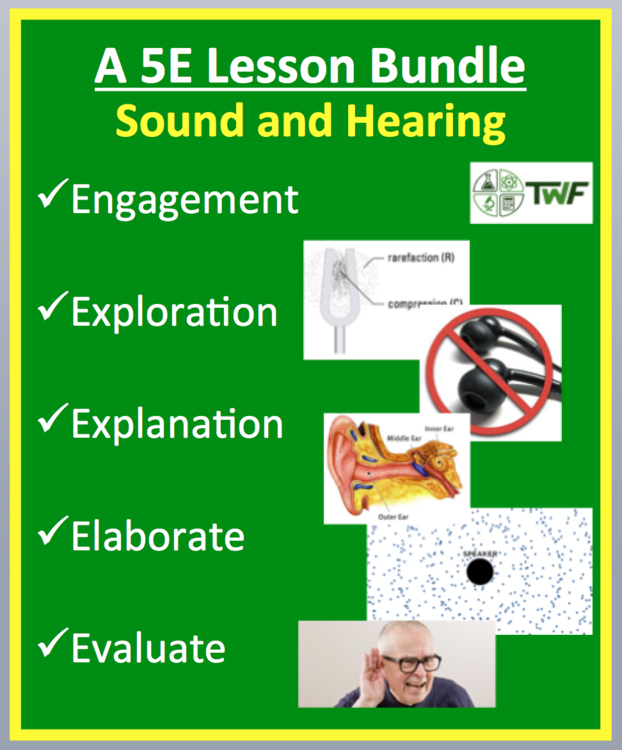
Sound and Hearing Complete 5E Lesson Bundle | Sound Waves, Vibrations, Earbuds
$28.88 $14.97
Get BundleSound and Hearing - Fully editable and Complete 5E Lesson. By purchasing this bundle you will save 53% vs. purchasing the individual components separately. Also, I've included my Sound Transfer STEM Activity for your convenience.
Lesson Objectives:
Throughout this 5E lesson, students will learn about:
• Sound, creating sound, moving sound, speed of sound
• Noise-cancelling headphones
• Hearing: frequencies, loss
• Earbuds
• Teen hearing stats
• Hearing loss prevention
• Sound intensity
• The human ear
• Hearing aids
My Promise to You
I know every classroom is different. If you purchase a resource and feel it is not the right fit for your students, contact me and I’ll provide 2x the amount you paid in store credit toward another resource in my store, so you can find something that better supports your students.
Buyer Comments:
- "This is great! I am a DHH teacher, and I'm trying to get my DHH students to learn and understand about their hearing loss and how it impacts their lives. This is a great addition to my work with the secondary students. Great job!"
- "Great Resource! It's well laid out and fun for the students! Lots of interaction."
How does the 5E model facilitate learning?
• It emphasizes inquiry, critical thinking, and the process of science
• Its success is backed by countless scientific studies that demonstrate its effectiveness
• It’s built around the idea that humans construct knowledge and meaning from their learning experiences. That they build upon their prior knowledge and to be effective, learning needs to be active and allow the participants to construct new knowledge from their experiences
----------------------------------
What's included?
Engagement Phase
- This could involve a short video with probing question or a discussion based around current events, common misconceptions, etc.
- Creates interest and excitement for your students
- Asks questions and probes their initial conceptions
- In this bundle, your students will be immediately gripped as they watch a short video designed to peak their interest
Exploration Phase
- Students use and develop creative thinking skills, make observations, record results, and make connections
- This bundle comes with a 7-station, Lab Activity where they will gain real experiences with the topic
**Note: The lab station activity requires very little preparation or materials**
- For a complete description of the lab station activity, please see below
Explanation Phase
- This is the instructional phase where concepts are presented to the students in a clear and applicable way
- Students develop understanding of the content
- Observations and experiences are discussed and critiqued
- Students develop vocabulary
- Students are able to connect the content presented to previous experiences
- This bundle includes two lessons in PowerPoint and .PDF formats. For a complete description of them, please see below
Elaborate Phase
- This phase involves the students completing an activity or assignment that forces them to expand their thinking and knowledge of the topic. They will propose solutions and extend their learning to new situations
- This bundle includes a reading comprehension article
**Note: This activity requires no preparation or materials**
- For a complete description, please see below
Evaluate Phase
- Your students' will demonstrate their understanding and evaluate their own progress
- This phase involves the students completing an activity or assignment that forces them to expand their thinking and knowledge of the topic. They will propose solutions and extend their learning to new situations
- The evaluation section includes a quiz that will allow you to evaluate your students' topic understanding
------------------------------------------------------------
The NRC's How People Learn has synthesized decades of research across many different disciplines about how people learn (NRC, 1999 blue right-pointing triangle). Key findings from that synthesis include the following. First, students (people) must be interested and engaged in what they are learning and find it useful and meaningful. Second, students (people) must be actively involved in the process of teaching and learning, comparing new information to previous ideas, constructing new understandings, and quite simply changing their own minds about how the world works. And third, students (people) need opportunities to apply what they have learned to new situations, to check the completeness of their understanding, and to evaluate their own learning for themselves. (https://www.ncbi.nlm.nih.gov/pmc/articles/PMC2931660/)
By incorporating this 5E lesson, you will provide your students with a meaningful and coherent way of learning that best suits their needs. You will also utilize technology in a way that creates order and promotes understanding.
------------------------------------------------------------
Explore - Sound, Sound Energy, and Speed - 7 Engaging Lab Station Activities
This fully editable Lab Station Activity on Sound, Sound Energy, and Speed is meant to get your students out of their seats and engaged in the content. Each station not only offers a unique opportunity to test your students' knowledge (offer an opinion, answer questions based on a video or reading, draw, etc.), but also provides a fantastic learning opportunity where your kids are learning through assessment. Each station comes with a description card while some also contain more detailed instructions, a reading, questions to answer, etc. Students are equipped with a recording sheet (passport) to write their answers. There is almost no prep for you. Simply print the cards, lay them out around the room and you're all set. An answer key is also provided where applicable.
This lab activity covers:
- Sound
- Sound Energy
- The Speed of Sound
----------------------------------------------
Bonus Activities: To ensure your students don’t have any downtime between stations, your lab also includes a 10-word word scramble and word search, both with an answer key. You can use them as part of their mark, as a bonus so it’s not mandatory, etc. However you choose to use it, it will ensure that your students are always busy and never idle. Note: For stronger classes, I give the word scramble and for weaker ones, the word search.
-----------------------------------------------
These station cards are meant to be used as a lab activity but can also be utilized in a review task before a test or a quiz. Used either way, your students will love it! I know mine do and I'm telling you from first-hand experience as I've used this activity in my own class,
How do the Lab Stations work? Each station is specially designed to be a unique complement to the material while at the same time, provide a valuable learning experience. Below is an overview of how each station works. In your activity, each will be tailored to the specific content.
Station 1: Get Hands-On – using their creative skills, students are required to draw or build.
Station 2: Research – using a classroom computer or their own device, students must research a specific question/issue surrounding the topic.
Station 3: Explain yourself – students write down an opinion to a question in paragraph form.
Station 4: Rest Station - students can use this time to catch up on work they didn't have time to complete at a previous station or prepare themselves for an upcoming one.
Station 5 - Applicability reading – students read a short passage from an article, website, etc. which directly connects the classroom content to a real life application.
Station 6: Test your knowledge – students answer 5 multiple choice questions then provide a written explanation for how/why they came to their conclusions.
Station 7: Learn from the expert – using a classroom computer or their own device, students must watch a short video clip and answer the associated questions. They may stop, rewind and restart as often as they like during the time frame.
Station 8 - Rest Station.
Station 9: Become the question master – Students must create 2 multiple-choice questions, 2 true/false questions and 1 short answer question. Students must also supply the answers
Explain - There are two lessons included.
1) Lesson 1 - Sound, Sound Energy, and Speed
Sound, Sound Energy, and Speed. The lesson first reviews sound including how it is heard and how it is created. It then requires the students to perform an inquiry activity into the how noise canceling headphones work. Lastly, the speed of sound is examined including how its speed changes in different temperatures. To reinforce this, the lesson includes multiple practice questions. There are 2 videos embedded right into the lesson. Simply view the lesson in slideshow mode and click the video image. The video will automatically open in your browser. The videos are embedded on my site so that I can keep them updated and replace them if needed.
The PowerPoint contains diagrams, examples, and explanations. It includes the lesson (student and teacher versions of the PowerPoint) and 2 videos. I have used this lesson in my own classroom with great success.
Included in the lesson package is:
- The teacher version of the PowerPoint
- The student version of the PowerPoint
- 2 embedded videos
- Student lesson handout
In order, the lesson covers:
- Sound
- Creating Sound
- Moving Sound
- Inquiry
- Noise Cancelling Headphones
- The Speed of Sound
2) Lesson 2 - Hearing and the Human Ear
Hearing and the Human Ear - 1-2 day lesson package. This lesson package has both physics as well as biology elements. The main focus of the lesson is to provide information about hearing to students in regards to what kinds of sounds are heard, the possibility of hearing loss caused by everyday activities and the anatomical features of the ear which allow us to perceive sound. There are 10 videos embedded right into the lesson as well as one website which links to an online hearing test. Simply view the lesson in slideshow mode and click the video/activity image. The video will automatically open in your browser. The videos are embedded on my site so that I can keep them updated and replace them if needed.
The PowerPoint contains diagrams, examples, and explanations. It includes the lesson (student and teacher versions of the PowerPoint), a student worksheet with answers and a student lesson handout as a word document which follows the PowerPoint. The lesson also contains 10 videos embedded into the slides. I have used this lesson in my own classroom with great success.
Included in the lesson package is:
- The teacher version of the PowerPoint
- The student version of the PowerPoint
- 10 embedded videos
- 1 online hearing activity
- Student lesson handout
In order, the lesson covers:
- Hearing Tests
- Hearing Frequencies
- Hearing Loss and Earbuds
- Teen Hearing Stats
- Hearing Loss Prevention
- Sound Intensity
- The Human Ear
- Outer, Middle and Inner Ear
- Semicircular Canals and Balance
- Hearing Aids
The student version of the PowerPoint contains multiple blanks that need to be filled in throughout the lesson. These blanks are conveniently underlined and bolded on the teacher copy. I have found this to be the most effective means of keeping my students engaged and active without having them write everything out. This also leaves more time for discussion and activities.
Elaborate - Tinnitus – Ringing in the Ears - Science Reading Article
Tinnitus – Ringing in the Ears. This resource is suitable for middle and high school students. Tackle literacy and science by having your students read and answer questions from a scientific article. Questions include knowledge (direct from the paper), thinking, connecting, application and open-ended varieties.
No Prep, no formatting, no issues. Simply download, print (or upload to your class site) and you're all set.
**This resource is fully editable for your convenience.**
This resource covers the following topics:
- What is tinnitus?
- Subjective tinnitus
- Objective tinnitus
- What causes tinnitus?
- How can tinnitus be treated?
The Problem You Face - Not having the time to properly teach scientific literacy (disciplinary literacy) or improve your students reading comprehension and analysis skills.
The Solution
This fully editable, NO PREP reading comprehension article is composed of relevant, applicable and engaging reading activities which can be used to:
• introduce your topic
• improve your students reading comprehension and scientific literacy skills
• improve your students' analysis skills
• provide an extension activity to students who move at a faster pace
• provide extra credit to students in need
• measure your students literacy skills
Furthermore, this resource works very well as an emergency substitute plan as it will keep your students on task and focused while you are away.
---------------------------------------------
Praise For My Reading Comprehension Resources:
"Perfect for informational text reading standards! Thanks!"
"I teach middle school science and need to include informational text in my classroom. These readings are great for independent reading for my grade level and upper-level readers. The articles address CCSS.ELA-Literacy.RST.6-8.1 (Citing specific textual evidence to support analysis of science and technical texts.) and CCSS.ELA-Literacy.RST.6-8.10 (By the end of grade 8, read and comprehend science/technical texts in the grades 6-8 text complexity band independently and proficiently.). The leveled questions allow you to subtly assign the questions to different ability students working in a group.
Topics are relevant to the students and current. Graphics draw the students into the article.
I'm going to have one printed and waiting in for my substitute folder too!
THANKS!"
"Thanks for putting together a wonderful resource."
"I teach Special Education high school science in Maryland in a special school for children with learning disabilities/Autism. I liked the readings and I think students could relate to the topics. I know these are too high a reading level for most of my students and I would read it out loud and highlight the important information together. I would not be able to use the higher order thinking questions (which I like) with these kids. For my high students (very few of these in my school :), I really like these especially how you noted where you got the information which if they were inclined, they could go back to the original source. I like that you have scaffolded the questions and I would only be able to use these with a handful of students, but I think in a regular high school classroom (I spent many years in regular ed) these are spot on. Thank you for sharing."
--------------------------------------------------
How this product will help your students:
- Improve their scientific and disciplinary literacy skills
- Improve their reading comprehension and scientific knowledge
- Give them insights into important scientific concepts
- Provide an extension activity for your faster moving/more gifted students
How this product will help you:
- Allow you to meet the NGSS, TEKS and Common Core Standards
- Provide you with a concise introduction to your topic
- Provide you with an engaging and easy to leave substitute plan which will keep your students engaged and on task
- Prove you a means of measuring your students' literacy skills
We don't spend enough time teaching scientific literacy to our students. This is either because we don't have the resources to do so effectively or we don't have the time. However, teaching our students to become scientifically literate is vital if we want them to succeed in life. We need them to know about the world they live in and about the issues they face. Even issues as simple as the common cold are misunderstood and can lead to the misuse of antibacterial drugs eventually rendering them ineffective.
It can be used as a tool in your teaching arsenal on a regular basis, an extension activity for your faster learners, left for a substitute in an emergency or planned absence or as an extra bit of information for a topic.
Report this resource to Linked Through Learning
Reported resources will be reviewed by our team. Report this resource to let us know if this resource breaks our rules.
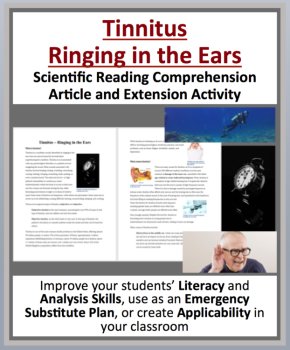
Tinnitus – Ringing in the Ears Reading Comprehension Passage and Questions. This resource is suitable for middle and high school students. Tackle literacy and science by having your students read and answer questions from a scientific article. Questions include knowledge (direct from the paper), thi
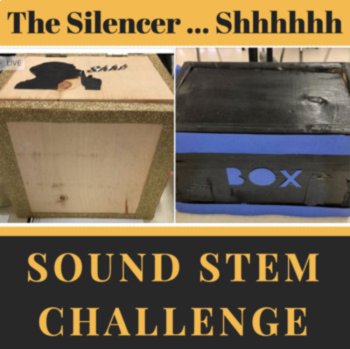
Your students' mission requires them to design and build a soundproofing container that will reduce noise as much as possible. In my opinion, learning about soundproofing is very important. I think students need to understanding that exposure to high levels of sound can lead to issues such as Tinnit
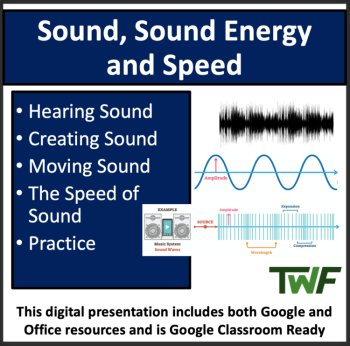
Sound, Sound Energy, and Speed. The lesson first reviews sound including how it is heard and how it is created. It then requires the students to perform an inquiry activity into how noise-canceling headphones work. Lastly, the speed of sound is examined including how its speed changes in different t
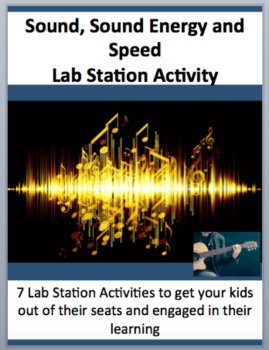
This fully editable Lab Station Activity on Sound, Sound Energy, and Speed is meant to get your students out of their seats and engaged in the content. Each station not only offers a unique opportunity to test your students knowledge (offer an opinion, answer questions based on a video or reading, d
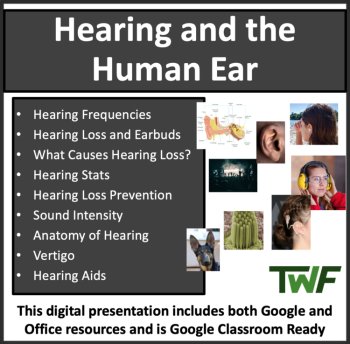
Hearing and the Human Ear - 1-2 day lesson package. This lesson package has both physics as well as biology elements. The main focus of the lesson is to provide information about hearing to students in regards to what kinds of sounds are heard, the possibility of hearing loss caused by everyday acti
No questions yet.

Meet the Seller
Middle and High School Science Engaging Resources
I have been selling resources to middle and high school teachers for the last 15 years. During that time I've also been in the classroom so I know what works and what will help your students the most.
Canada
$22.50 $34.75 (318)
$22.50 $33.50 (190)
$22.50 $33.00 (128)
$21.50 $35.00 (221)
$21.50 $34.00 (218)