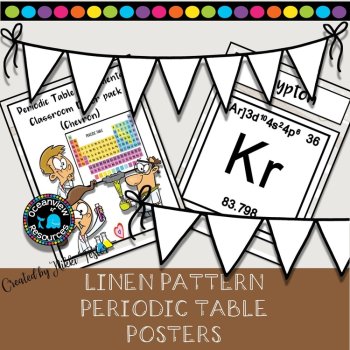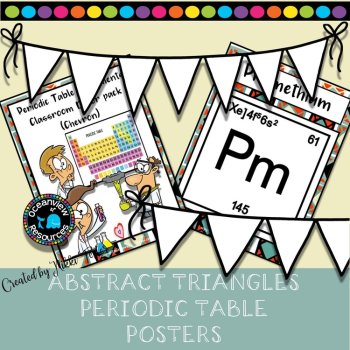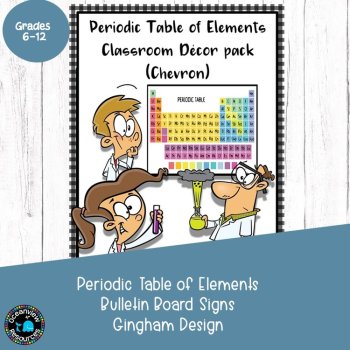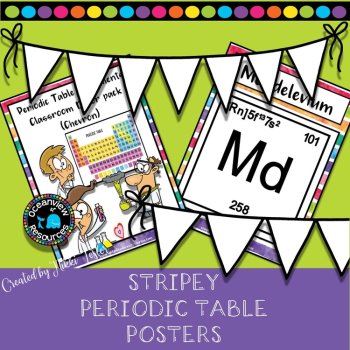

Science Posters- The Periodic Table-Brown Corduroy Design
$5.00 (1)

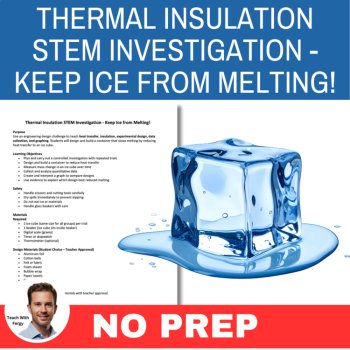
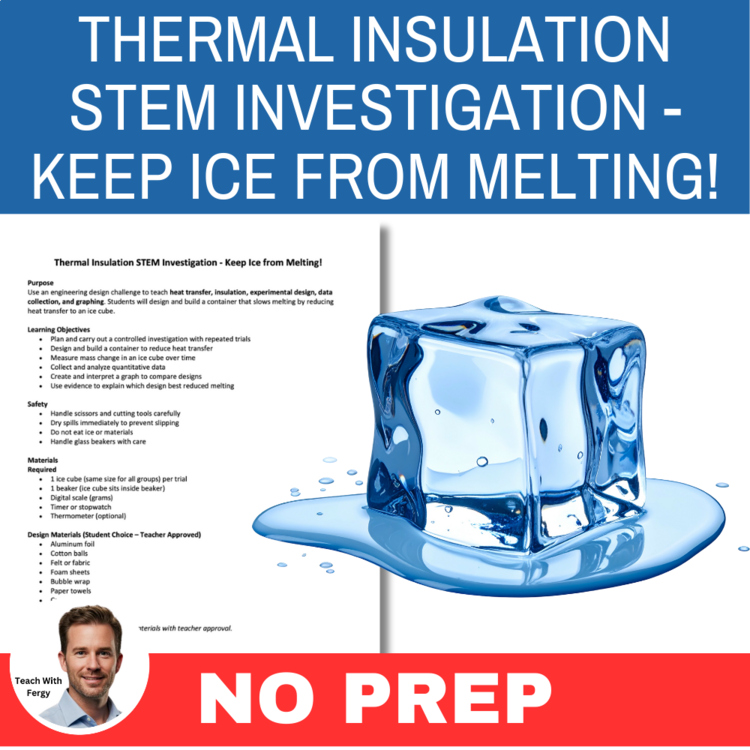
In this hands-on STEM investigation, students will explore heat transfer and thermal insulation by designing and building a container that keeps an ice cube from melting. Using common materials, students test how different insulation designs affect the rate at which ice melts when exposed to room temperature.
Students measure the mass of an ice cube before and after a set time period and calculate how much ice has melted. Through repeated trials, data collection, graphing, and a structured Claim–Evidence–Reasoning (CER) response, students connect insulation design to real-world heat transfer concepts in a clear, engaging way.
This investigation blends engineering design and physical science, allowing students to test, analyze, and improve their designs using evidence—just like real engineers and scientists.
What Students Will Learn
Learning Targets
What’s Included
Teacher Guide
Background explanations of heat transfer (conduction, convection, radiation), setup guidance, safety notes, classroom management tips, and common student misconceptions with fixes. Includes implementation notes to ensure fair testing and consistent data collection.
Student Packet
Hypothesis prompt, variables chart, step-by-step design and testing instructions, structured data tables, graphing task, analysis questions, and a guided CER response.
Analysis & Answer Key
Sample data, expected patterns, completed data tables, graph examples, detailed reasoning explanations, CER model responses, and common error notes.
Rubric
Assesses experimental design, data collection accuracy, graphing quality, scientific reasoning, CER strength, collaboration, and safety.
Why Teachers Love It
➡️ You can get this STEM as well as all my other ones in this series inside my STEM Investigations Growing Bundle. As more labs are added, the price will increase. CLICK HERE to have a look
Best For
Physical Science (thermal energy, heat transfer), energy units, engineering design, lab skills, graphing, CER writing, STEM investigations, or sub-friendly hands-on lessons.
Materials Needed
Ice cubes (same size per group), beaker or clear container, digital scale (grams), timer, insulation materials (foil, cotton, foam, cardboard, paper towels, etc.), scissors, student packet (included).
Estimated Timing
1 class period for design → testing → data collection → graphing → CER writing
Optional extension for redesign and improvement discussion
➡️ You can get this activity inside my STEM Investigations Growing Bundle.
I also have the following STEM Labs in My Store:
NGSS alignment
MS-PS3-3, MS-PS3-4 (Energy & Energy Transfer)
Practices: Planning & Carrying Out Investigations; Analyzing Data; Using Mathematics & Computation; Constructing Explanations; Argument from Evidence
Assessment
Use the included rubric to score experimental design, procedure consistency, data accuracy, graphing quality, scientific reasoning, CER strength, collaboration, and safety.
Report this resource to Linked Through Learning
Reported resources will be reviewed by our team. Report this resource to let us know if this resource breaks our rules.
No questions yet.

Meet the Seller
Middle and High School Science Engaging Resources
I have been selling resources to middle and high school teachers for the last 15 years. During that time I've also been in the classroom so I know what works and what will help your students the most.
Canada