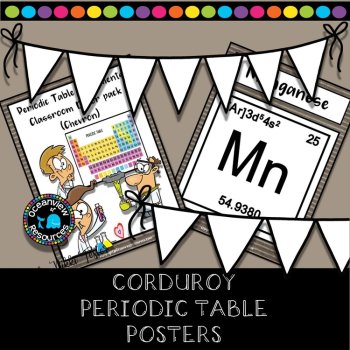
Science Posters- The Periodic Table-Brown Corduroy Design
$5.00 (1)

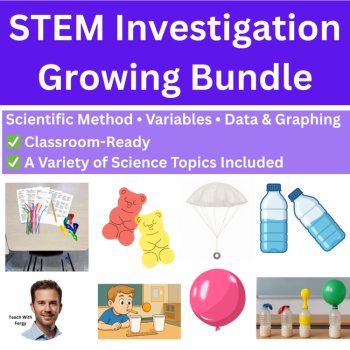
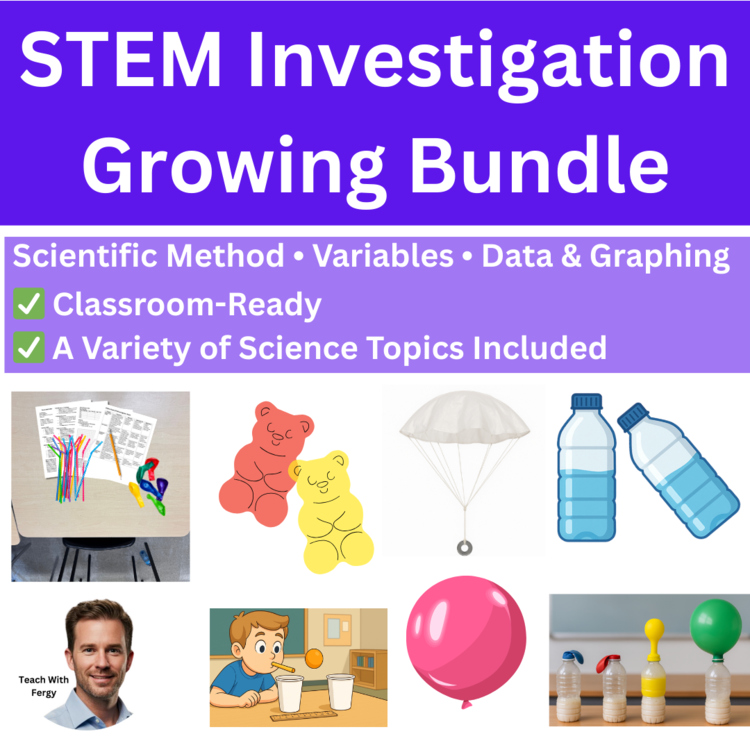
Build a high-engagement, low-prep STEM program that grows with you. This Growing Bundle collects my best STEM investigations—each one built around true engineering design, fair testing, repeated trials, data tables, graphing, and CER writing. Buy once and get every future lab added to this bundle at no extra cost (price increases as new labs are added).
What Students Do
STEM Labs Currently Included
What’s Included in Every Lab
Growing Bundle Promise: The price will increase as new investigations are added. Purchase now to lock in all future additions for free via TpT updates.
Why Teachers Love It
NGSS Alignment
Materials
Every lab uses readily available, budget-friendly supplies (full lists included)—think paper, tape, string, cups, balloons, rulers, coins, food-safe reactants, etc.
Tip: Add this bundle to your year-long STEM rotation. Start with simpler build-tests (Blow Cup, Paper Table), then progress to dynamics (Pendulum, Parachute, Catapult), flight/rotation (Paper Airplane/Helicopter, Bottle Flip), gas-generation design (Yeast & Balloon Lift), and finish with energy analysis (Candy Calorimetry).
Report this resource to Linked Through Learning
Reported resources will be reviewed by our team. Report this resource to let us know if this resource breaks our rules.
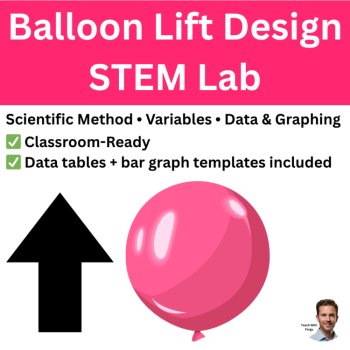
Turn a bottle, balloon, and household ingredients into a full engineering-design challenge! Students test how different amounts of baking soda affect CO₂ gas production and balloon lift.The lab emphasizes variables, fair testing, repeated trials, data collection, graphing, and CER writing—perfect fo
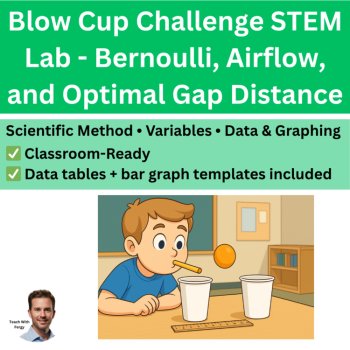
Engage your students with a fast-paced, low-prep engineering and physics lab that turns two cups and a table tennis ball into a rich investigation of airflow and pressure. Students use the full scientific method to test how the gap between two cups affects the success rate of transferring a ball by
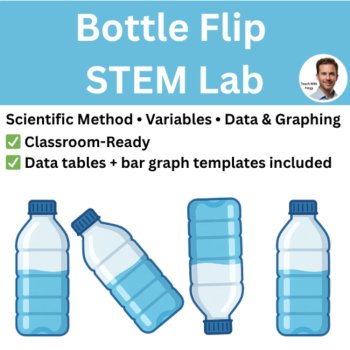
Turn a student-favorite challenge into a STEM and Scientific Method investigation. This print-and-go lab walks middle schoolers through the full scientific method as they test how bottle fill level impacts upright landing success. This lab is also appropriate for early high school as well.Students p
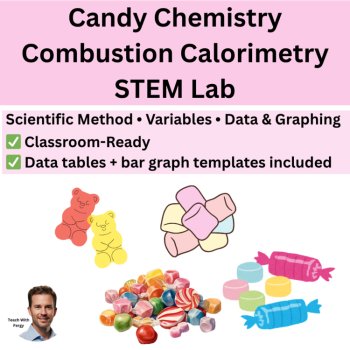
Turn everyday candy into a rigorous calorimetry and energy conservation investigation. Students burn a small candy sample under a soda-can calorimeter, measure the water’s temperature change, calculate q = m·c·ΔT, and estimate energy per gram (J/g and kcal/g)—then deduce from evidence which candy ha
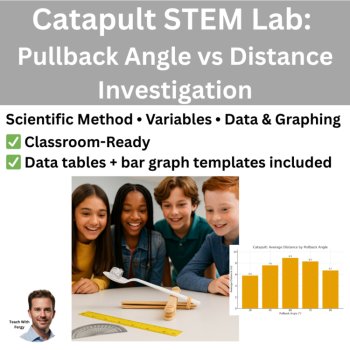
Turn a classic popsicle-stick catapult into a rigorous, print-and-go STEM investigation. Students test how pullback angle (tension) affects projectile distance, practicing the full scientific method from variables and fair tests to data analysis and evidence-based conclusions. A clear teacher guide
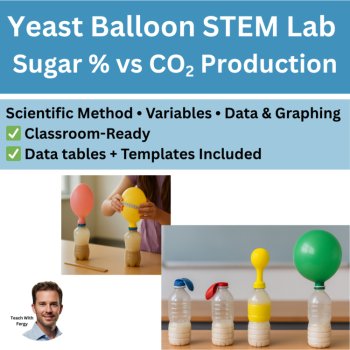
Turn a cup, balloon, and pantry ingredients into a full scientific-method investigation. Students explore how sugar concentration changes yeast fermentation by measuring balloon circumference as a proxy for CO₂ volume. The lab emphasizes variables, fair testing, repeated trials, graphing, and CER wr
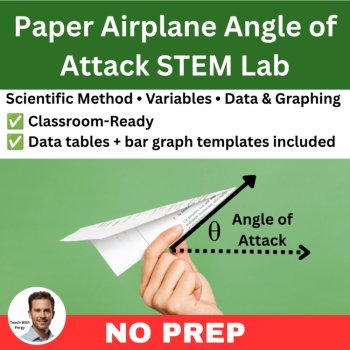
Resource DescriptionTurn a favorite classroom activity into a rigorous, print-and-go STEM investigation. In this lab, students test how a paper airplane’s angle of attack changes flight distance while practicing the full scientific method. Learners define variables and controls, follow a consistent
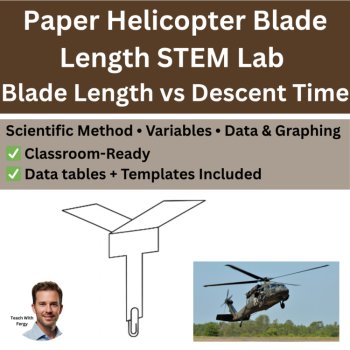
Turn a single sheet of paper into a powerful investigation of forces and motion. In this hands-on lab, students build and test paper “whirlybirds” with different blade lengths to determine how blade size affects descent time. The activity emphasizes testing, data quality, graphing, and claim–evidenc
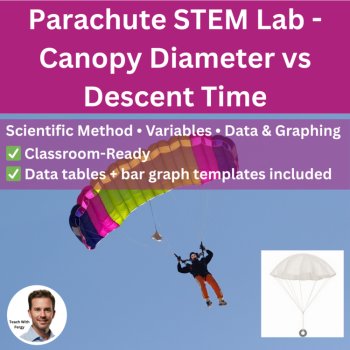
Turn a simple parachute build into a rigorous, print-and-go STEM investigation. Students test how canopy diameter affects descent time, practicing the full scientific method: defining variables and controls, following a consistent drop procedure, recording 10 trials per size, calculating averages, a
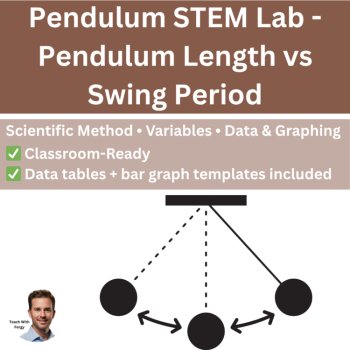
Give students a true inquiry experience: they build a simple pendulum, change only the string length, and use repeated timings to determine how the period changes with length. The packet guides them from planning a fair test to organizing data, averaging, and graphing—then wrapping up with clear CER
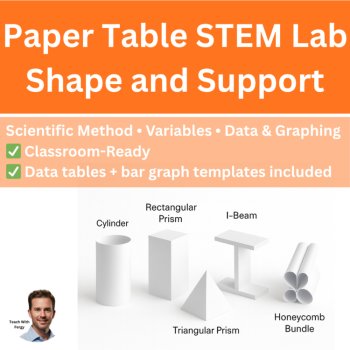
Give students a fast, hands-on engineering investigation: build a paper “table,” change only the support shape, and measure which design holds the greatest load. With tight build rules and simple materials, students plan a fair test, collect one clear data point per shape, and create a comparison ba
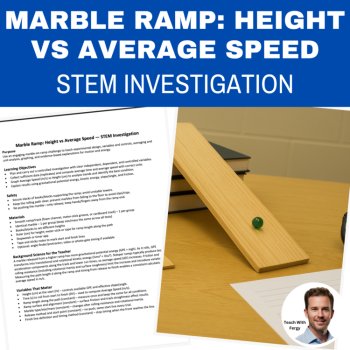
Give students a fast, hands-on motion investigation: set up a simple marble ramp, change only the ramp height, and measure how height affects average speed. With clear test rules and simple materials, students plan a fair test, collect multiple times for each height, calculate average speed, and cre
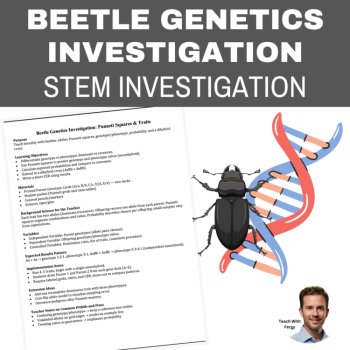
Give students a fast, hands-on genetics investigation: simulate beetle heredity, change only the parent genotypes, and use Punnett squares to predict and compare offspring outcomes. With print-and-cut genotype cards and clear scaffolds, students run multiple monohybrid crosses, extend to one dihybri
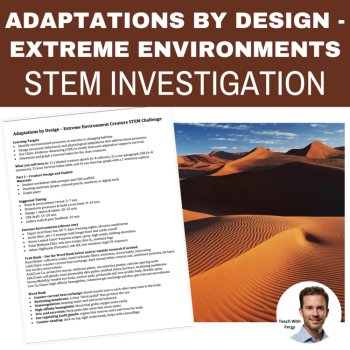
Students will design a biologically plausible organism, choose one extreme environment, and justify how its adaptations solve real environmental pressures. With a trait bank, word bank, a structured CER, and a Survival Index that rolls into a class bar graph, students connect structure → function →
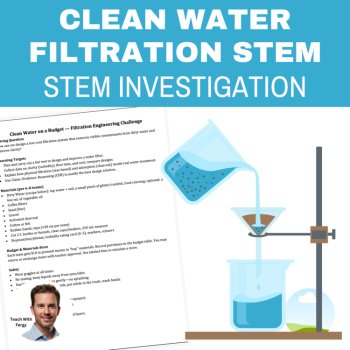
Give students a fast, hands-on engineering investigation: build a low-cost water filter, change only one design choice at a time (layer order, thickness, sealing, or adding charcoal), and measure which design makes the clearest water the fastest—all while staying under a classroom budget cap. With t
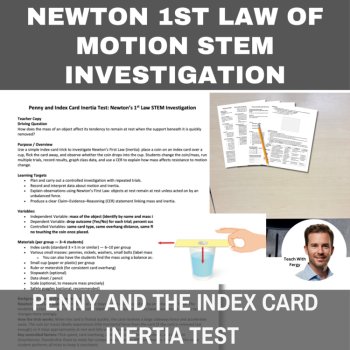
Students will investigate Newton’s First Law of Motion by testing how different masses behave when the support beneath them is removed rapidly. Using an index card, a coin, and a cup, students flick the card to observe whether objects of varying mass drop straight into the cup or move with the card.
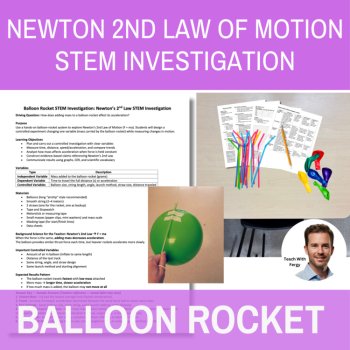
Students will investigate Newton’s 2nd Law of Motion by testing how changing the mass carried by a balloon rocket affects its acceleration. Using a taut string track, a straw, a balloon, and removable mass clips, students run repeated launches to measure travel time and calculate average speed. Thro
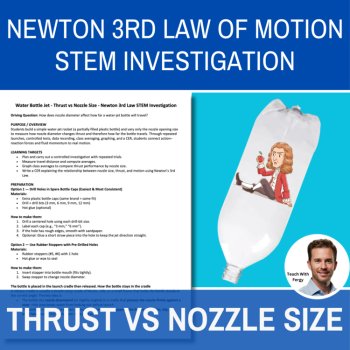
Students will investigate Newton’s 3rd Law of Motion by testing how changing the nozzle opening of a water-powered bottle jet affects the distance it travels. Using a plastic bottle, interchangeable bottle-cap nozzles with different hole diameters, and a simple launch cradle, students observe how th
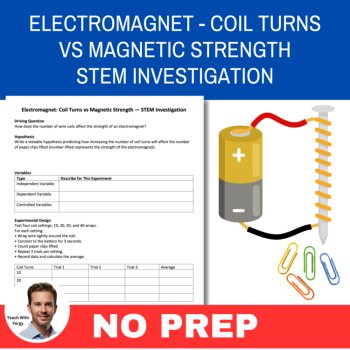
Students will investigate electromagnetism by building their own classroom-made electromagnets and testing how changing the number of wire coils affects magnetic strength. Using an iron nail, insulated wire, a battery, and paper clips, students observe how electric current creates a magnetic field a
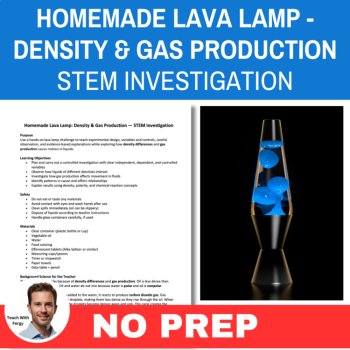
Students will investigate density, polarity, and gas production by creating a homemade lava lamp and testing how adding different amounts of an effervescent tablet affects liquid motion. Using oil, water, food coloring, and tablets, students observe how gas bubbles change density, causing colored li
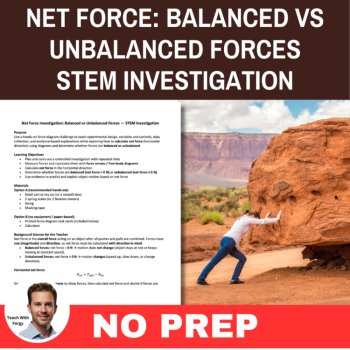
In this hands-on STEM investigation, students will explore net force, balanced forces, and unbalanced forces by analyzing force interactions in the horizontal direction. Using force diagrams and simple calculations, students learn how multiple forces act on an object and how to determine whether tho
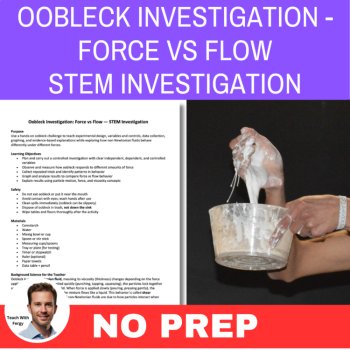
Students will investigate non-Newtonian fluids by creating oobleck and testing how different types of force affect whether it behaves like a solid or a liquid. Using cornstarch and water, students observe how fast force causes oobleck to act solid while slow force allows it to flow like a liquid. Th
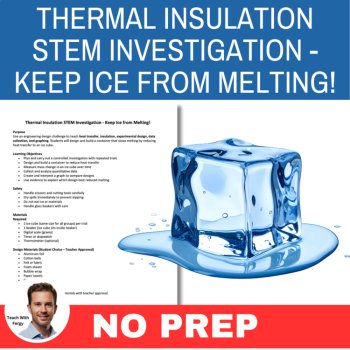
In this hands-on STEM investigation, students will explore heat transfer and thermal insulation by designing and building a container that keeps an ice cube from melting. Using common materials, students test how different insulation designs affect the rate at which ice melts when exposed to room te

In this hands-on STEM investigation, students explore freezing point depression and phase changes by testing how adding different amounts of salt affects how quickly ice melts. Using real-world winter road safety as the context, students investigate why salt is spread on icy roads and how it changes
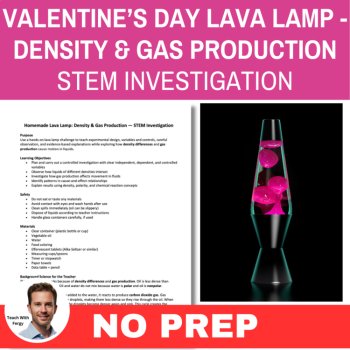
Students will investigate density, polarity, and gas production through a Valentine’s Day–themed lava lamp investigation. Using oil, water, food coloring in Valentine colors, and heart-themed effervescent tablets, students explore how chemical reactions can make liquids move in surprising ways—perfe
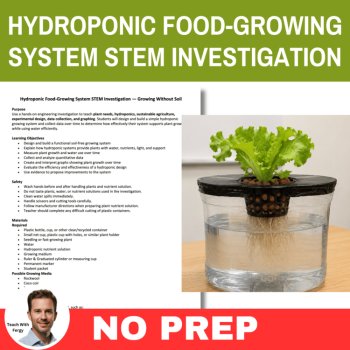
Students will investigate hydroponics, plant growth, and sustainable food production by designing and building their own soil-free food-growing system. Using a simple reservoir, nutrient solution, growing medium, and fast-growing plant, students explore how plants can receive the water and nutrients
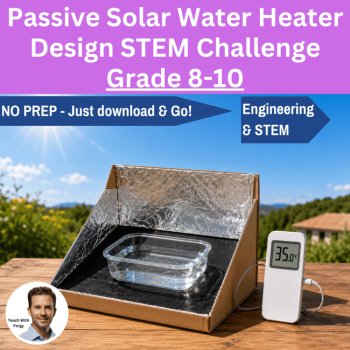
Passive Solar Water Heater Design Challenge | Solar Energy STEM Project and Graphing LabIn this project, your students will research, design, build, and test a passive solar water heater using simple classroom materials. Students explore how solar energy can be used to warm water and how design choi
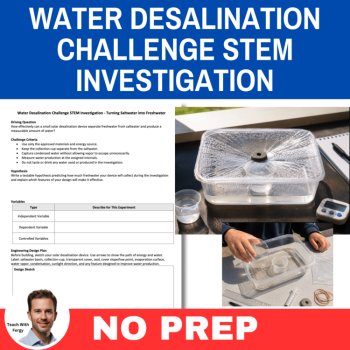
Students will investigate water desalination, phase changes, and sustainable freshwater production by designing and building their own solar desalination device. Using a shallow basin, prepared saltwater, collection cup, transparent cover, and solar energy, students explore how evaporation and conde

Students will investigate yeast, cellular energy use, and the characteristics of living things by comparing yeast under four different experimental conditions. Using bottles, balloons, sugar, yeast, and warm and cold water, students explore how the presence of yeast, sugar availability, and temperat
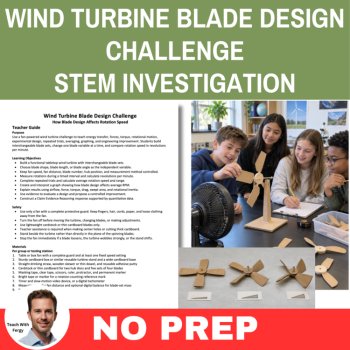
Students will investigate wind energy, turbine blade design, and rotational motion by designing and testing their own fan-powered model wind turbine. Using a guarded fan, reusable turbine stand, rotating axle, and interchangeable blade sets, students explore how blade shape, length, or angle affects
No questions yet.

Meet the Seller
Middle and High School Science Engaging Resources
I have been selling resources to middle and high school teachers for the last 15 years. During that time I've also been in the classroom so I know what works and what will help your students the most.
Canada

AI Assisted
I develop the ideas, plan the activities, and guide the creation of all resources. AI tools assist with writing, illustrations, and design. Every resource is reviewed, edited, and refined using my teaching experience to ensure quality, accuracy, and meaningful real-world learning.
$6.38 $7.98

AI Assisted
I develop the ideas, plan the activities, and guide the creation of all resources. AI tools assist with writing, illustrations, and design. Every resource is reviewed, edited, and refined using my teaching experience to ensure quality, accuracy, and meaningful real-world learning.
$7.60 $9.50