
Human Evolution Virtual Jigsaw Activity
 Ms Kiaras Science Teacher Shoppe
$4.00

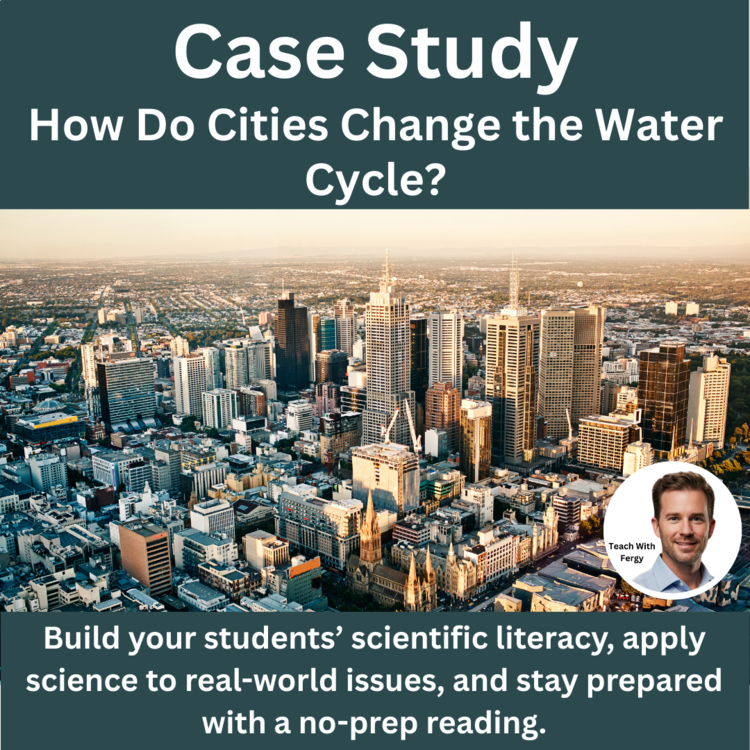
Ecology Case Study “How Do Cities Change the Water Cycle?”
This resource provides an engaging look at how urbanization alters the movement and availability of water within the water cycle. Students explore how replacing natural landscapes with roads, buildings, and other impermeable surfaces changes the way water flows through Earth’s systems.
Through this real-world case study, students build scientific literacy while developing a deeper understanding of the water cycle by examining how cities affect runoff, infiltration, evaporation, transpiration, and groundwater recharge.
Students investigate why impermeable surfaces increase flooding risk, how reduced vegetation alters transpiration, and how the urban heat island effect influences evaporation. They also explore how human water use and wastewater systems change local water flow and water quality.
The case study highlights the consequences of urban development on groundwater supplies and nearby ecosystems. Students learn why aquifers beneath cities recharge more slowly and how this can affect wells, rivers, and plants that rely on groundwater. Finally, the reading introduces sustainable solutions such as green roofs, permeable pavement, rain gardens, and increased vegetation, showing how thoughtful city design can reduce negative impacts on the water cycle.
This resource encourages students to connect human activities to Earth’s systems and consider how science-based planning can help balance environmental needs with urban growth.
Your reading contains ~400-500 words plus 5 questions and their answers.
This resource is suitable for students in grades 7-10. Tackle literacy and science by having your students read and answer questions from a scientific article.
No prep, no formatting, no issues. Simply download, project, print (or upload to your class site) and you're all set.
Google Classroom and Distance Learning Ready
This resource will take your students between 30-45 minutes to complete and includes some open-ended questions. An answer key is also included for your reference.
What Teachers Say about my Case Studies
⭐️⭐️⭐️⭐️⭐️ Extremely satisfied - My students loved this resource! Very engaging and highly recommend.
⭐️⭐️⭐️⭐️⭐️ Extremely satisfied - My students love these! Excellent for extended practice.
⭐️⭐️⭐️⭐️⭐️ Extremely satisfied - A great sub plan! Thank you for a great resource!
⭐️⭐️⭐️⭐️⭐️ Extremely satisfied - Thank you so much for the great activity. Great to use after notes.
⭐️⭐️⭐️⭐️⭐️ Extremely satisfied - I used this material as a part of an ongoing project for the end of the year. This was a great addition to the lesson.
If you're teaching Ecology, you'll also be interested in my Ecology and Sustainable Ecosystems Unit. It includes 9 lessons and many engaging activities to help your students gain a full understanding of ecology and ecosystems.
If you have any questions please feel free to send me an email - devon@teachwithfergy.com
Report this resource to Linked Through Learning
Reported resources will be reviewed by our team. Report this resource to let us know if this resource breaks our rules.
No questions yet.

Meet the Seller
Middle and High School Science Engaging Resources
I have been selling resources to middle and high school teachers for the last 15 years. During that time I've also been in the classroom so I know what works and what will help your students the most.
Canada
$32.50 $50.00 (398)
$22.50 $34.50 (169)