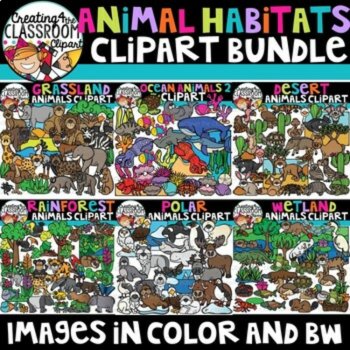
Animal Habitats Clipart MEGA Bundle – 6 Sets
$32.50 $50.00 (398)

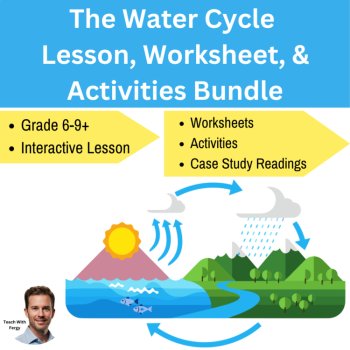
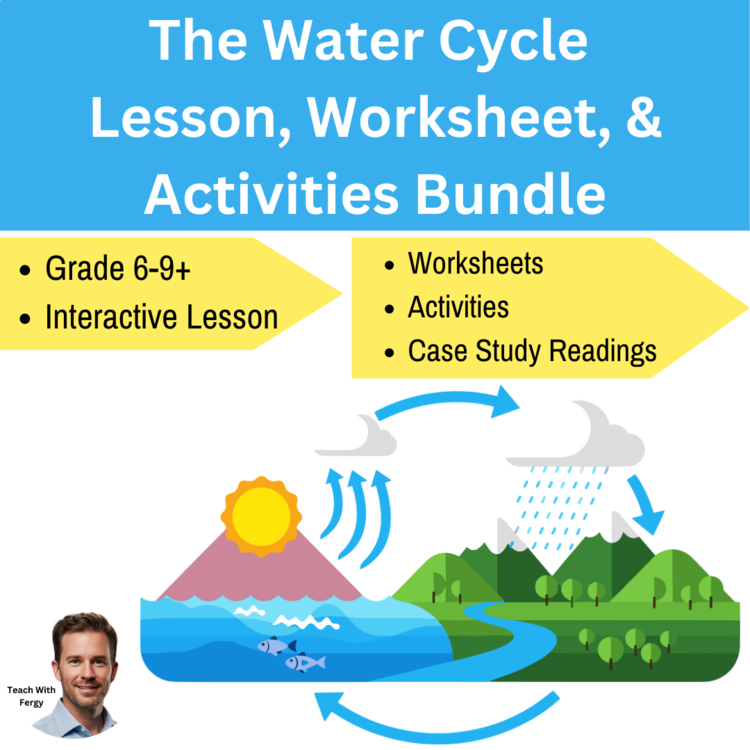
The Water Cycle Bundle - Lesson, Worksheets, & Activities | Hydrologic Cycle
$16.70 $9.46
Get BundleThe NO-PREP bundle includes a lesson, worksheets, labs, activities, a reading, and multiple case studies on the Water Cycle
Students will build a deep, evidence-based understanding of the water cycle as a dynamic Earth system through a carefully sequenced combination of explicit instruction, hands-on labs, scientific reading, and vocabulary reinforcement.
Specifically, the bundle includes:
This bundle moves students from foundational concepts to real data collection and explanation—making the water cycle meaningful, observable, and scientifically rigorous.
Designed for middle school (grades 6–9) and adaptable through early high school, this bundle supports conceptual understanding, scientific literacy, and NGSS-aligned practices.
What Students Will Learn
Across lessons, labs, and literacy activities, students will:
What’s Included in This Bundle
Water Cycle Labs Bundle (3 Investigations)
Students explore evaporation through progressively more complex investigations:
Each lab includes teacher guides, student packets, data tables, graphing tasks, answer keys, and rubrics.
Water Cycle Lesson (1–2 Days)
A complete, student-friendly lesson introducing the water cycle and its pathways, including:
Includes:
Student slides include embedded fill-in-the-blank prompts to maximize engagement without excessive note-taking.
Water Cycle Reading Comprehension & Questions
A no-prep scientific reading that builds disciplinary literacy, covering:
Includes knowledge, thinking, connecting, application, and open-ended questions—plus a complete answer key.
Water Cycle Vocabulary: Word Search & Word Scramble
A flexible, differentiated vocabulary resource featuring:
Covers 25 essential water cycle terms with full answer keys and definitions.
Why Teachers Love This Bundle
NGSS Alignment
MS-ESS2-4
Additional connections: HS-ESS2-4, HS-ESS2-5, HS-PS1-3
Practices: Planning & Carrying Out Investigations; Analyzing & Interpreting Data; Developing & Using Models; Constructing Explanations; Argument from Evidence
Report this resource to Linked Through Learning
Reported resources will be reviewed by our team. Report this resource to let us know if this resource breaks our rules.
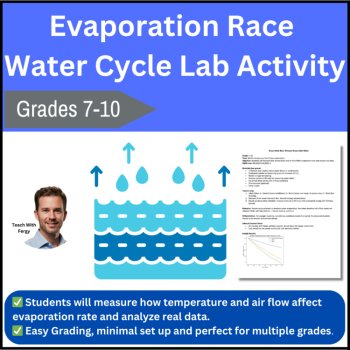
Students will investigate evaporation in the water cycle by measuring how temperature and air flow affect evaporation rate. Using identical shallow dishes filled with equal volumes of water, students set up control, warm, and wind conditions and track changes in water volume over time. Through repea
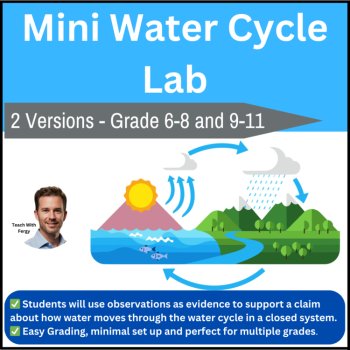
Students will model the water cycle in a closed system by creating a mini “water cycle” using a sealed clear bag. By adding energy from sunlight or a lamp, students observe evaporation, condensation, and water movement over time. Through structured observations, optional temperature tracking, and a
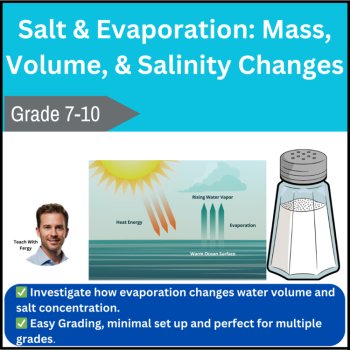
Students will investigate how evaporation changes water volume and salt concentration by comparing freshwater, ocean-like salinity, and high-salinity solutions over multiple days. Using shallow dishes, measured salt masses, and repeated mass or volume measurements, students track evaporation and cal
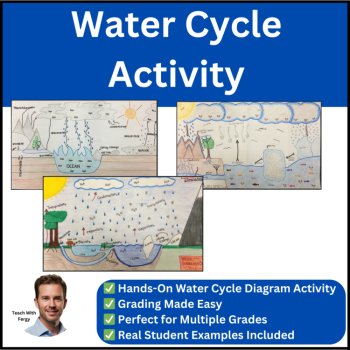
This activity allows your students to creatively demonstrate their understanding of the water cycle. Your students will use their varied learning styles to complete this assignment and get a better appreciation for the cycle through hands-on learning. ✅ Hands-On Water Cycle Model – Engage students
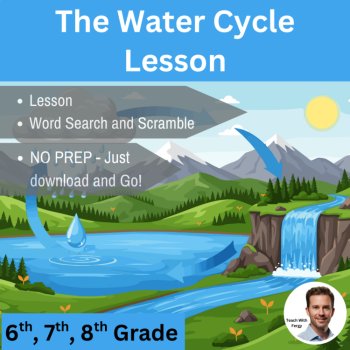
The Water Cycle Middle School - This earth science lesson is specifically designed for 6th, 7th, and 8th grade science and covers the NGSS MS–ESS2-4 Standard. It is meant to be done over 1-2 day(s). The lesson overviews the water cycle and what we mean that water is cycled from location to location
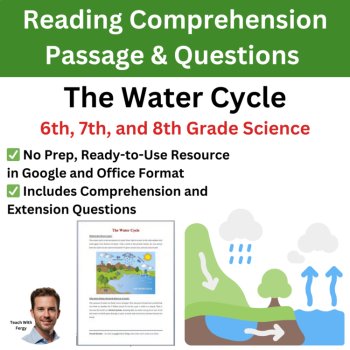
Tackle literacy and science by having your students read and answer questions from a scientific article about the Water Cycle. Questions include knowledge (direct from the paper), thinking, connecting, application, and open-ended varieties.The Reading Looks at:- What is the water cycle?- Why Does Wa
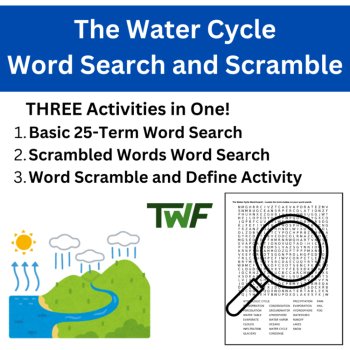
Word Search and Scramble - The Water Cycle. Ensure your students are challenged by selecting the correct level of difficulty.What’s Inside: Designed for students in middle and high school, this activity is actually three-in-one. 1) Simple Word Search Using 25 common Water Cycle terms - see below.2)
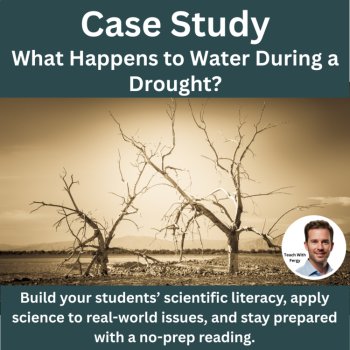
Ecology Case Study "What Happens to Water During a Drought?"This resource provides an engaging look at how droughts affect the movement and availability of water within the water cycle. Students will explore how long periods of low precipitation disrupt Earth’s systems and impact both natural enviro
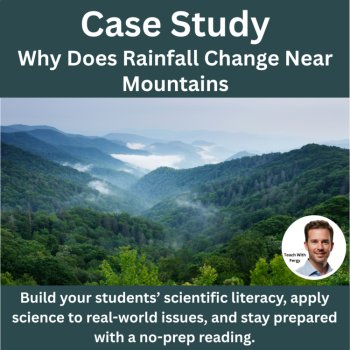
Ecology Case Study "Why Does Rainfall Change Near Mountains"This resource provides an engaging look at how mountains shape and determine rainfall and impact the water cycle. Students will explore how natural land formations help determine rainfall on both sides of a mountain.Through this real-world

Ecology Case Study “How Do Cities Change the Water Cycle?”This resource provides an engaging look at how urbanization alters the movement and availability of water within the water cycle. Students explore how replacing natural landscapes with roads, buildings, and other impermeable surfaces changes
No questions yet.

Meet the Seller
Middle and High School Science Engaging Resources
I have been selling resources to middle and high school teachers for the last 15 years. During that time I've also been in the classroom so I know what works and what will help your students the most.
Canada
$32.50 $50.00 (398)
$22.50 $34.50 (169)
$18.50 $36.50 (84)