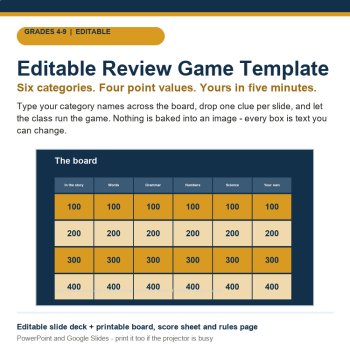
Editable Review Game Template | Whole Class Review | Grades 4-9

$5.99

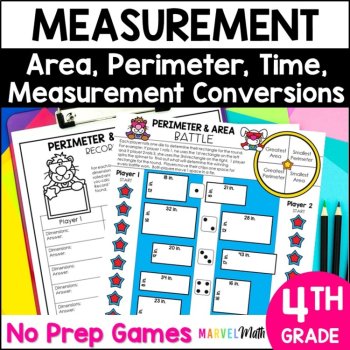
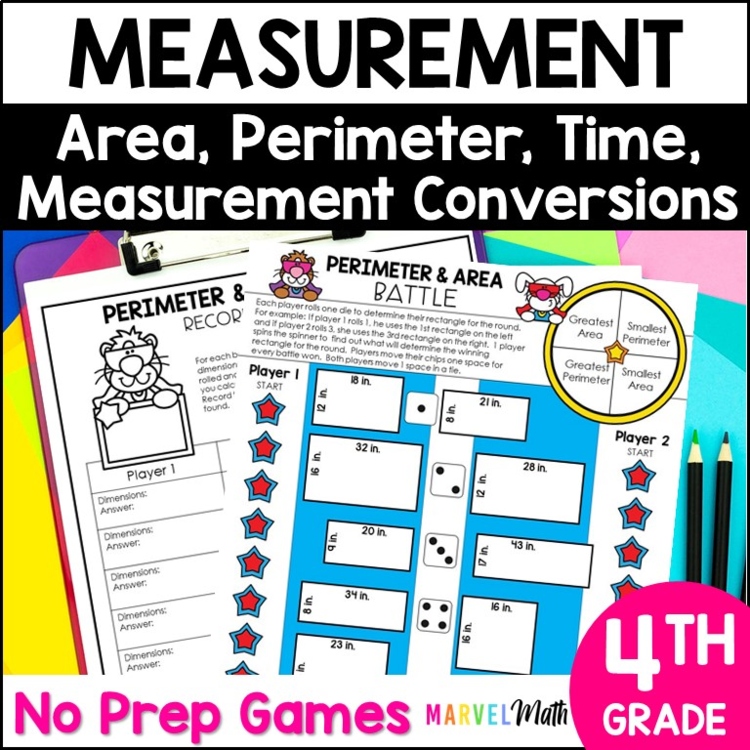
4th Grade Measurement Conversions, Area and Perimeter, Elapsed Time Games
(35 ratings)$6.00
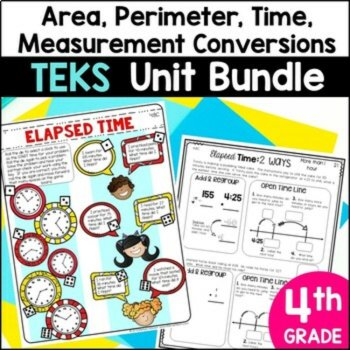
Add to cartYour students will love these Fun 4th Grade Measurement Conversions, Area and Perimeter, Relative Sizes of Measurement Units and Elapsed Time Word Problems Games! Students will be engaged while playing each of these games that practice challenging measurement topics.
What Topics are Covered?
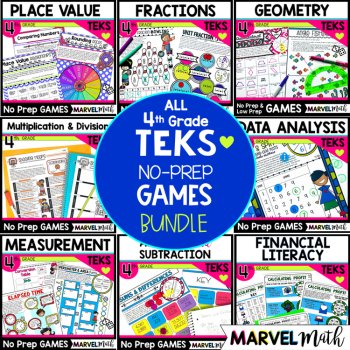
This resource is part of this time saving, discounted bundle:
❤ 4th Grade Measurement Unit and Bundle ❤
What's Included?
How Can I use these Games?
Games in this Resource:
Standards Covered
TEKS:
Common Core:
Report this resource to Linked Through Learning
Reported resources will be reviewed by our team. Report this resource to let us know if this resource breaks our rules.
“This was a great addition to my learning stations! The activity was easy to set up, engaging for students, and provided meaningful practice with the skill. My students enjoyed working through the activity, and it kept them focused and involved.”
“My students absolutely loved these games during our conversions unit!”
For Equal Groups Multiplication and Division Word Problems Strip Diagrams 3rd grade
This was wonderful practice for my students in small group! Great visuals
Rebekah H.
Grades taught: 3rd
For 3rd Grade Math STAAR Review - Math Test Prep Games
Thank you for providing this great resource, much appreciated!
Cecilia C.
Grades taught: 1st, K, 2nd
For 4th Grade Math STAAR Review - Math Test Prep Games
Thank you for providing this great resource, much appreciated!
Cecilia C.
Grades taught: 1st, K, 2nd
For 3rd Grade Math TEKS STAAR Review Task Card Bundle - Print
Thank you for providing this great resource, much appreciated!
Cecilia C.
Grades taught: 1st, K, 2nd
For Multiplication and Division Practice - 4th Grade TEKS - Online STAAR Review
This review of Multiplication and Division was a great resource for my classroom!
Julia B.
For 4th Grade Math STAAR Review - Math Test Prep Games
"This resource is an absolute game-changer for teaching Unit 3 in 4th grade! If you are feeling overwhelmed by the dense teacher manuals or spending hours trying to format your own presentations, do yourself a favor and buy this right now. The slides are completely no-prep, beautifully designed, and student-friendly. Every single lesson includes clearly stated learning targets right at the beginning, which keeps my students focused and aligns perfectly with our instructional goals. I especially love the embedded anchor charts and direct hyperlinks—they save me so much transition time during lessons because I don’t have to hunt for materials across different tabs or manuals. The included student worksheets and guided practice prompts provide wonderful scaffolding that keeps student engagement high and supports all learners, including my emerging bilinguals and students who need extra support. It breaks down complex concepts into bite-sized, manageable pieces without watering down the curriculum. Thank you for creating such a polished, time-saving, and effective teaching tool! It has easily cut my planning time in half and made our daily lessons run seamlessly."
Michelle C.
Grades taught: PreK, K, 1st, 2nd
For 3rd Grade Addition and Subtraction Worksheets TEKS 3.4A 3.4B 3.4C 3.5A
"This resource is an absolute game-changer for teaching Unit 3 in 4th grade! If you are feeling overwhelmed by the dense teacher manuals or spending hours trying to format your own presentations, do yourself a favor and buy this right now. The slides are completely no-prep, beautifully designed, and student-friendly. Every single lesson includes clearly stated learning targets right at the beginning, which keeps my students focused and aligns perfectly with our instructional goals. I especially love the embedded anchor charts and direct hyperlinks—they save me so much transition time during lessons because I don’t have to hunt for materials across different tabs or manuals. The included student worksheets and guided practice prompts provide wonderful scaffolding that keeps student engagement high and supports all learners, including my emerging bilinguals and students who need extra support. It breaks down complex concepts into bite-sized, manageable pieces without watering down the curriculum. Thank you for creating such a polished, time-saving, and effective teaching tool! It has easily cut my planning time in half and made our daily lessons run seamlessly."
Michelle C.
Grades taught: PreK, K, 1st, 2nd, 4th
For 4th Grade Math Review Bundle - Digital Task Cards - Online STAAR Practice
This really supported my 4th graders, and had great variety
Ashley D.
Grades taught: 4th
For 2 Digit by 2 Digit Multiplication Worksheets with Mazes - 2x2 Multiplication
Great resource to give kids extra practice in a fun way.
Meghan F.
Grades taught: 3rd, 4th
For 3rd Grade Multiplication and Division Unit TEKS - Notebook, Worksheets, Games
These bundles are an absolute must have. They have everything you need to teach the unit.
Teach J.
Grades taught: 3rd
For 3rd Grade Addition and Subtraction Unit - Word Problems, Regrouping TEKS
These resources are simply a must have. There are lots of activies to choose from. Thank you!
Teach J.
Grades taught: 3rd
For Area of Composite Figures using Side Lengths - Interactive Google Slides
Really good for early finishers, they also love anything they can do on the computer!
Sara S.
Grades taught: PreK, K, 1st, 2nd, 3rd
For Math Interactive Notebook 4th Grade - TEKS Bundle
This interactive notebook has been very useful for reinforcing 4th grade math skills. The pages are organized, easy for students to follow, and work well for notes, review, and extra practice. I especially like having everything in one resource that aligns well with what we are teaching.
Jasmine T.
Grades taught: 5th, 4th
For Digital Game - Ten Times Place Value Relationships - Digital Math Stations
This is a great option for students who finish their work early.
Serafina D.
Grades taught: 3rd, 4th, 5th
For 3rd Grade Math Interactive Notebook Bundle - 3rd Grade Math TEKS
This is a fantastic resource for student math notebooks. This is my go-to resource following a lesson. Each page has a student-friendly definition/ explanation when needed and ample examples. The layout is clean, and the fonts are student-friendly. It also has an answer key for each page. Love this resource!
Kira C.
Grades taught: 3rd
For Place Value Charts to Support Expanded Notation and Place Value Relationships
This was SUPER HELPFUL FOR MY SMALL GROUP MATH! great source!
sassyclass2
Grades taught: 5th
For Use Multiplication to Solve Division - Connecting Multiplication and Division
This was perfect for my students to complete while practicing
Noelle C.
For No Prep Multiplication Games & Division Games for Math Stations
This resource was a great, yet short fact fluency practice. I set a timer for 5 minutes and my third graders had a blast practicing their facts.
carline S.
Grades taught: 5th, 3rd
For 5th Grade STAAR Review Math TEKS - Games, Assessments, STAAR Practice
This resource is great! I have set up stations using storage clipboards that have everything the kids need- the game board choices, the markers, the pieces, the dice, the task cards. These are wonderful!
Tiny T.
Grades taught: 4th, 5th
For 3 Digit Subtraction with Regrouping #1 - Base 10 Blocks - Subtracting in Space
Thank you for this! It was great to use with my class.
Edventures T.
Grades taught: 3rd
No questions yet.

Meet the Seller
In addition to my work in education, I also run a STEM-based Christmas Light Show business. When I'm not creating new math resources or working with teachers, I'm designing and fabricating light shows sequenced to music with my husband and our team. That business came about after our family was featured on ABC's The Great Christmas Light Fight. My son attends the University of Texas, Austin and I'm currently soaking up every last minute with my daughter, a high school senior.
San Antonio, Texas
 Unlocking Potential Educational Services,LLC
$3.95
AI Assisted
The seller says AI was used in making this resource, but didn't add details.
Unlocking Potential Educational Services,LLC
$3.00
Unlocking Potential Educational Services,LLC
$4.95
AI Assisted
Used AI to brainstorm word problem ideas.
Unlocking Potential Educational Services,LLC
$4.95
AI Assisted
Used AI to brainstorm word problem ideas.
Unlocking Potential Educational Services,LLC
$4.95