
20 Zen Decor Posters Growth Mindset Quotes Relaxing Watercolor Woodland Nature

$5.00 (1)

Student behavior can change across activities and times of day. This Airplanes student behavior point sheet gives teachers a consistent way to track daily behavior data, provide feedback, and measure progress toward a daily behavior goal.
When feedback is given inconsistently or recorded only at the end of the day, it can be difficult to identify patterns or determine whether a behavior plan is working. Teachers can use the completed daily behavior point sheet to see when the student is successful, when additional support is needed, and whether performance is improving over time.
Choosing a theme connected to the student’s interests can make the point sheet feel more personal and increase the student’s willingness to use it. The theme does not replace clear expectations, instruction, or meaningful reinforcement, but it can help create initial interest and buy-in.
Rather than relying on a general report that the student had a “good” or “difficult” day, the chart creates specific daily behavior data that can be reviewed with the student, shared with families, or used by the educational team.
Three Versions for Different Levels of Support
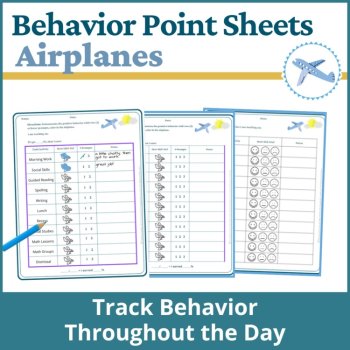
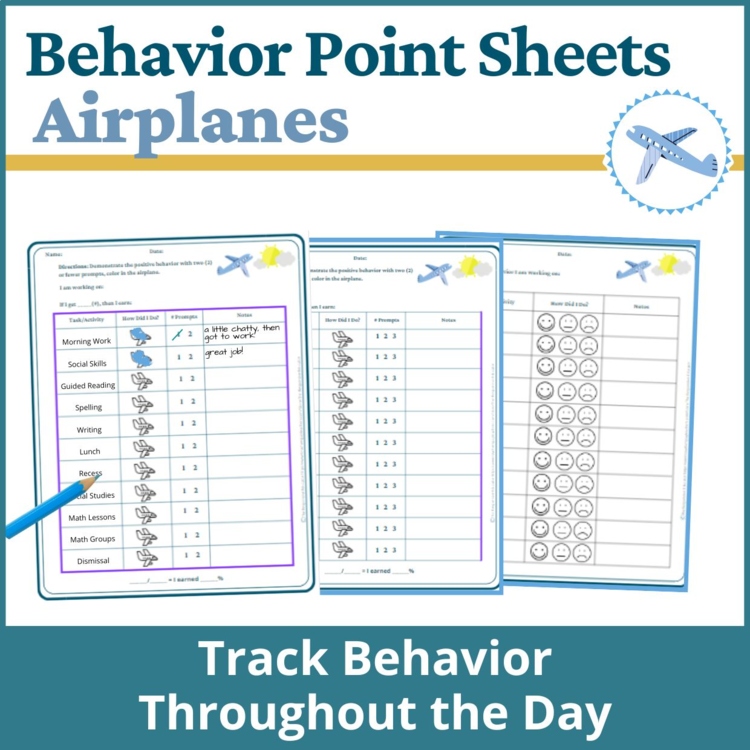
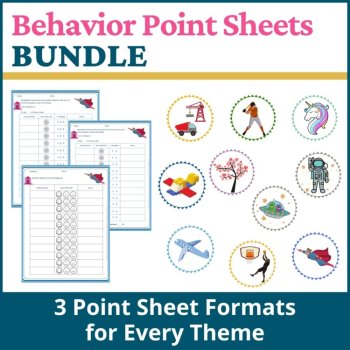
This resource includes three versions of the Airplanes point sheet:
Version 1: The student can color the design when they receive two or fewer prompts.
Version 2: The student can color the design when they receive three or fewer prompts, providing a more attainable starting point for students who currently need additional support.
Version 3: A smiley face behavior chart for younger students or students who benefit from simple visual feedback.
The different versions allow teachers to choose a scoring option that matches the student’s current needs. As the student becomes more independent, the criteria can be adjusted to encourage continued progress.
Create a Clear Daily Behavior Goal
A point sheet is most useful when the student knows exactly what behavior is being monitored and what success will look like. Use the fillable fields to enter the student’s name, target behavior, and daily schedule. Then establish an achievable percentage goal based on the student’s current performance.
During the day, the chart provides a consistent place to record how the student performed during each activity or time period. At the end of the day, the percentage earned can be compared with the student’s goal. This creates behavior goal data that is more useful than relying on memory or a general impression of the day.
When used consistently over time, the completed sheets provide daily behavior goal data that can help teams evaluate progress and make informed decisions about goals, prompting, and reinforcement.
How to Use the Point Sheet
Enter the student’s name, target behavior, and schedule in the fillable PDF fields, or print the sheet and complete it by hand.
Select the version that provides an appropriate level of support for the student.
Define and teach the target behavior so the student understands what is expected.
Set a realistic daily percentage goal based on the student’s current level of performance.
Have the teacher or student record performance consistently throughout the day. If the student is self-monitoring, review the ratings together until the student can evaluate their behavior accurately.
Review the completed chart with the student and acknowledge specific areas of success.
Record the percentage earned and use the results to monitor progress from day to day.
For the most accurate data, make sure that the adults using the chart agree on the target behavior, what counts as a prompt, and how each section will be scored.
Support Student Self-Monitoring, Reflection, and Accountability
Students can help mark the point sheet throughout the day or complete their own copy to compare with the teacher’s ratings. This gives them practice noticing their behavior, connecting their choices with the feedback they receive, and recognizing patterns across activities or times of day.
Self-monitoring can gradually reduce the student’s dependence on adults to tell them how they are doing. It also creates a more specific conversation than simply telling the student to “do better.” Students can identify where they were successful, where they needed more prompts, and what strategy they can try next time.
Self-monitoring should be taught rather than assumed. Teachers may need to model how to rate behavior, compare ratings with the student, and provide feedback until the student can evaluate their performance more accurately. This keeps the focus on building the underlying skill rather than only earning a reward.
Use the Data for Progress Monitoring
Completed sheets can be used to:
Track daily earned percentages
Identify patterns across activities, transitions, or times of day
Compare performance with the student’s daily behavior goal
Monitor whether prompting is decreasing over time
Share specific information with families and other team members
Support decisions about when goals or interventions need to be adjusted
For longer-term progress monitoring, use the recorded percentages with the Point Sheet for Behavior Graphing to graph the behaviors you are seeing (available separately).
Helpful for Daily Home Communication
The completed chart provides families with more information than a general good-day or bad-day report. It shows how the student performed across the day and gives families a clear starting point for recognizing progress and discussing areas that still need support.
What’s Included
Three versions of the Airplanes student behavior point sheet
Options based on two or fewer prompts, three or fewer prompts, or smiley face feedback
Fillable fields for entering student-specific information
Printable and digital use options
Guidance explaining three important elements of effective reinforcement
What “Editable” Means
This is a fillable PDF. You can type into the designated form fields to add information such as the student’s name, target behavior, and schedule. You may also print the chart and complete those areas by hand.
The form itself is not customizable. The page layout, graphics, directions, and other design elements cannot be moved, deleted, or changed.
Important Consideration
This daily behavior point sheet is designed for students who can wait until the end of the day to receive reinforcement connected to their daily goal. A student who is still learning to delay reinforcement may need more frequent feedback or access to reinforcement throughout the day.
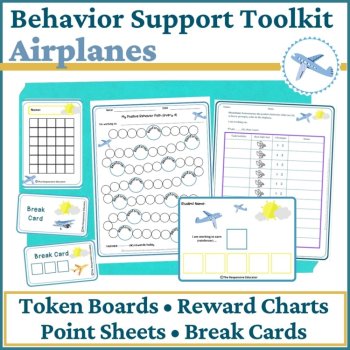
Additional token boards, behavior charts, and point sheets for different levels of support are available in The Responsive Educator store.
Report this resource to Linked Through Learning
Reported resources will be reviewed by our team. Report this resource to let us know if this resource breaks our rules.
No questions yet.

Meet the Seller
Behavior Support and Interventions
I provide resources that help teachers manage classroom behavior and teach social-emotional skills effectively. With over 20 years of experience in special education, I offer practical tools and strategies to support both teachers and students in achieving their best. I have been dedicated to supporting students with special needs since 2005, specializing in both behavioral and academic interventions. My extensive experience spans teaching in self-contained classrooms from grades K-12 and assisting general and special education teachers with managing significant behavioral challenges. As a former lead of an RTI committee and a behavior specialist, I have a deep understanding of effective classroom management strategies.
Florida