Fractured Fairy Tales- Create your own story

$4.25 (16)

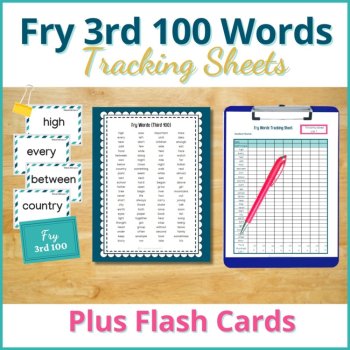
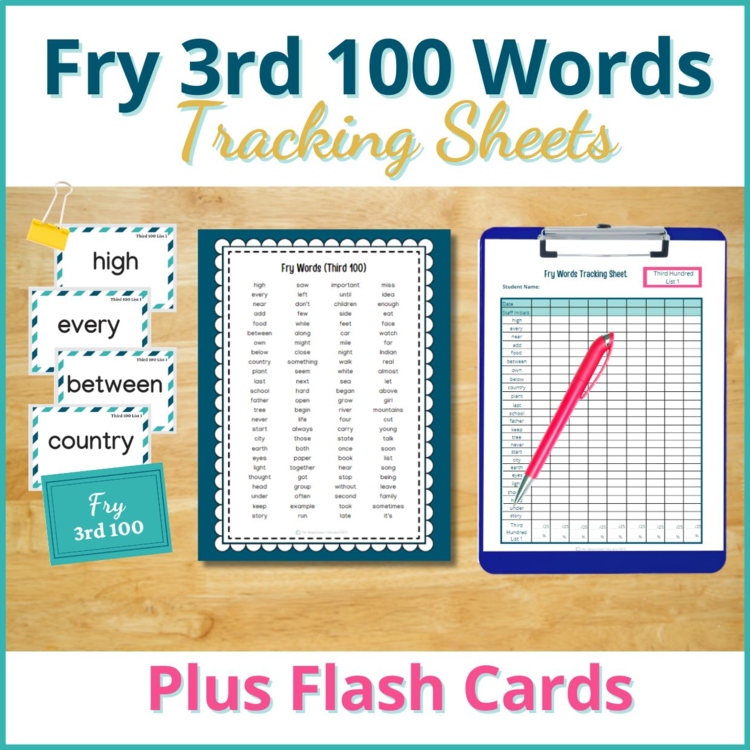
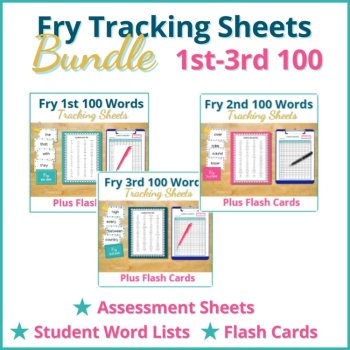
Fry Sight Words Checklist, Sight Words Flash Card 3rd 100
Continuing the journey of sight word mastery, the Fry Sight Words Checklist 3rd 100 builds upon the foundational assessment introduced in the first set of 100 Fry sight words.
Key Features
Maintaining the meticulous design of the preceding Fry checklist, this version encompasses the subsequent 100 Fry sight words. It retains the familiar layout of 9 columns per page, offering dedicated spaces for date recording, staff signatures, word tracking, and percentage calculations. This consistent format supports comprehensive and enduring assessment across multiple trials.
Available in both full-color and black-and-white versions, this resource remains adaptable to various printing requirements, ensuring flexibility across diverse classroom environments.
Focused Goal Setting
Continuing to empower educators, the Fry Sight Words Checklist 3rd 100 aids in establishing precise IEP goals that align with the newly introduced 100 Fry sight words, enabling educators to tailor learning objectives effectively.
Complementary Practice Tools
Accompanying this checklist are flashcards specifically designed for the third set of 100 Fry sight words. These flashcards serve as crucial reinforcement tools, facilitating consistent and effective practice sessions to bolster learning.
Why Learning the 3rd 100 Fry Sight Words Matters
Expanding beyond the initial 100 words, mastering this additional set significantly bolsters reading capabilities and overall language proficiency. This resource marks a pivotal step in enhancing reading fluency, bolstering confidence, and fostering continuous reading development.
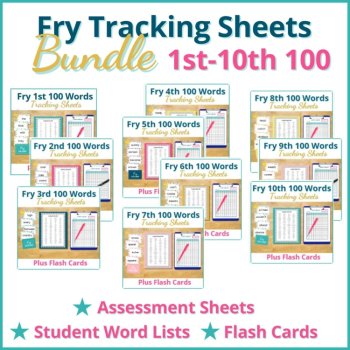
Advantages of Fry Words over Dolch Words The Fry Sight Words list is organized into 10 groups of 100 words each, covering the most frequently used words in writing. Starting with the initial 300 words in early education significantly boosts reading and comprehension skills. While Fry words aren't strictly tied to specific grades, they're usually introduced in sets of 100 words to support gradual sight word recognition. Here's a general guide for introducing these sets:
First 100 Fry Words: Typically introduced in kindergarten and first grade.
Second 100 Fry Words: Taught in first or second grade, reinforcing foundational words.
Third 100 Fry Words: Added in second or third grade, including more complex words.
Fourth 100 Fry Words: Introduced in third or fourth grade, advancing vocabulary.
Fifth 100 Fry Words: Presented in fourth or fifth grade, offering more challenging words.
The 6th to 10th sets of 100 Fry words are usually introduced later, depending on the student's mastered words.
Curious for More?
Explore our wide range of academic and behavior-tracking resources designed to support comprehensive student development. From specialized behavior management tools to diverse academic tracking aids, discover a holistic approach to student progress and growth. Visit our collection here for an array of resources that cater to your students' diverse needs.
Get Connected
Want to stay in the loop? I’d love for you to join my community on TPT and be the first to know about an ever-expanding collection of exceptional resources. They're all about boosting your teaching journey and empowering your elementary classroom with fantastic SEL and behavior support resources.
Earn Credits
And here's the sweet deal – with your purchase, you're not just enriching your teaching toolkit. You also have the chance to spread the love through reviews and unlock TPT credits that may be used toward more exceptional educational resources.
Report this resource to Linked Through Learning
Reported resources will be reviewed by our team. Report this resource to let us know if this resource breaks our rules.
No questions yet.
Meet the Seller
Behavior Support and Interventions
I provide resources that help teachers manage classroom behavior and teach social-emotional skills effectively. With over 20 years of experience in special education, I offer practical tools and strategies to support both teachers and students in achieving their best. I have been dedicated to supporting students with special needs since 2005, specializing in both behavioral and academic interventions. My extensive experience spans teaching in self-contained classrooms from grades K-12 and assisting general and special education teachers with managing significant behavioral challenges. As a former lead of an RTI committee and a behavior specialist, I have a deep understanding of effective classroom management strategies.
Florida