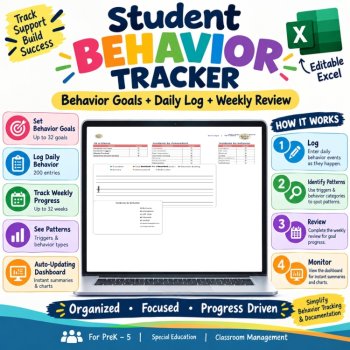
Student Behavior Tracker | Behavior Goals, Daily Log & Weekly Review | Editable

$3.50

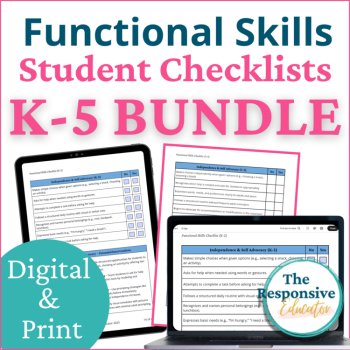
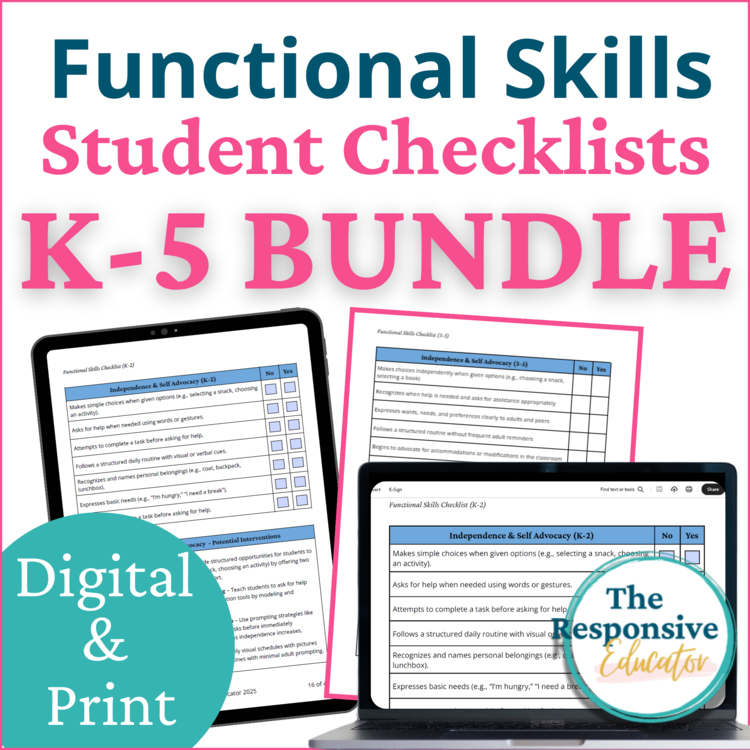
Functional Life Skills Checklist, IEP Goals & Interventions K–5th Grade Bundle
$15.90 $14.31
Get BundleFunctional skill expectations change significantly between kindergarten and fifth grade. A skill that is appropriate for a first grader may be too basic for a fifth grader, while an upper-elementary expectation may not be developmentally appropriate for a younger student.
The K-5th Grade Functional Life Skills Checklists, IEP Goals & Interventions Bundle includes two separate, age-appropriate resources for assessing student needs, selecting targeted interventions, and developing measurable goals:
Each resource addresses the same broad areas of functional development while providing skills, interventions, and goals that reflect the expectations of its specific grade band.
I created this bundle to help educators identify what a student needs to learn next without relying on one checklist that is either too basic or too advanced.
TWO DEVELOPMENTALLY APPROPRIATE GRADE BANDS
The bundle includes:
K–2nd Grade Resource
The early elementary resource focuses on foundational skills related to routines, communication, self-care, safety, emotional regulation, play, and emerging independence.
3rd–5th Grade Resource
The upper elementary resource reflects increasing expectations for responsibility, organization, self-advocacy, work habits, personal care, social participation, and preparation for middle school.
Because the resources are separated by grade band, educators can choose the version that best reflects the student’s developmental level and current needs.
MOVE FROM A BROAD CONCERN TO A SPECIFIC SKILL
A student described as “not independent” may need support with one specific part of a larger routine. Another student may demonstrate the skill in one setting but not with different adults, materials, or expectations.
These informal functional skills assessments help educators break broad concerns into specific, observable skills. Once the team identifies the skill that needs support, the aligned interventions and sample goals provide a starting point for individualized instruction and planning.
WHAT’S INCLUDED IN THE BUNDLE
The bundle includes:
The same 14 broad functional areas are addressed in both resources. The checklist items, interventions, and goals are adapted to match the expectations of each grade band.
FOURTEEN FUNCTIONAL LIFE SKILL AREAS
Each grade-band resource addresses:
These areas allow teams to consider the whole student rather than focusing only on classroom behavior or academic performance.
TARGETED FUNCTIONAL SKILLS INTERVENTIONS
Each checklist area includes intervention ideas that can be selected and adapted based on the student’s identified needs.
Depending on the skill and grade band, interventions may include:
The intervention lists provide practical starting points. They are not intended to create the same support plan for every student.
MEASURABLE FUNCTIONAL LIFE SKILLS IEP GOALS
The sample goals connect directly to the skills assessed. Educators can adjust the setting, prompting level, frequency, performance criteria, and expected degree of independence to match the student’s baseline and individual needs.
Goals may address:
Using aligned checklists, interventions, and goals makes it easier for teams to explain why a goal was selected and what skill the student is working to develop.
USE THIS BUNDLE TO
WHO THIS BUNDLE IS FOR
This bundle may be especially helpful for:
The two grade bands make this bundle especially useful for elementary programs, intervention teams, and educators who support students with a wide range of developmental abilities.
IMPORTANT ASSESSMENT INFORMATION
These resources are informal educational assessment and planning tools. They are not standardized, norm-referenced, or diagnostic assessments. They do not replace a formal evaluation, functional behavior assessment, or other individualized assessment when one is required.
The checklist items, interventions, and sample goals should be individualized based on the student’s needs, baseline performance, environment, developmental level, and required support.
The purpose is not simply to document whether a student can or cannot perform a skill. It is to help the team determine what the student needs to learn next and plan instruction that supports meaningful independence over time.
Important Note About Upgrading to the Bundle
If you have already purchased one or both individual checklists (K–2 or 3–5) and would like the full bundle, you can contact TPT for a reimbursement of the individual products so you only pay the bundle price.
Not sure what kind of data collection you need? Take a look at my FREE Resource, Data Collection for Behavior, which will walk you through various types of data collection, how to use them, and which types of behavior each data collection method is best suited to.
Please follow me on TPT for more great behavior tracking and SEL resources. And remember, if you purchase, please leave a review and TPT will give you credits toward more fabulous TPT resources!
Report this resource to Linked Through Learning
Reported resources will be reviewed by our team. Report this resource to let us know if this resource breaks our rules.
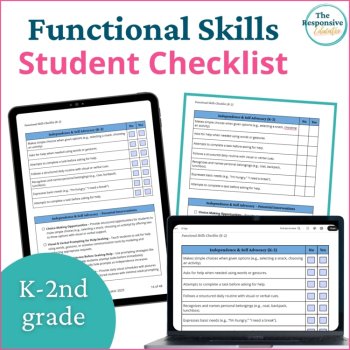
Students who struggle with routines, communication, self-care, emotional regulation, or independence may need more than repeated reminders. Teachers need a practical way to identify the specific functional life skill that needs support, determine what to teach next, and connect that need to appropri
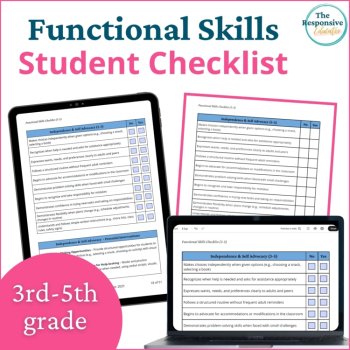
As students move through upper elementary school, expectations for independence increase. Students are expected to follow more complex routines, manage materials, regulate their emotions, communicate their needs, and complete daily responsibilities with less adult support.When a student struggles in
No questions yet.
Meet the Seller
Behavior Support and Interventions
I provide resources that help teachers manage classroom behavior and teach social-emotional skills effectively. With over 20 years of experience in special education, I offer practical tools and strategies to support both teachers and students in achieving their best. I have been dedicated to supporting students with special needs since 2005, specializing in both behavioral and academic interventions. My extensive experience spans teaching in self-contained classrooms from grades K-12 and assisting general and special education teachers with managing significant behavioral challenges. As a former lead of an RTI committee and a behavior specialist, I have a deep understanding of effective classroom management strategies.
Florida