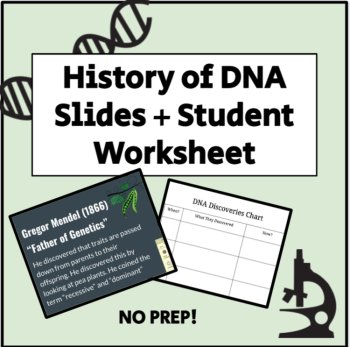
History of DNA Slides + Student Worksheet
 Ms Kiaras Science Teacher Shoppe
$4.00

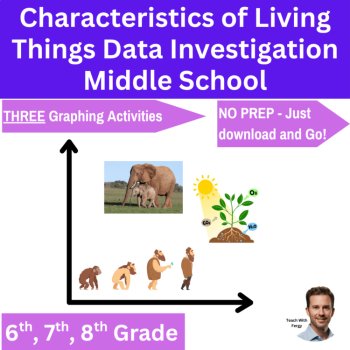
Characteristics of Living Things Data Graphing Lab Bundle 6th, 7th, 8th Grade
$5.97 $3.97
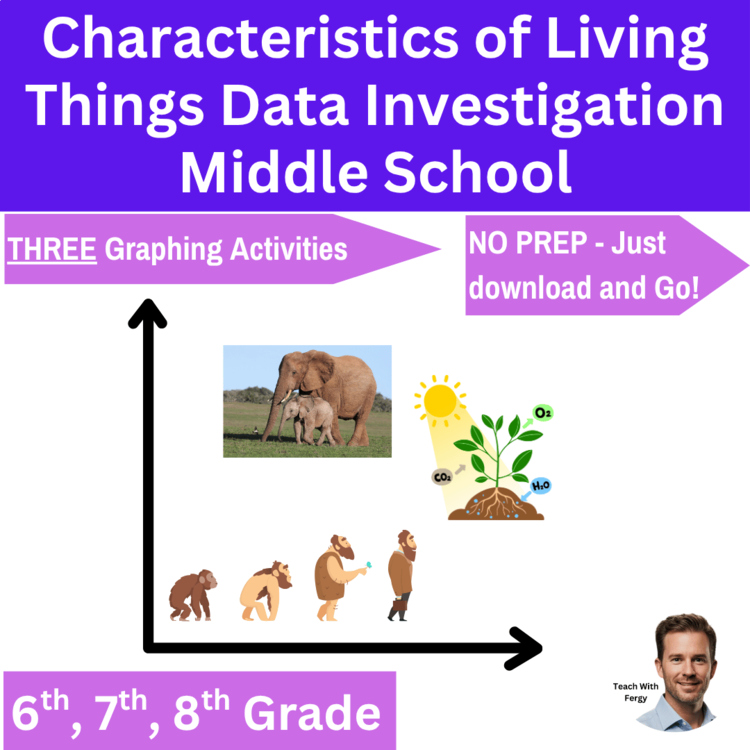
Add to cartThese three characteristics of living things data graphing activities will help your students understand how organisms grow and develop, obtain and use energy, respond to environmental changes, and maintain stable internal conditions—all while building strong graphing and data-analysis skills. This bundle gives teachers an easy, NO PREP way to have students work with real-world datasets while exploring Growth & Development, Metabolism & Energy Use, and Response to Stimuli & Homeostasis.
There are 3 Graphing Labs Included:
Students analyze real-world datasets related to human growth, orange-tree growth, vitamin C and guinea-pig tooth development, carbon dioxide uptake in plants, oxygen consumption during exercise, metabolic demand, heart-rate recovery, pupil response to light, and daily body-temperature changes. They create several types of graphs before using their results to identify patterns, analyze relationships, and explain how the data provide evidence of essential life processes.
Each activity includes a complete answer key with the required graphs and is easy to differentiate for different ability levels.
Topics Students Explore
This graphing bundle is also included inside my Middle School Science Graphing & Data Analysis Mega Bundle at a significant discount. The bundle contains graphing activities for all 6th, 7th, and 8th grade science topics.
What’s Included
✅ Three characteristics of living things graphing investigations
✅ Real-world data tables for every investigation
✅ Three graphing tasks in each investigation
✅ Background readings and driving questions
✅ Ten data-analysis questions in each investigation plus Claim–Evidence–Reasoning activities
✅ Complete answer keys with finished graphs
✅ Data-based extension challenges
✅ Investigation and extension rubrics
Each activity moves students from reading data → graphing data → interpreting patterns → explaining scientific processes.
Perfect for:
Teacher-Friendly Features
Report this resource to Linked Through Learning
Reported resources will be reviewed by our team. Report this resource to let us know if this resource breaks our rules.
No questions yet.

Meet the Seller
Middle and High School Science Engaging Resources
I have been selling resources to middle and high school teachers for the last 15 years. During that time I've also been in the classroom so I know what works and what will help your students the most.
Canada