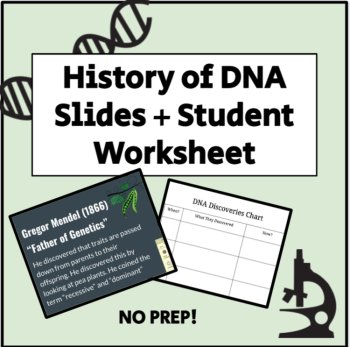
History of DNA Slides + Student Worksheet
 Ms Kiaras Science Teacher Shoppe
$4.00

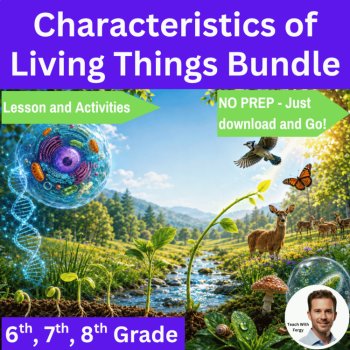
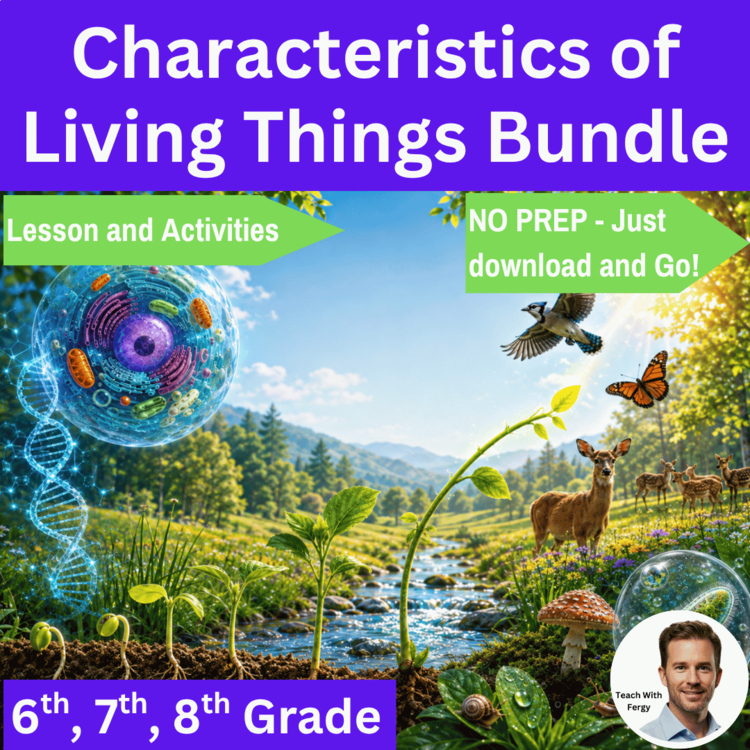
Characteristics of Living Things Lesson Bundle | What is Life, Living, Nonliving
$15.88 $6.97
Get BundleHelp your students understand what makes something alive with this growing Characteristics of Living Things Bundle for middle school science. Students explore the differences between living, once-living, and nonliving things while learning how organisms are organized, use energy, grow, respond to stimuli, maintain homeostasis, and carry out other essential life processes.
This bundle currently includes a complete lesson, two differentiated scientific readings, three data graphing investigations, and a student research activity. Together, the resources provide multiple ways for students to learn, apply, review, and extend their understanding of the characteristics of life.
The activities are designed primarily for Grades 6–8, with an additional advanced reading appropriate for Grade 8 and up.
This Is a Growing Bundle!
Additional Characteristics of Living Things resources will be added to this bundle over time. Purchase now and receive all future additions at no additional cost. The price will increase as new resources are added.
What’s Currently Included
1. Characteristics of Living Things Lesson
A complete lesson introducing the characteristics shared by living organisms and the evidence scientists use to distinguish living things from nonliving things. Students examine cells, energy use, growth and development, reproduction, responses to stimuli, homeostasis, and adaptation.
2. Characteristics of Living Things Reading: What Is Life? – Grades 6–8
A middle school scientific reading that helps students determine what makes something alive. Students compare living, once-living, and nonliving examples while learning why movement, growth, or appearance alone cannot prove that something is alive.
3. Characteristics of Living Things Reading Comprehension – Grade 8 and Up
A more advanced scientific reading examining cells, DNA, metabolism, homeostasis, dormancy, death, and biological origin. Students apply scientific criteria to challenging examples such as dormant seeds, wood, fossils, viruses, fire, crystals, and robots.
4. Characteristics of Living Things Data Graphing Lab Bundle
Three print-and-go data investigations in which students create graphs, analyze patterns, and connect real-world data to essential life processes:
5. “I Was Today Years Old When I Learned…” Characteristics of Life Research Activity
A student-centered research activity in which students investigate an unusual organism and discover something surprising about how it carries out essential life processes. Students summarize their discovery and communicate what they learned to their classmates.
Topics Covered
Skills Your Students Will Develop
This growing bundle is ideal for introducing a Characteristics of Living Things unit, reinforcing important biology concepts, providing meaningful graphing practice, or reviewing how scientists determine whether something is alive. The variety of lessons, readings, data investigations, and research tasks makes it easy to support different learners while building scientific literacy, data-analysis skills, and evidence-based reasoning.
Report this resource to Linked Through Learning
Reported resources will be reviewed by our team. Report this resource to let us know if this resource breaks our rules.
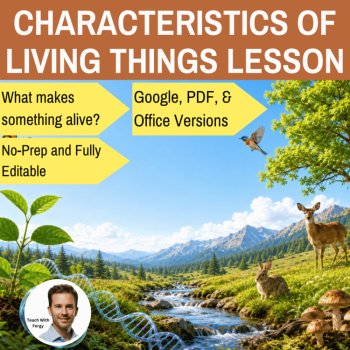
This 7 Characteristics of Living Things lesson introduces students to the major characteristics shared by living organisms in a clear, student-friendly way This middle school life science lesson builds understanding without overwhelming learners. Students examine familiar examples—including plants r
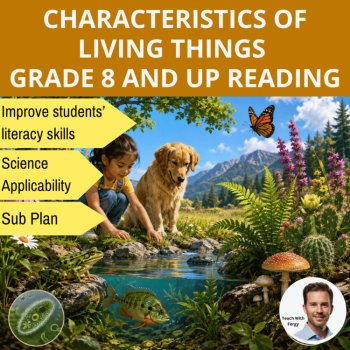
Characteristics of Living Things: How Scientists Determine What Is Alive Reading Comprehension Passage and QuestionsThis reading explores how scientists determine whether something is alive by examining the shared characteristics of living organisms. Students learn why displaying a single life-like
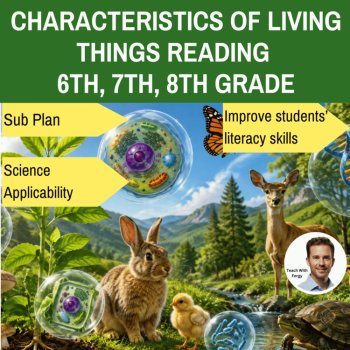
This Grade 6–8 reading comprehension article and questions introduces students to the characteristics shared by living things and how scientists determine whether something is alive. Students explore why showing one life-like feature—such as growing, moving, responding, or releasing energy—is not en
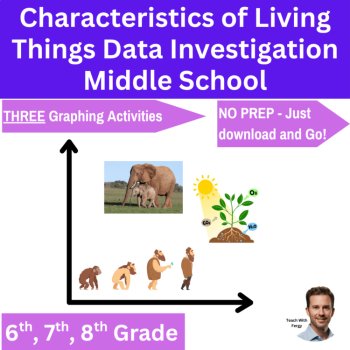
These three characteristics of living things data graphing activities will help your students understand how organisms grow and develop, obtain and use energy, respond to environmental changes, and maintain stable internal conditions—all while building strong graphing and data-analysis skills. This
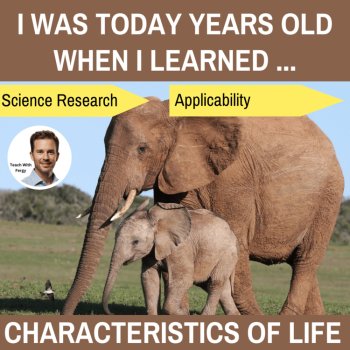
Characteristics of Life Research ActivityTurn the popular phrase “I was today years old when I learned…” into an engaging science research and discovery activity about the Characteristics of Life! Perfect as an icebreaker activity for the beginning of the unit or as a fun activity during. This activ
No questions yet.

Meet the Seller
Middle and High School Science Engaging Resources
I have been selling resources to middle and high school teachers for the last 15 years. During that time I've also been in the classroom so I know what works and what will help your students the most.
Canada