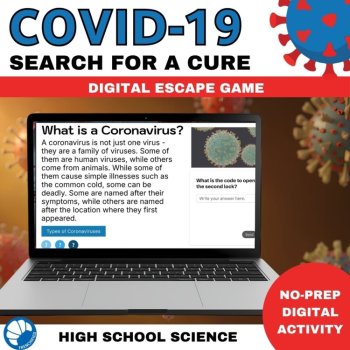
Health Science Escape Room | High School Biology & COVID-19
$4.25 (8)

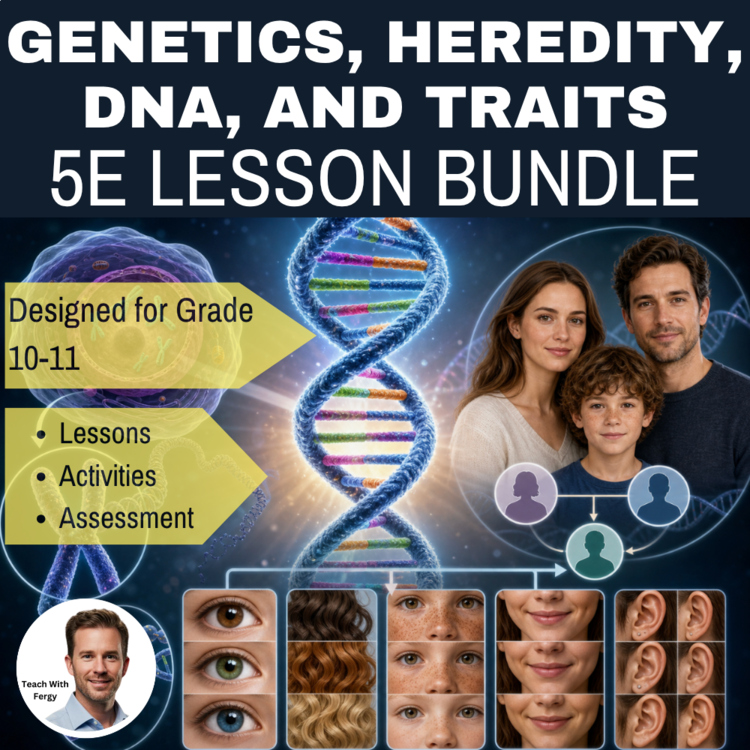
Genetics, Heredity, DNA, and Traits - 5E Lesson Bundle | Genotype and Phenotype
$42.51 $14.97
Get BundleGenetics, Heredity, DNA, and Traits - Fully editable and Complete 5E Lesson. This bundle is designed for science students in grades 10–11, but the content can be adapted to fit different learning levels.
Lesson Objectives:
Throughout this 5E lesson, students will learn about:
How does the 5E model facilitate learning?
What's included?
Engagement Phase – Video Worksheet and Word Search
Your students will watch the included introduction to genetics and heredity video, Intro Genetics: Why Your Cat Looks Like That, and complete the accompanying video worksheet. The worksheet includes a direct link to the video as well as an answer key. You also get the DNA and DNA Replication Word Search and Scramble Activity to help introduce key vocabulary.
This phase is an excellent way to introduce the idea that traits are passed from parents to offspring through genetic information. It helps students begin thinking about why offspring often resemble their parents, why siblings are not identical, and where traits come from.
Exploration Phase – Digital Scavenger Hunt Activity
Your students will complete DNA, Genes, Chromosomes, and Alleles – A Digital Scavenger Hunt Activity.
This activity allows students to work individually or in small groups as they research, apply vocabulary, and extend their understanding of heredity concepts. It helps students connect key ideas about genetics, heredity, DNA, and traits to new examples and scenarios. The outline also includes Monster Genetics Challenge – Punnett Squares & Heredity as an optional creative extension.
Explanation Phase – Lesson
Complete the lesson DNA, Genes, Chromosomes, and Alleles. In this lesson, students learn how genetic information is organized and how genes and alleles connect to inherited traits.
This is the instructional phase where concepts are presented in a clear and applicable way
The lesson can also be supported with How Traits Are Passed On or DNA, Genes, and Mutations as needed. The focus of this phase is helping students understand how DNA, genes, chromosomes, alleles, and inherited traits are connected.
Elaborate Phase – Reading
Your students will complete CRISPR Gene Editing: Rewriting the Code of Life Reading.
This activity allows students to extend their understanding of genetics, DNA, inherited traits, and genetic disorders by exploring a real-world biotechnology application: CRISPR. Students connect gene editing to the larger genetics unit and consider how changes in DNA can affect traits, proteins, and health. They also evaluate the benefits, risks, and ethical questions related to gene editing.
Evaluate Phase – Lab Station Activity
In groups of 2–3, have your students complete the DNA, Genes, Chromosomes, and Alleles Lab Station Activity. Once they are done, they will submit their passport to you.
This phase gives students the chance to demonstrate their understanding by making connections between DNA, genes, chromosomes, alleles, and inherited traits. Students observe, record results, and apply their knowledge in an active, hands-on format rather than treating the terms as isolated vocabulary.
The following 5E lessons are currently available in My Store
Physics
• Newton's Three Laws of Motion
• Current Electricity and Circuits
• One and Two-Dimensional Motion
• Static Electricity
• Projectile Motion
• Light and its Production
• Energy, Energy Transfer, and its Forms
• Kinetic and Gravitational Potential Energy
• Electricity Production
• Friction
• Density and Buoyancy
• Sound and Hearing
• Uniform Acceleration
• How Planes Fly
• Refraction
• Work
• Power
• Magnetic Fields
• Momentum, Conservation of Momentum, and Impulse
• Forces
• Flight
• Nuclear Energy - Fission and Fusion - Middle School
• Nuclear Energy - Fission and Fusion - High School
• Simple Machines - Middle School
• Simple Machines - High School
Biology
• Cells and the Cell Theory
• Digestive System
• Photosynthesis and Cellular Respiration
• Mitosis and the Cell Cycle
• Circulatory System
• Cancer
• Photosynthesis
• Respiratory System
• Cell Membrane and Transport
• Energy Flow In Ecosystems
• The Human Eye
• Genetic Material: DNA and RNA
• Nervous System
• Plant and Animal Cells
• Carbohydrates and Lipids
• Photosynthesis and Cellular Respiration
• Cellular Organelles - Cell Structure and Function
• Human Body Systems
• Genetics, Heredity, DNA, and Traits
Ecology
• The Cycling of Matter: The Water and Carbon Cycles
• Cells and the Cell Theory
• Ecosystems
• Biodiversity
• Invasive Species
• Interactions Within Ecosystems
• Photosynthesis
• Biomes
• The Classification of Living Things
• Photosynthesis
• Ecological Succession
• Energy Flow in Ecosystems
• Plant Sexual and Asexual Reproduction
Chemistry
• Physical and Chemical Properties and Changes
• Atoms and the Atomic Theory
• Chemical Reactions
• Types of Chemical Reactions and Balancing Equations
• Molecular and Ionic Compounds
• Acids, Bases, and pH
• The Periodic Table
• Particle Theory and Matter Classification
• The Mole/Avogadro's Number
• Types of Bonds and Intermolecular Forces
• Solutions and Mechanical Mixtures
• Matter and the Particle Theory of Matter
Coming Soon:
• Nomenclature
• Intermolecular Forces
• Stoichiometry
• Gases
Earth and Space Science
• Climate Change and Global Warming
• The Moon and its Phases
• Our Solar System
• The Seasons
• Human Space Exploration
• The Life and Death of Stars
• Asteroids, Comets, and Meteors
• Solar and Lunar Eclipse
• Tectonic Plates
• Rock Cycle
Coming Soon:
• Galaxies and our Universe
Report this resource to Linked Through Learning
Reported resources will be reviewed by our team. Report this resource to let us know if this resource breaks our rules.
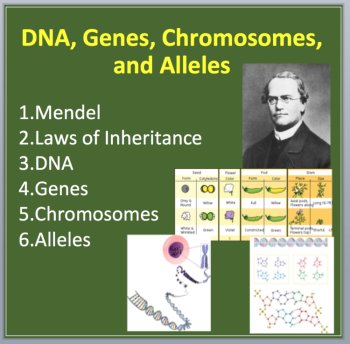
This lesson is an introduction to DNA, Genes, Chromosomes, and Alleles. This 23-slide lesson is geared towards high school biology students who are starting a unit on genetics. The PowerPoint contains diagrams, three embedded videos, examples, discussion lead-ins, and explanations that will keep you
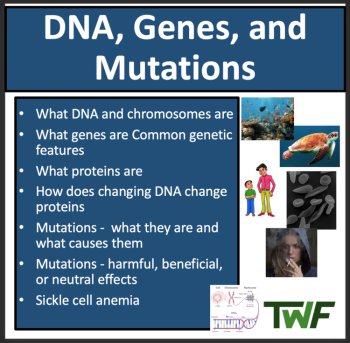
DNA, Genes, and Mutations Middle School - This Introductory Biology lesson is specifically designed for Middle School science and covers the NGSS MS–LS3-1 Standard. It is meant to be done over 2-3 days. It describes why structural changes to genes (mutations) located on chromosomes may affect protei
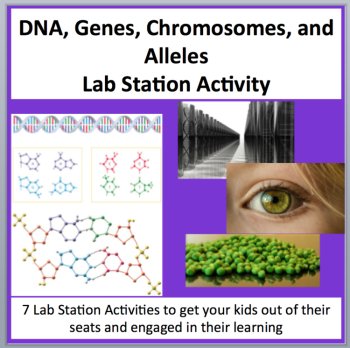
This fully editable Lab Station Activity on DNA, Genes, Chromosomes, and Alleles is meant to get your students out of their seats and engaged in the content. This activity was designed for High School biology science students.✅ Covers Key Genetics Topics: Includes DNA, genes, chromosomes, alleles,...
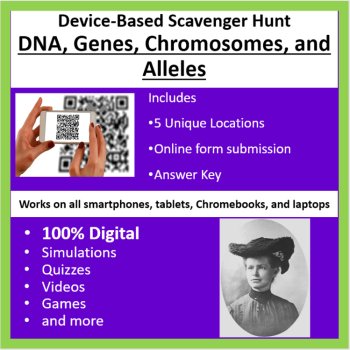
DNA, Genes, Chromosomes, and Alleles - A digital, device-based resource that will get your kids out of their seats, engaged, utilizing technology, and collaborating to solve real problems and test their knowledge. This activity works well across grades as a means of assessment, review, and/or instru
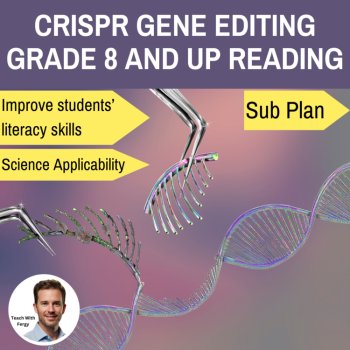
CRISPR Gene Editing Reading Comprehension Passage and Questions. CRISPR gene editing is one of the most powerful scientific developments of the 21st century, and this Reading Comprehension Passage and Questions article helps students understand what CRISPR is, how it works, and why it matters. It ex
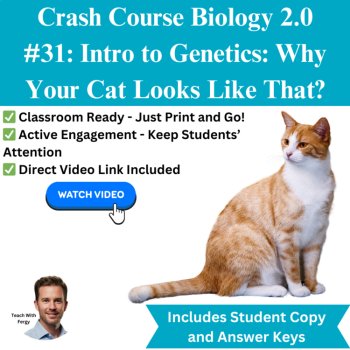
Crash Course Biology #31: INTRO TO GENETICS: WHY YOUR CAT LOOKS LIKE THAT (2024 Updated Video Series) Video Worksheet. Whether you are introducing, reviewing, or leaving it as a sub plan, my Crash Course video worksheet is a terrific solution.Your worksheet includes a direct YouTube video link! Just
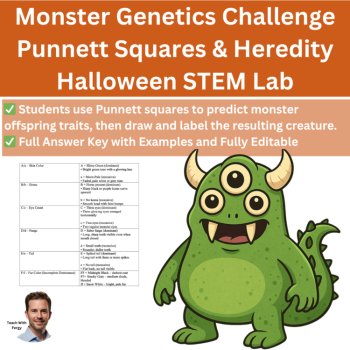
Under the eerie glow of a full moon, strange creatures are stirring in the lab—each one a mix of mysterious genes and spooky surprises! It’s up to your students to uncover the secrets of monster heredity by predicting, combining, and sketching their own genetically engineered beasts.In this interact
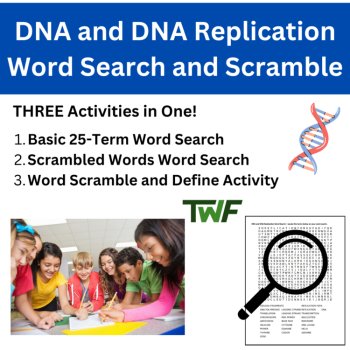
Word Search and Scramble - DNA and DNA Replication. Ensure your students are challenged by selecting the correct level of difficulty.What’s Inside: Designed for students in high school, this activity is actually three-in-one. 1) Simple Word Search Using 25 common DNA and DNA Replication terms - see
No questions yet.

Meet the Seller
Middle and High School Science Engaging Resources
I have been selling resources to middle and high school teachers for the last 15 years. During that time I've also been in the classroom so I know what works and what will help your students the most.
Canada