Animal Habitats Clipart MEGA Bundle – 6 Sets

$32.50 $50.00 (398)

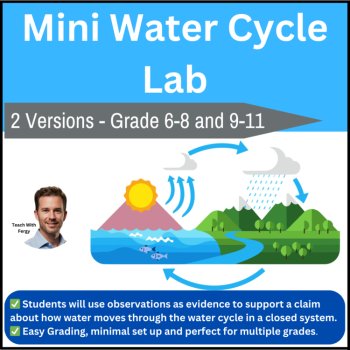
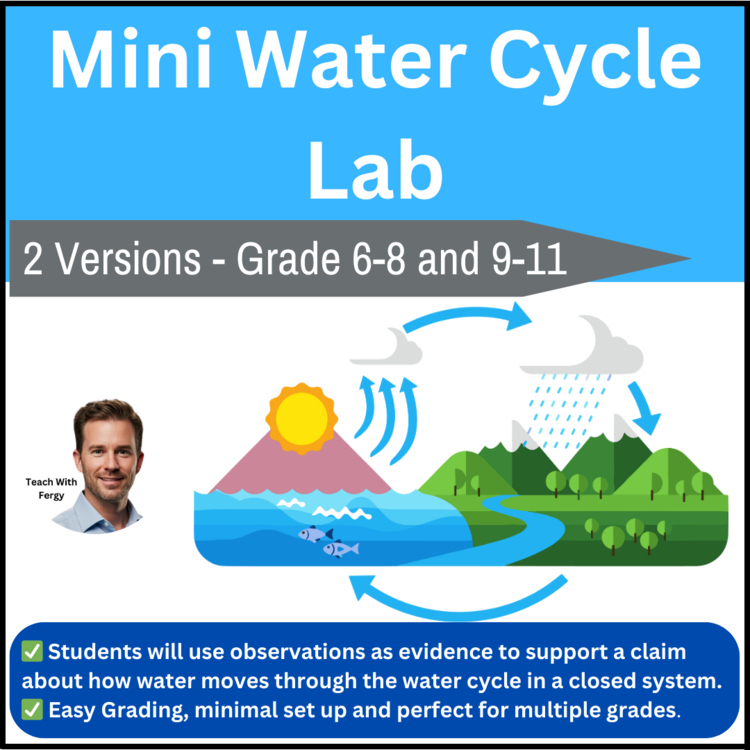
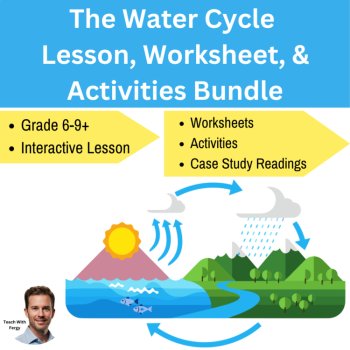
Students will model the water cycle in a closed system by creating a mini “water cycle” using a sealed clear bag. By adding energy from sunlight or a lamp, students observe evaporation, condensation, and water movement over time. Through structured observations, optional temperature tracking, and a Claim–Evidence–Reasoning (CER) explanation, students explain how energy transfer drives phase changes and cycling of water—mirroring processes that occur in Earth’s atmosphere.
Learning Targets
What’s Included
Why Teachers Love It:
Best For
Earth Science, Water Cycle units, evaporation & phase change, environmental science, data analysis over time, graphing practice, and CER writing.
Materials Needed
Clear zip bag, water (measured), marker, tape, light source or sunny window, student lab sheet (included). Optional: thermometer.
Estimated Timing:
NGSS alignment
MS-ESS2-4, HS-ESS2-4
Practices: Planning & Carrying Out Investigations; Analyzing & Interpreting Data; Using Mathematics & Computational Thinking; Constructing Explanations; Argument from Evidence
Report this resource to Linked Through Learning
Reported resources will be reviewed by our team. Report this resource to let us know if this resource breaks our rules.
No questions yet.

Meet the Seller
Middle and High School Science Engaging Resources
I have been selling resources to middle and high school teachers for the last 15 years. During that time I've also been in the classroom so I know what works and what will help your students the most.
Canada
$32.50 $50.00 (398)
$22.50 $34.50 (169)
$18.50 $36.50 (84)