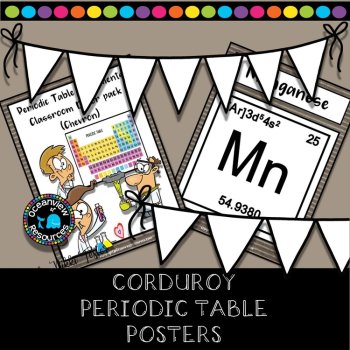
Science Posters- The Periodic Table-Brown Corduroy Design
$5.00 (1)

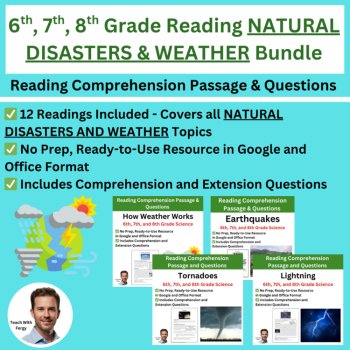
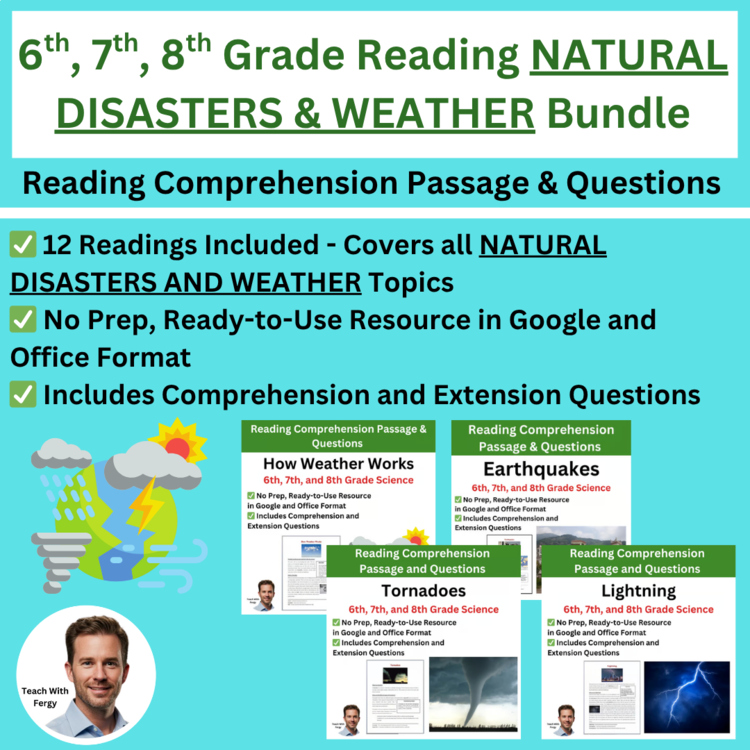
Natural Disasters & Weather Reading Comprehension & Questions 6th, 7th, 8th
$29.70 $11.88
Get BundleReading Comprehension Passage & Questions 6th, 7th, 8th - NATURAL DISASTERS AND WEATHER - This resource contains 60 reading comprehension articles for students in grades 6, 7, and 8 as well as older students with lower developed learning levels. This bundle will save you 60% vs. purchasing the resources individually.
If you would like to save even more money, check out my 6th, 7th, 8th Grade Reading Comprehension & Question MEGA Bundle which includes 105 Articles. CLICK HERE to have a look.
Tackle literacy and science by having your students read and answer questions from a scientific article. Questions include knowledge (direct from the paper), thinking, connecting, application, and open-ended varieties.
✅ Clear, Student-Friendly Content - Helps students explore current BIOLOGY topics and applications using accessible language and relevant examples
✅ No Prep, Ready-to-Use – Print or assign digitally with Google Docs, Microsoft Word, and PDF formats for seamless classroom use.
✅ Supports Critical Thinking – Includes a variety of question types, from factual recall to deeper analysis and open-ended responses.
✅ Perfect for Grades 6-8 & Differentiation – Designed for middle school students and older learners needing additional reading support.
These resources are fully editable for your convenience and include:
**This bundle contains some of the readings found in my Natural Disasters and Weather - Grade 5-7 Reading Comprehension Mini Bundle. If you've already purchased it, please do not purchase this item as well**
Tackle literacy and science by having your students read and answer questions from a scientific article. Each article highlights and explains key concepts for students' understanding at a level they can comprehend. Furthermore, each page defines important words or phrases for student reference. Lastly, each reading includes Reading Comprehension questions and answers which test students' concept understanding (direct from the paper), thinking, and connecting along with optional Extension Questions which have the students perform additional work and research outside the paper.
-----------------------------------------------
Google Classroom and Distance Learning Ready
Having all three options allow you to assign the reading to your students without worrying about formatting issues as all the work has already been done for you. It also allows you, as well as your students, to access everything no matter where you are or what kind of equipment is being used.
-----------------------------------------------
The Problems You Face
- Not having the time to properly teach scientific literacy (disciplinary literacy) or improve your students reading comprehension and analysis skills.
- Some students work faster than others and you would like an interesting extension activity for your faster-moving students to keep them learning and engaged.
The Solution
This fully editable, NO PREP reading comprehension article is composed of relevant, applicable, and engaging reading activities which can be used to:
• introduce your topic
• improve your students literacy skills
• improve your students reading comprehension and scientific literacy skills
• improve your students' analysis skills
• provide an extension activity to students who move at a faster pace
• provide extra credit to students in need
• measure your students literacy skills
Furthermore, this resource works very well as an emergency substitute plan as it will keep your students on task and focused while you are away.
----------------------------------------------------------------------------------------------
Praise For My Other Reading Comprehension Resources:
"I teach middle school science and need to include informational text in my classroom. These readings are great for independent reading for my grade level and upper-level readers. The articles address CCSS.ELA-Literacy.RST.6-8.1 (Citing specific textual evidence to support analysis of science and technical texts.) and CCSS.ELA-Literacy.RST.6-8.10 (By the end of grade 8, read and comprehend science/technical texts in the grades 6-8 text complexity band independently and proficiently.). The leveled questions allow you to subtly assign the questions to different ability students working in a group.
Topics are relevant to the students and current. Graphics draw the students into the article. I'm going to have one printed and waiting in for my substitute folder too!
THANKS!"
"Thanks for putting together a wonderful resource."
"I teach Special Education high school science in Maryland in a special school for children with learning disabilities/Autism. I liked the readings and I think students could relate to the topics. I know these are too high a reading level for most of my students and I would read it out loud and highlight the important information together. I would not be able to use the higher-order thinking questions (which I like) with these kids. For my high students (very few of these in my school :), I really like these especially how you noted where you got the information which if they were inclined, they could go back to the original source. I like that you have scaffolded the questions and I would only be able to use these with a handful of students, but I think in a regular high school classroom (I spent many years in regular ed) these are spot on. Thank you for sharing."
----------------------------------------------------------------------------------------------
How this product will help your students:
How this product will help you:
We don't spend enough time teaching scientific literacy to our students. This is either because we don't have the resources to do so effectively or we don't have the time. However, teaching our students to become scientifically literate is vital if we want them to succeed in life. We need them to know about the world they live in and about the issues they face.
*****************************
I also have a range of assignments and lessons/units from other grade levels at my store. Please CLICK HERE to have a look around and don’t forget to follow if you like what you see.
Report this resource to Linked Through Learning
Reported resources will be reviewed by our team. Report this resource to let us know if this resource breaks our rules.
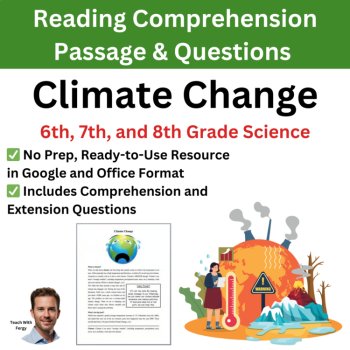
Tackle literacy and science by having your students read and answer questions from a scientific article about Climate Change. Questions include knowledge (direct from the paper), thinking, connecting, application, and open-ended varieties.The Reading Looks at:- What is Climate?- What’s the big deal?
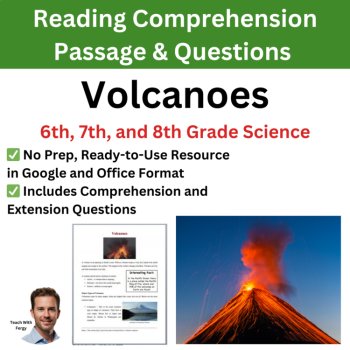
Tackle literacy and science by having your students read and answer questions from a scientific article about Volcanoes. Questions include knowledge (direct from the paper), thinking, connecting, application, and open-ended varieties.The reading looks at:- Volcano introduction- Major types of volcan
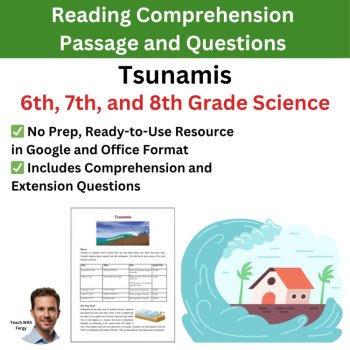
Tackle literacy and science by having your students read and answer questions from a scientific article about Tsunamis. Questions include knowledge (direct from the paper), thinking, connecting, application, and open-ended varieties.The reading looks at:- History- How Tsunamis work- Tsunamis Today-
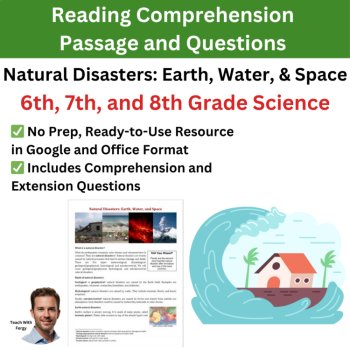
Tackle literacy and science by having your students read and answer questions from a scientific article about Natural Disasters: Earth, Water, and Space. Questions include knowledge (direct from the paper), thinking, connecting, application, and open-ended varieties.The reading looks at:- What is a
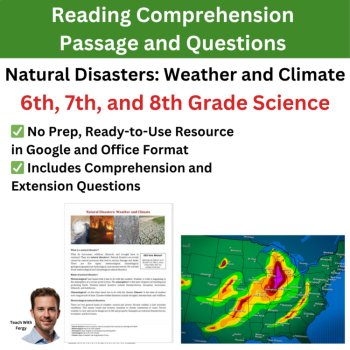
Tackle literacy and science by having your students read and answer questions from a scientific article about Natural Disasters: Weather and Climate. Questions include knowledge (direct from the paper), thinking, connecting, application, and open-ended varieties.The reading looks at:- What is a natu
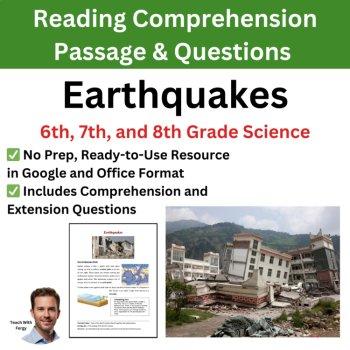
Tackle literacy and science by having your students read and answer questions from a scientific article about Earthquakes. Questions include knowledge (direct from the paper), thinking, connecting, application, and open-ended varieties.The Reading Looks at:- How earthquakes work- The dangers of eart
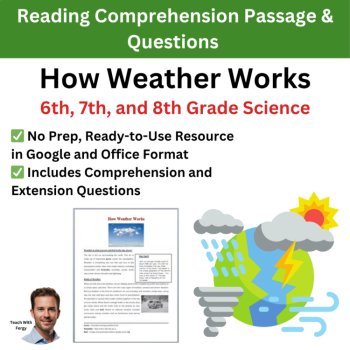
Tackle literacy and science by having your students read and answer questions from a scientific article about How Weather Works. Questions include knowledge (direct from the paper), thinking, connecting, application, and open-ended varieties.The reading looks at:- Weather- Kinds of weather- What cau
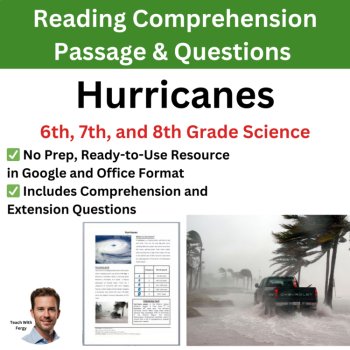
Tackle literacy and science by having your students read and answer questions from a scientific article about Hurricanes. Questions include knowledge (direct from the paper), thinking, connecting, application, and open-ended varieties.The reading looks at:- What is a hurricane?- Hurricane wind- How
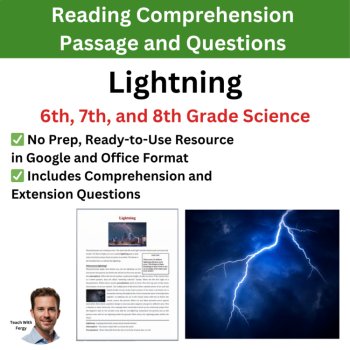
Tackle literacy and science by having your students read and answer questions from a scientific article about Lightning. Questions include knowledge (direct from the paper), thinking, connecting, application, and open-ended varieties.The reading looks at:- What causes lightning?- Lightning and Thund
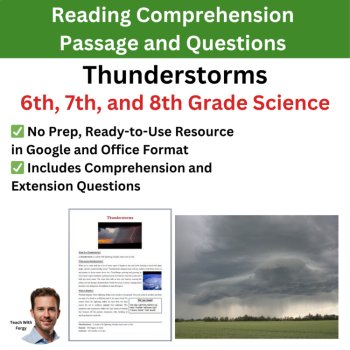
Tackle literacy and science by having your students read and answer questions from a scientific article about Thunderstorms. Questions include knowledge (direct from the paper), thinking, connecting, application, and open-ended varieties.The reading looks at:- What is a thunderstorm?- What causes th
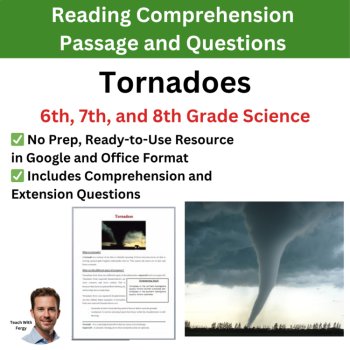
Tackle literacy and science by having your students read and answer questions from a scientific article about Tornadoes. Questions include knowledge (direct from the paper), thinking, connecting, application, and open-ended varieties.Buyer Comments: - "Great Resource!" - "Saved me on a sub day, than
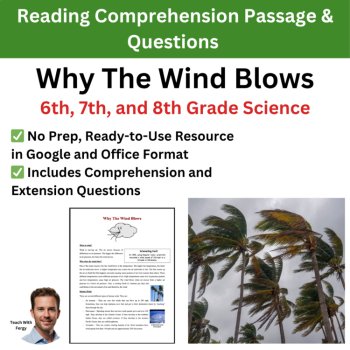
Tackle literacy and science by having your students read and answer questions from a scientific article about Why The Wind Blows. Questions include knowledge (direct from the paper), thinking, connecting, application, and open-ended varieties.The reading looks at:- What is wind?- Why does the wind b
No questions yet.

Meet the Seller
Middle and High School Science Engaging Resources
I have been selling resources to middle and high school teachers for the last 15 years. During that time I've also been in the classroom so I know what works and what will help your students the most.
Canada
$22.50 $34.75 (318)
$22.50 $33.50 (190)