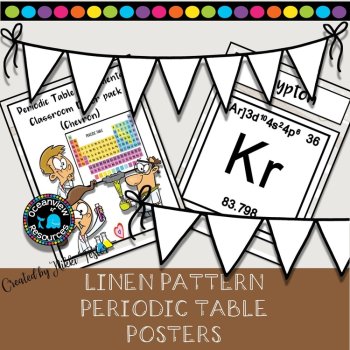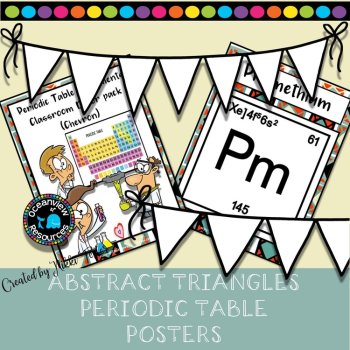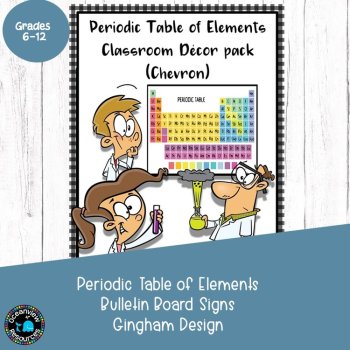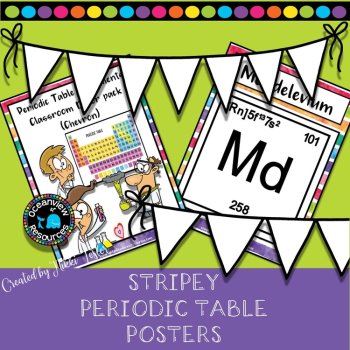
Science Posters- The Periodic Table-Brown Corduroy Design

$5.00 (1)

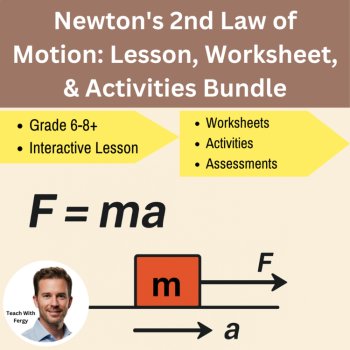
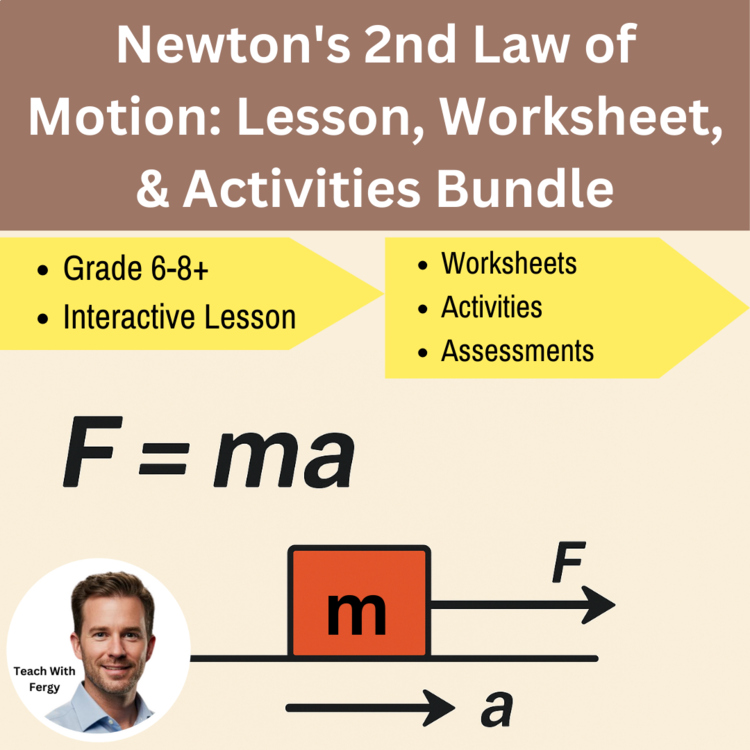
Newton's 2nd Law of Motion Lesson, Worksheet, Activities Bundle | 6th, 7th, 8th
$10.85 $6.59
Get BundleThe NO-PREP bundle includes a lesson, worksheets, activities, a STEM investigation, a student-led lab, and case study on Newton's 2nd Law of Motion. It is specifically designed for 6th, 7th, and 8th grade but can also be used to teach Newtons Second Law to high school students as it provides an excellent overview of the topic.
The Bundle Includes:
Each resource is fully editable and comes in Office and PDF versions. They are fully ready to implement. Simply download and print.
Students Will Learn
Included Resources
1) Lesson: Newton's Second Law of Motion Lesson
This lesson on Newton's Second Law of Motion specifically covers Forces and Net Force, Newton's 2nd Law equation, Applications and Problem Solving as well as Simulation Activities. It also includes a 6-Part worksheet.
In order, the lesson covers:
2) Lab: Newton’s Second Law Student-Led Lab
This student-led activity covers NGSS MS-PS2-2 - Apply Newton’s Third Law to design a solution to a problem involving the motion of two colliding objects.
Learning Targets
✅ Hands-on student-led lab exploring Newton’s Second Law
✅ Students design 2 experiments testing force, mass, and acceleration
✅ Includes worksheet in Word, PDF, and Google Docs formats
✅ Aligned to NGSS MS-PS2-2 with real-world applications
3) Worksheets: Newton's 2nd Law of Motion Worksheet Bundle
Through vocabulary practice, true/false evaluation, real-life scenarios, application problems, and higher-level thinking challenges, students will develop a solid understanding of Newton’s First Law and how it applies to everyday life. By answer different types of questions, students will develop a deeper understanding of Newton's First Law of Motion.
Skills Students Will Learn
4) Case Study: Newton's 2nd Law Case Study - Sports Car vs Truck
This resource delivers a clear, real-world explanation of Newton’s Second Law of Motion through a relatable comparison between a lightweight sports car and a heavy pickup truck. Students follow a simple moment at a stoplight: two vehicles, the same engine force, and two very different accelerations. Through this everyday scenario, learners see how mass directly affects acceleration when force remains constant—a key idea at the heart of Newton’s Second Law (F = ma).
5) STEM Investigation: Newton's Second Law of Motion STEM Investigation
Students will investigate Newton’s 2nd Law of Motion by testing how changing the mass carried by a balloon rocket affects its acceleration. Using a taut string track, a straw, a balloon, and removable mass clips, students run repeated launches to measure travel time and calculate average speed. Through structured trials, data recording, class averaging, graphing, and a CER, students discover how added mass changes motion and why unbalanced forces create different accelerations.
Learning Targets:
Report this resource to Linked Through Learning
Reported resources will be reviewed by our team. Report this resource to let us know if this resource breaks our rules.
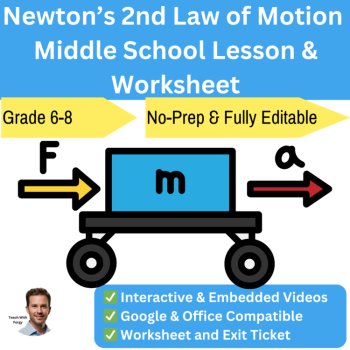
This lesson on Newton's Second Law of Motion specifically covers Forces and Net Force, Newton's 2nd Law equation, Applications and Problem Solving as well as Simulation Activities. It also includes a 6-Part worksheet.✅ Full Lesson Coverage – Newton’s Second Law of Motion including Theory, Applicati...
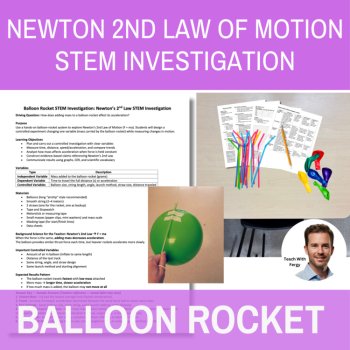
Students will investigate Newton’s 2nd Law of Motion by testing how changing the mass carried by a balloon rocket affects its acceleration. Using a taut string track, a straw, a balloon, and removable mass clips, students run repeated launches to measure travel time and calculate average speed. Thro
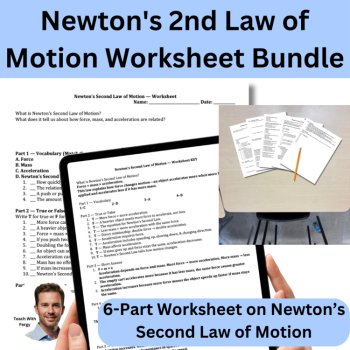
Perfect for classroom instruction, science centers, homework, assessments, and review! Just print & use—no prep required!Introduce and/or review Newton's Second Law of Motion, Force equals mass times acceleration (F = ma), with this engaging, print-ready worksheet bundle designed to help learner
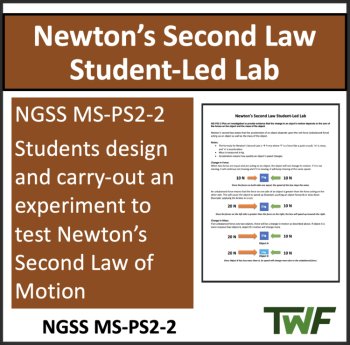
This student-led activity covers NGSS MS-PS2-2 - Apply Newton’s Third Law to design a solution to a problem involving the motion of two colliding objects.Examples of practical problems could include the impact of collisions between two cars, between a car and stationary objects, and between a meteor

Physical Science Case Study - "Newton's 2nd Law - Sports Car vs Pickup Truck"This resource delivers a clear, real-world explanation of Newton’s Second Law of Motion through a relatable comparison between a lightweight sports car and a heavy pickup truck. Students follow a simple moment at a stopligh
No questions yet.

Meet the Seller
Middle and High School Science Engaging Resources
I have been selling resources to middle and high school teachers for the last 15 years. During that time I've also been in the classroom so I know what works and what will help your students the most.
Canada