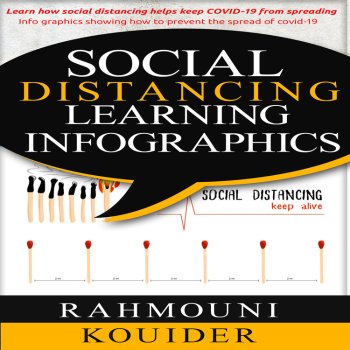
Social Distancing Learning Infographics

Free

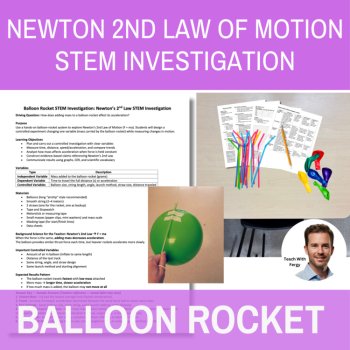
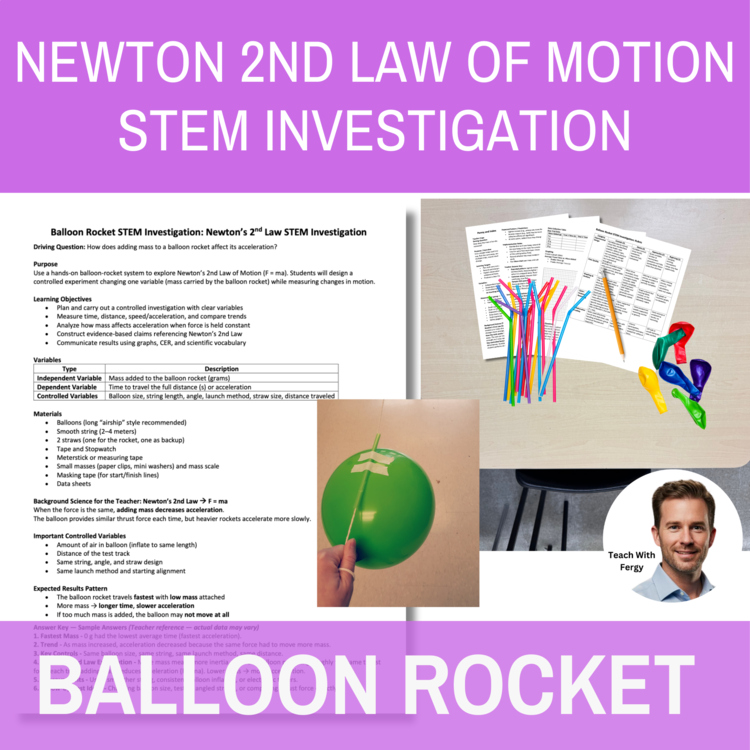
Students will investigate Newton’s 2nd Law of Motion by testing how changing the mass carried by a balloon rocket affects its acceleration. Using a taut string track, a straw, a balloon, and removable mass clips, students run repeated launches to measure travel time and calculate average speed. Through structured trials, data recording, class averaging, graphing, and a CER, students discover how added mass changes motion and why unbalanced forces create different accelerations.
Learning Targets
What’s Included
Why Teachers Love It:
➡️ You can get this STEM as well as all my other ones in this series inside my STEM Investigations Growing Bundle. As more labs are added, the price will increase. CLICK HERE to have a look
Best For
Physical Science (forces, motion, inertia), lab skills, graphing, CER writing, introductory Newton’s Laws, or sub-friendly science explorations.
Materials Needed
Index cards, coins/washers/bolts (various masses), a cup, a ruler, student lab sheet (included), calculator or percent chart. Optional: scale, stopwatch, high-speed video.
Estimated Timing:
1 class period for setup → trials → percent success → class graph. Add 20–30 minutes for CER writing, discussion questions, and error analysis.
➡️ You can get this activity inside my STEM Investigations Growing Bundle.
I also have the following STEM Labs in My Store:
NGSS alignment
MS-PS2-2, MS-PS2-1 (forces & motion, Newton’s 1st Law)
Practices: Planning & Carrying Out Investigations; Analyzing Data; Using Mathematics & Computation; Constructing Explanations; Argument from Evidence
Assessment
Use the included rubric to score environment understanding, adaptation quality and plausibility, scientific accuracy, CER strength, and class data/graph work.
Report this resource to Linked Through Learning
Reported resources will be reviewed by our team. Report this resource to let us know if this resource breaks our rules.
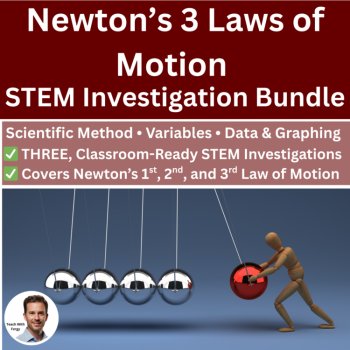 Newton's Three Laws of Motion STEM Investigations Bundle — Scientific Method
$5.49
$8.91
Save 38%
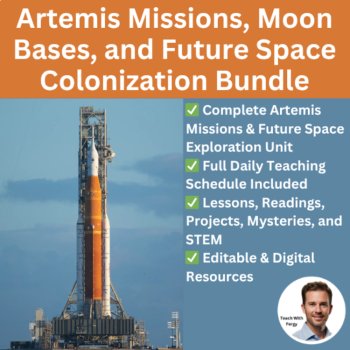 Artemis Missions, Moon Bases, and Future Space Colonization Unit Bundle
$9.97
$40.67
Save 75%
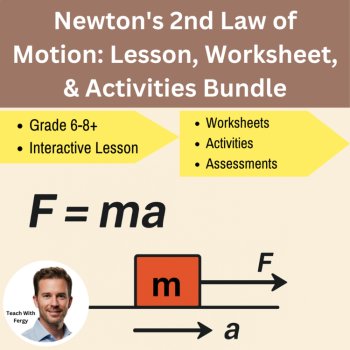 Newton's 2nd Law of Motion Lesson, Worksheet, Activities Bundle | 6th, 7th, 8th
$6.59
$10.85
Save 39%
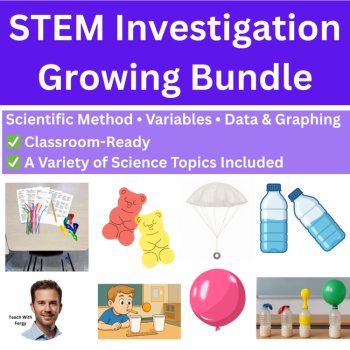 STEM Investigations Growing Bundle — Scientific Method, Design, Data & CER
$24.97
$88.13
Save 72%
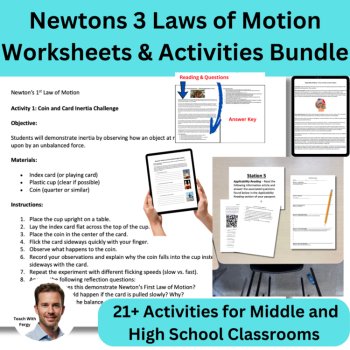 Newton's Three Laws of Motion Worksheets & Activities Bundle | 1st, 2nd, 3rd Law
$15.14
$38.79
Save 61%
No questions yet.

Meet the Seller
Middle and High School Science Engaging Resources
I have been selling resources to middle and high school teachers for the last 15 years. During that time I've also been in the classroom so I know what works and what will help your students the most.
Canada
AI Assisted
I develop the ideas, plan the activities, and guide the creation of all resources. AI tools assist with writing, illustrations, and design. Every resource is reviewed, edited, and refined using my teaching experience to ensure quality, accuracy, and meaningful real-world learning.
$6.38 $7.98
AI Assisted
I develop the ideas, plan the activities, and guide the creation of all resources. AI tools assist with writing, illustrations, and design. Every resource is reviewed, edited, and refined using my teaching experience to ensure quality, accuracy, and meaningful real-world learning.
$7.60 $9.50
AI Assisted
I develop the ideas, plan the activities, and guide the creation of all resources. AI tools assist with writing, illustrations, and design. Every resource is reviewed, edited, and refined using my teaching experience to ensure quality, accuracy, and meaningful real-world learning.
$5.60 $7.00
AI Assisted
I develop the ideas, plan the activities, and guide the creation of all resources. AI tools assist with writing, illustrations, and design. Every resource is reviewed, edited, and refined using my teaching experience to ensure quality, accuracy, and meaningful real-world learning.
$5.60 $7.00
AI Assisted
I develop the ideas, plan the activities, and guide the creation of all resources. AI tools assist with writing, illustrations, and design. Every resource is reviewed, edited, and refined using my teaching experience to ensure quality, accuracy, and meaningful real-world learning.
$6.56 $8.20