AI Assisted
AI Assisted
The seller says AI was used in making this resource, but didn't add details.
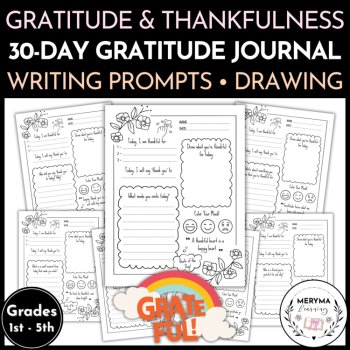
30-Day Thankfulness and Gratitude Journal Writing Prompts and Drawing Activities
$3.00

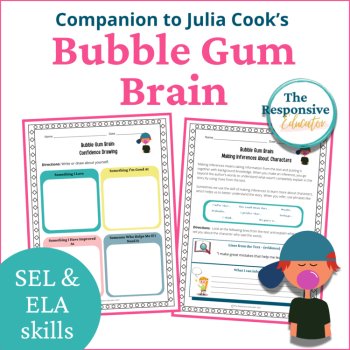
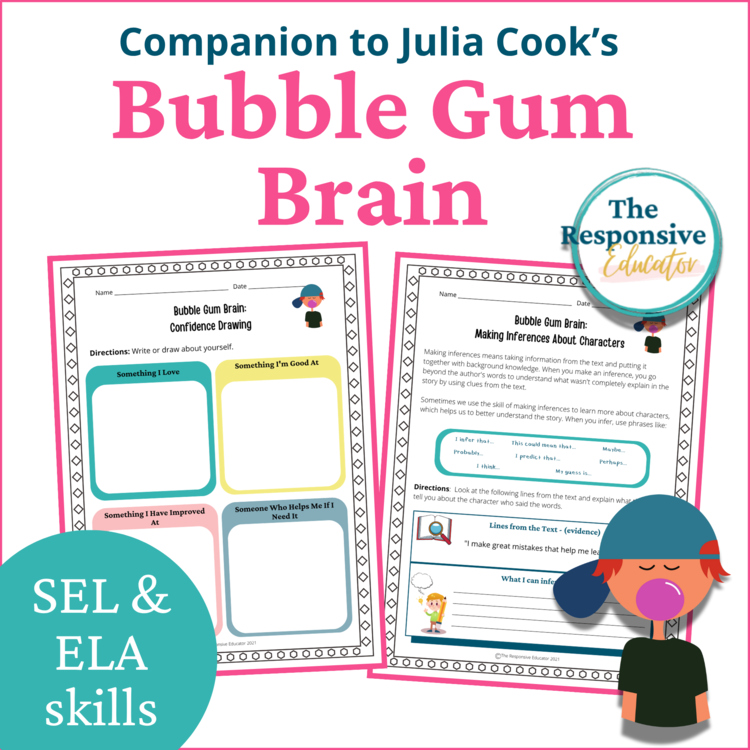
Bubble Gum Brain Book Read Aloud SEL Flexible Thinking Worksheets and Activities
(3 ratings)$7.25
Add to cartBubble Gum Brain Book Read Aloud SEL Flexible Thinking Worksheets and Activities is a structured companion for Bubble Gum Brain by Julia Cook. Designed for students in 2nd–5th grade, it helps students understand the difference between fixed and growth mindsets while developing flexible thinking, positive self talk, and perseverance.
This resource includes Bubble Gum Brain worksheets, flexible thinking worksheets & activities, and positive self talk worksheets and activities. Students learn how to recognize thoughts that keep them stuck, reframe negative thinking, and approach mistakes or challenges with a more productive mindset.
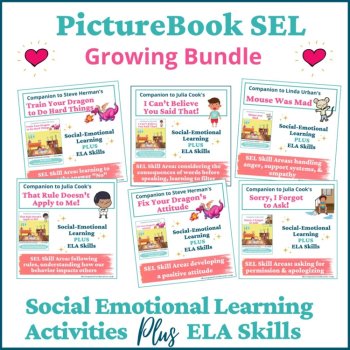
Part of a Collection of SEL Read Alouds
This resource is part of a growing collection of SEL read alouds that combine meaningful picture books with explicit social-emotional and literacy instruction. Each read-aloud gives students a relatable character and situation they can examine before connecting the lesson to their own experiences.
These character education read aloud activities allow teachers to discuss confidence, mistakes, persistence, and academic risk-taking in a supportive way. The accompanying character education book activities provide structured practice through discussion, writing, scenario analysis, and personal reflection.
When a Fixed Mindset Affects Learning
A fixed mindset may appear when a student avoids a challenging task, rushes to finish, becomes frustrated by mistakes, or says, “I’m just not good at this.” These responses may look like low motivation or refusal, but the student may actually be protecting themselves from feeling unsuccessful.
Simply telling students to try harder does not teach them what to do when effort feels uncomfortable or their first attempt does not work. Students need direct instruction in identifying unhelpful thoughts, adjusting their approach, and recognizing that progress often requires practice, feedback, and mistakes.
This resource was created to support that instruction.
Using an engaging picture book and structured discussion, this interactive read-aloud companion helps students understand that skills can grow over time. Students learn that flexible thinking does not mean pretending a task is easy. It means being willing to consider another strategy, accept support, and continue learning when the original plan is not working.
Why Teachers Use This Resource
This companion helps teachers:
What’s Included
This 96-page resource contains more than 40 differentiated activities designed for flexible use. Teachers can select the pages that best match their students’ needs without having to complete the entire resource.
The variety allows you to:
Interactive Read-Aloud Lesson Plan
The included lesson plan provides:
Flexible Thinking Worksheets and Activities
The flexible thinking worksheets & activities help students recognize when their thinking has become rigid. Students examine situations in which the first plan does not work, a task feels harder than expected, or they receive feedback they do not want to hear.
Students then practice considering another strategy, asking for help, breaking a task into smaller parts, or using feedback to improve their work. The goal is not to teach students to continue using an ineffective approach. It is to help them adjust their thinking and choose a more useful response.
Positive Self Talk Worksheets and Activities
The positive self talk worksheets and activities help students recognize the difference between an honest statement about difficulty and a thought that shuts down learning. For example, “I don’t understand this yet” leaves room for support and growth, while “I’ll never be able to do this” treats the current difficulty as permanent.
Students practice replacing negative self-talk with statements that are realistic, specific, and useful. Rather than relying on empty praise, they learn language that directs them toward a next step, such as trying another strategy, asking a question, or giving themselves more time.
Reframing Negative Thoughts
Reframing negative thoughts activities help students separate what happened from what they are assuming about themselves. A mistake does not prove that a student is incapable, and needing help does not mean that learning has failed.
Students examine common fixed-mindset thoughts and consider more balanced alternatives. They learn that reframing is not about pretending everything is positive. It is about interpreting a challenge in a way that supports problem-solving and continued effort.
Effort, Mistakes, and the Power of Yet
Power of yet worksheets help students understand that “not yet” describes a current stage of learning rather than a permanent limitation. Students identify skills they have developed over time and consider the practice, support, and mistakes that helped them improve.
The activities also distinguish productive effort from simply repeating the same unsuccessful strategy. Students learn that perseverance may include slowing down, changing approaches, using feedback, or accepting support.
Social Emotional Learning Skills
Students practice:
ELA Skills
Students also practice:
Additional Supports
The resource includes:
How Teachers Use This Resource
Teachers can use these Bubble Gum Brain worksheets and activities during:
About the Book
In Bubble Gum Brain by Julia Cook, Bubble Gum Brain and Brick Brain demonstrate two different ways of responding to challenges. Bubble Gum Brain stretches, learns, and grows, while Brick Brain remains rigid and resistant to change.
The story gives students a memorable way to understand how effort, mistakes, feedback, and persistence contribute to learning. It also helps them recognize that their thinking is not permanently fixed—they can practice responding to challenges in new ways.
Bottom Line
If your students struggle with confidence, negative self-talk, fear of mistakes, or giving up when work becomes difficult, this resource provides a structured way to teach the skills underneath those responses.
Through SEL read alouds, flexible thinking worksheets and activities, positive self talk worksheets, and meaningful reflection, students learn how to approach challenges with greater flexibility and confidence.
Curious for More?
Discover the range of impactful and engaging interactive read alouds & book companions available here, each carefully crafted to ignite student growth on multiple fronts.
Learn More: Interactive Readalouds for SEL and Literacy Skills
Discover the power of an interactive read aloud in promoting social-emotional learning (SEL) and literacy skills in children.
Whether you’re a teacher or a caregiver, learn how an interactive read aloud can positively transform young lives with this blog post: Interactive Read Alouds: How to Use Them to Promote SEL and Literacy Skills.
Get Connected
Want to stay in the loop? I’d love for you to join my community on TPT and be the first to know about an ever-expanding collection of exceptional resources. They're all about boosting your teaching journey and empowering your elementary classroom with fantastic SEL and behavior support resources.
Earn Credits
And here's the sweet deal – with your purchase, you're not just enriching your teaching toolkit. You also have the chance to spread the love through reviews and unlock TPT credits that may be used toward more exceptional educational resources.
Report this resource to Linked Through Learning
Reported resources will be reviewed by our team. Report this resource to let us know if this resource breaks our rules.
“This really helps to plan out the year with engaging activities.”
4.7
3
ratings
No reviews match. Try other filters.
No questions yet.
Meet the Seller
Behavior Support and Interventions
I provide resources that help teachers manage classroom behavior and teach social-emotional skills effectively. With over 20 years of experience in special education, I offer practical tools and strategies to support both teachers and students in achieving their best. I have been dedicated to supporting students with special needs since 2005, specializing in both behavioral and academic interventions. My extensive experience spans teaching in self-contained classrooms from grades K-12 and assisting general and special education teachers with managing significant behavioral challenges. As a former lead of an RTI committee and a behavior specialist, I have a deep understanding of effective classroom management strategies.
Florida
AI Assisted
The seller says AI was used in making this resource, but didn't add details.
$3.00
$4.00 (2)
$3.50 (1)