AI Assisted
AI Assisted
The seller says AI was used in making this resource, but didn't add details.
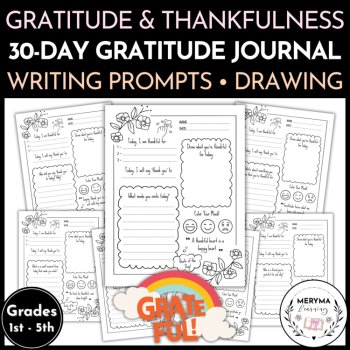
30-Day Thankfulness and Gratitude Journal Writing Prompts and Drawing Activities

$3.00

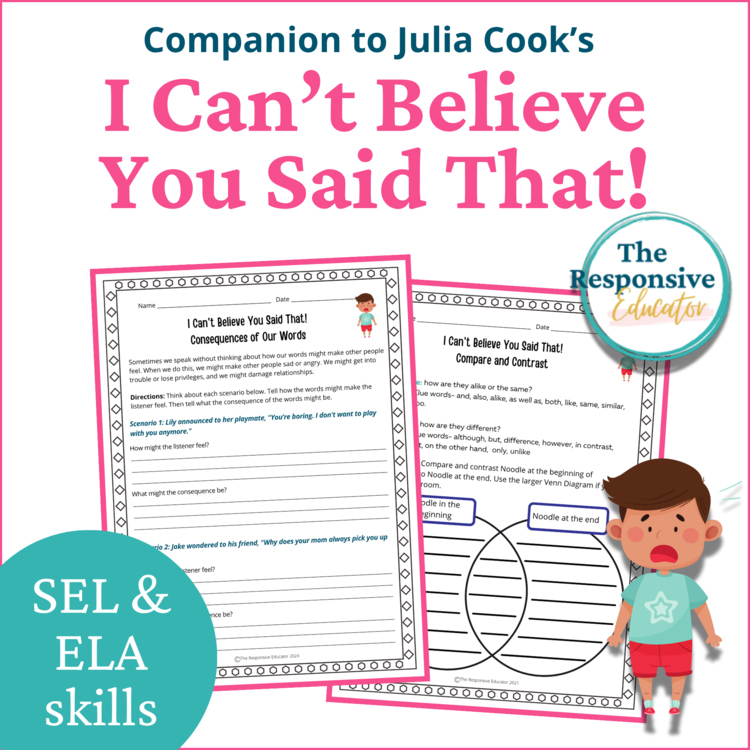
I Can't Believe You Said That Book SEL Character Education Read Aloud Activities
(3 ratings)$8.75
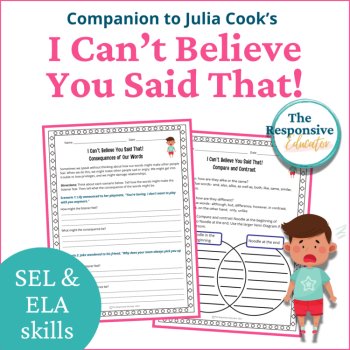
Add to cartI Can’t Believe You Said That Book SEL Character Education Read Aloud Activities is a structured companion for I Can’t Believe You Said That! by Julia Cook. Through guided discussion and differentiated follow-up activities, students learn to think before they speak, consider how their words affect other people, and make more thoughtful communication choices.
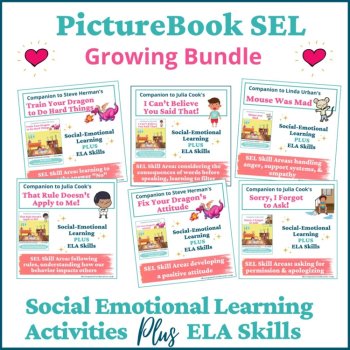
This resource is part of a growing collection of SEL read alouds that connect meaningful picture books with explicit instruction in behavior, social-emotional learning, and literacy. It can be used as an interactive read-aloud lesson, a short social-communication unit, or a flexible source of character education book activities that teachers can revisit throughout the year.
Help Students Understand Why Their Words Matter
Impulsive comments can quickly lead to hurt feelings, damaged trust, peer conflict, and classroom disruptions. Some students say whatever comes to mind without recognizing how their words may sound to another person. Others understand the problem afterward but still have difficulty pausing in the moment.
Repeated reminders to “be nice” or “watch what you say” do not necessarily teach the missing skill. Students may need explicit instruction in how to pause, consider the likely impact of a comment, and choose language that communicates the same idea more respectfully.
This resource was created to support that instruction.
Through a relatable picture book and structured character education read aloud activities, students examine the connection between thoughts, words, feelings, and outcomes. They practice using honest communication without treating every thought as something that must be said immediately or in its original form.
Why Teachers Use This Resource
This companion helps teachers:
What’s Included
This 96-page resource includes more than 40 differentiated activities. It is intentionally designed so that you do not need to complete every page.
The range of activities allows you to:
Interactive Read-Aloud Lesson Plan
The interactive read-aloud section includes:
If you are looking for an SEL social emotional read aloud that goes beyond reminding students to use polite words, this resource provides the structure needed to turn the story into explicit instruction in communication and self-control.
Think Before You Speak Activities
The think before you speak activities help students slow down and evaluate a comment before saying it. The goal is not to teach students that their thoughts or opinions do not matter. It is to help them communicate those thoughts in ways that are honest, useful, and respectful.
Students practice:
These activities provide direct practice with the decision-making process students need in real conversations.
Positive Behavior Choices
Communication is a behavior choice. Students may not control every thought that enters their mind, but they can learn to pause and make positive behavior choices about what they say and how they say it.
Making choices worksheets help students examine:
The activities help students understand that respectful communication does not require perfect wording. It requires awareness, effort, and a willingness to take responsibility when words cause harm.
Choices and Consequences Activities
The choices and consequences activities help students explore the natural outcomes of different communication choices. A comment may lead to trust and understanding, or it may lead to embarrassment, conflict, or distance in a relationship.
Students consider:
This allows teachers to discuss consequences as connected outcomes rather than relying only on punishment after a student says something inappropriate.
Emotional Regulation and Impulsive Speech
Students are often more likely to speak impulsively when they are excited, frustrated, angry, embarrassed, or trying to gain attention. They may know a communication rule when calm but have difficulty using it when emotions are stronger.
The emotional regulation learning worksheets help students recognize the feelings and physical signals that may come before impulsive speech. Social emotional regulation learning worksheets provide structured practice with pausing, managing the immediate reaction, and selecting a more productive response.
Teachers can use the emotional regulation activities worksheets when students need additional practice with:
Social-Emotional Learning Skills
Students practice:
ELA Skills
The resource also includes practice with:
These activities allow teachers to reinforce literacy skills while teaching communication, self-control, and perspective-taking.
Additional Supports
Additional materials include:
Ways to Use This Resource
Teachers can use these activities during:
About the Book
In I Can’t Believe You Said That! by Julia Cook, RJ says whatever comes to mind without recognizing how his words affect other people. With guidance from his parents, he begins learning how to pause, think, and choose more thoughtful responses.
The story provides a clear and relatable foundation for discussing impulsive language, polite words, social awareness, intent, impact, and responsibility.
The Bottom Line
If your students struggle with impulsive comments, unfiltered speech, or recognizing how their words affect others, this resource provides a structured way to teach the skills underneath those challenges.
Students learn to think before they speak, consider another person’s perspective, make positive behavior choices, and repair relationships when communication goes wrong. These skills support stronger classroom relationships and more successful communication beyond school.
Curious for More?
Explore the complete collection of SEL read alouds and book companions here. Each resource combines structured discussion, social-emotional learning, literacy practice, and differentiated follow-up activities to help students build skills they can use in real situations.
Learn More: Interactive Readalouds for SEL and Literacy Skills
Discover the power of an interactive read aloud in promoting social-emotional learning (SEL) and literacy skills in children.
Whether you’re a teacher or a caregiver, learn how an interactive read aloud can positively transform young lives with this blog post: Interactive Read Alouds: How to Use Them to Promote SEL and Literacy Skills.
Get Connected
Want to stay in the loop? I’d love for you to join my community on TPT and be the first to know about an ever-expanding collection of exceptional resources. They're all about boosting your teaching journey and empowering your elementary classroom with fantastic SEL and behavior support resources.
Earn Credits
And here's the sweet deal – with your purchase, you're not just enriching your teaching toolkit. You also have the chance to spread the love through reviews and unlock TPT credits that may be used toward more exceptional educational resources.
Report this resource to Linked Through Learning
Reported resources will be reviewed by our team. Report this resource to let us know if this resource breaks our rules.
“This was great for my 1st grade students.”
“Saved me time! Thank you!!!”
4.7
3
ratings
This was great for my 1st grade students.
Reply from The Responsive Educator
Thank you so much for your review, Sara! I really appreciate the positive feedback!
Sara F.
Grades taught: 1st
cool
Kelly's S.
Grades taught: 3rd
Saved me time! Thank you!!!
Reply from The Responsive Educator
I'm so glad! I hope you have a great year!
Emily G.
Grades taught: 4th
No questions yet.
Meet the Seller
Behavior Support and Interventions
I provide resources that help teachers manage classroom behavior and teach social-emotional skills effectively. With over 20 years of experience in special education, I offer practical tools and strategies to support both teachers and students in achieving their best. I have been dedicated to supporting students with special needs since 2005, specializing in both behavioral and academic interventions. My extensive experience spans teaching in self-contained classrooms from grades K-12 and assisting general and special education teachers with managing significant behavioral challenges. As a former lead of an RTI committee and a behavior specialist, I have a deep understanding of effective classroom management strategies.
Florida
AI Assisted
The seller says AI was used in making this resource, but didn't add details.
$3.00

$4.00 (2)
$3.50 (1)