AI Assisted
AI Assisted
The seller says AI was used in making this resource, but didn't add details.
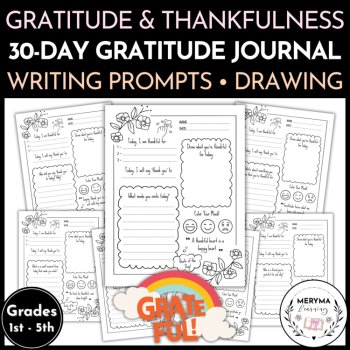
30-Day Thankfulness and Gratitude Journal Writing Prompts and Drawing Activities
$3.00

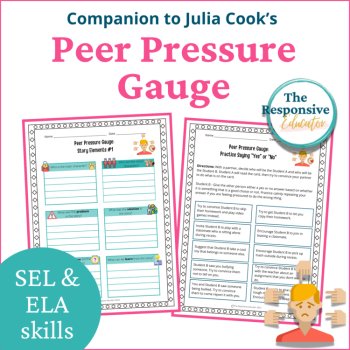
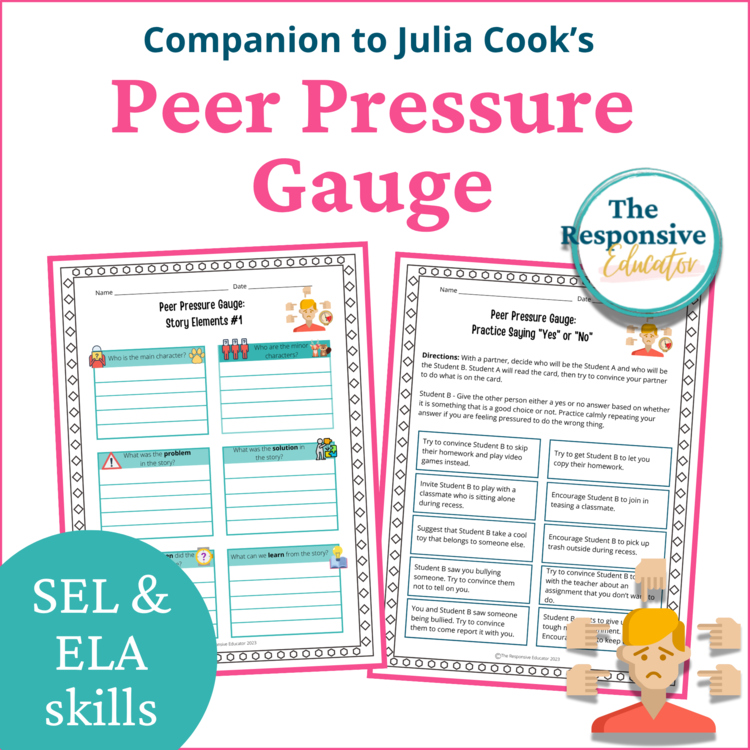
Peer Pressure Gauge Character Education Read Aloud Book Worksheets & Activities
(1 rating)$7.75
Add to cartPeer Pressure Gauge Character Education Read Aloud Book Worksheets & Activities is a structured companion for Peer Pressure Gauge by Julia Cook. Designed for students in 2nd–5th grade, it helps students recognize peer pressure, make independent decisions, and build the confidence needed to stand up for themselves.
The resource includes peer pressure worksheets and activities, self-advocacy practice, realistic scenarios, and decision-making exercises. Students learn how to identify when someone is trying to influence them, evaluate whether a choice matches their values, and respond without automatically following the group.
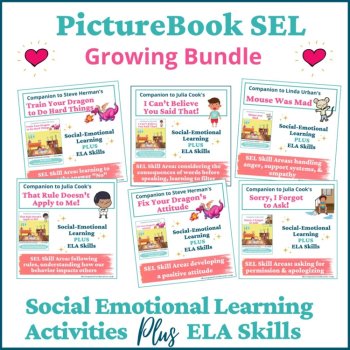
Part of a Collection of SEL Read Alouds
This resource is part of a growing collection of SEL read alouds that combine meaningful picture books with explicit social-emotional and literacy instruction. Each SEL social emotional read aloud gives students a safe way to examine a difficult social situation before applying the lesson to their own experiences.
These character education read aloud activities help teachers discuss peer influence, social pressure, and independent decision-making before a problem occurs. The accompanying character education book activities provide structured opportunities for students to practice what they could say and do when they face similar situations.
Why Students Need Direct Instruction About Peer Pressure
Many students know what they should do when they have time to think. The challenge comes when friends are watching, someone is pushing for an immediate answer, or a student worries that saying no could affect a friendship.
Peer pressure is not always obvious or openly threatening. It may sound like teasing, persistent encouragement, guilt, a promise of social acceptance, or the suggestion that “everyone else is doing it.” Students need practice recognizing these less obvious forms of pressure so they can respond before being pulled into a decision they do not want to make.
This resource was created to support that instruction.
Using an engaging picture book and guided discussion, this interactive read-aloud companion helps students identify peer influence, consider possible outcomes, and practice responding with confidence. Students learn that self-advocacy is not about being rude or refusing every suggestion. It means communicating their boundaries and making decisions based on safety, values, and personal responsibility.
Why Teachers Use This Resource
This companion helps teachers:
Teach students how to recognize peer pressure
Help students distinguish suggestions from unhealthy pressure
Build confidence and self-advocacy skills
Practice saying yes or no appropriately
Support students in making independent decisions
Reinforce positive behavior choices in realistic social situations
Teach students to consider choices and consequences
Prepare students to respond before they encounter pressure
Integrate SEL instruction into ELA without adding a separate lesson
Differentiate instruction using varied activities and ability levels
What’s Included
This 98-page resource contains more than 40 differentiated activities designed for flexible use. Teachers can select the pages that best match their students’ needs without having to complete the entire resource.
The variety allows you to:
Differentiate for student readiness and ability levels
Use the resource across several days or weeks
Assign activities during whole-group, small-group, center, or independent instruction
Revisit self-advocacy without repeating the same task
Select targeted activities for counseling or behavior-support groups
Interactive Read-Aloud Lesson Plan
The included lesson plan provides:
Before-, during-, and after-reading questions
Structured discussion prompts
Opportunities to predict, explain, and reflect
Connections between the story and real peer-pressure situations
Guidance for discussing influence, boundaries, values, and decision-making
Peer Pressure Worksheets and Activities
The peer pressure activities help students identify different ways people may try to influence a decision. Students examine realistic situations, determine whether pressure is occurring, and consider what could make the situation difficult to manage.
The peer pressure worksheets give students structured opportunities to think through possible responses before they are under pressure. Students practice using clear language, suggesting an alternative, leaving an unsafe situation, finding a supportive friend, and asking an adult for help when needed.
Self-Advocacy and Independent Decision-Making
Self-advocacy activities help students recognize that they are allowed to communicate a boundary even when another person disagrees. Students practice expressing their decisions clearly without becoming aggressive or apologizing for making a safe choice.
The activities also help students distinguish between healthy compromise and giving in to pressure. Students learn that friendship does not require them to participate in behavior that feels unsafe, unkind, dishonest, or inconsistent with their values.
Choices, Consequences, and Positive Behavior
The choices and consequences activities help students look beyond the immediate social reward of following the group. Students consider how a decision could affect safety, trust, relationships, school expectations, and their own feelings afterward.
Positive behavior choices activities give students practice selecting responses that reflect both independence and responsibility. They also examine how to support a friend who is under pressure without taking control of that person’s decision.
Social Emotional Learning Skills
Students practice:
Recognizing direct and indirect peer pressure
Identifying when influence becomes unhealthy pressure
Practicing self-advocacy
Communicating personal boundaries
Saying yes or no appropriately
Making independent decisions
Considering short- and long-term consequences
Responding when others continue to apply pressure
Helping a friend who feels pressured
Making positive behavior choices
Identifying when adult support is needed
ELA Skills
Students also practice:
Making predictions
Summarizing
Analyzing characters and their choices
Making text-to-self connections
Comparing and contrasting
Explaining cause and effect
Responding to writing prompts
Additional Supports
The resource includes:
Realistic peer-pressure scenarios for discussion and problem-solving
Reflection and writing prompts for deeper thinking
Notes to families with strategies for supporting independent decision-making at home
Real photographs to strengthen student connection and engagement
Differentiated activities for varied instructional needs
How Teachers Use This Resource
Teachers can use these character education book activities during:
Whole-group interactive read-aloud lessons
Small-group SEL or self-advocacy instruction
School counseling groups
Centers or independent work
Behavior-support programs
Self-contained classroom instruction
Individual support for students who tend to follow others
About the Book
In Peer Pressure Gauge by Julia Cook, Norbert faces a situation that tests his ability to make his own decision while other people are watching. The story gives students a relatable example of how social pressure can affect their thinking and behavior.
Through Norbert’s experience, students explore how to recognize pressure, evaluate their options, and respond in a way that reflects their values. The story provides a strong foundation for conversations about confidence, boundaries, friendship, and responsible decision-making.
Bottom Line
If your students struggle with peer pressure, following the group, or expressing their own decisions confidently, this resource provides a structured way to teach those skills. Through SEL read alouds, peer pressure worksheets and activities, self-advocacy practice, and choices and consequences activities, students learn how to think independently and respond to social pressure more effectively.
Curious for More?
Discover your next impactful and engaging interactive read aloud & book companion available here, each carefully crafted to ignite student growth on multiple fronts.
Learn More: Interactive Readalouds for SEL and Literacy Skills
Discover the power of an interactive read aloud in promoting social-emotional learning (SEL) and literacy skills in children.
Whether you’re a teacher or a caregiver, learn how an interactive read aloud can positively transform young lives with this blog post: Interactive Read Alouds: How to Use Them to Promote SEL and Literacy Skills.
Get Connected
Want to stay in the loop? I’d love for you to join my community on TPT and be the first to know about an ever-expanding collection of exceptional resources. They're all about boosting your teaching journey and empowering your elementary classroom with fantastic SEL and behavior support resources.
Earn Credits
And here's the sweet deal – with your purchase, you're not just enriching your teaching toolkit. You also have the chance to spread the love through reviews and unlock TPT credits that may be used toward more exceptional educational resources.
Report this resource to Linked Through Learning
Reported resources will be reviewed by our team. Report this resource to let us know if this resource breaks our rules.
“Love Julia Cook activities that consistently teach students how to do a life skill”
Love Julia Cook activities that consistently teach students how to do a life skill
Northridge E.
Grades taught: 2nd
No questions yet.
Meet the Seller
Behavior Support and Interventions
I provide resources that help teachers manage classroom behavior and teach social-emotional skills effectively. With over 20 years of experience in special education, I offer practical tools and strategies to support both teachers and students in achieving their best. I have been dedicated to supporting students with special needs since 2005, specializing in both behavioral and academic interventions. My extensive experience spans teaching in self-contained classrooms from grades K-12 and assisting general and special education teachers with managing significant behavioral challenges. As a former lead of an RTI committee and a behavior specialist, I have a deep understanding of effective classroom management strategies.
Florida
AI Assisted
The seller says AI was used in making this resource, but didn't add details.
$3.00
$4.00 (2)
$3.50 (1)