
15 Retro 90s Pop Art Growth Mindset Quotes Coloring Pages Positive Class Posters

$3.89 (3)

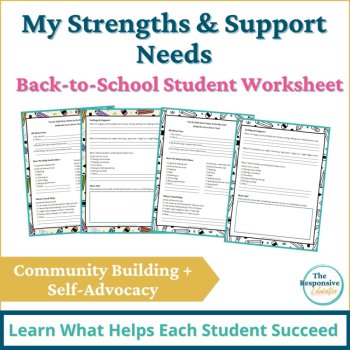
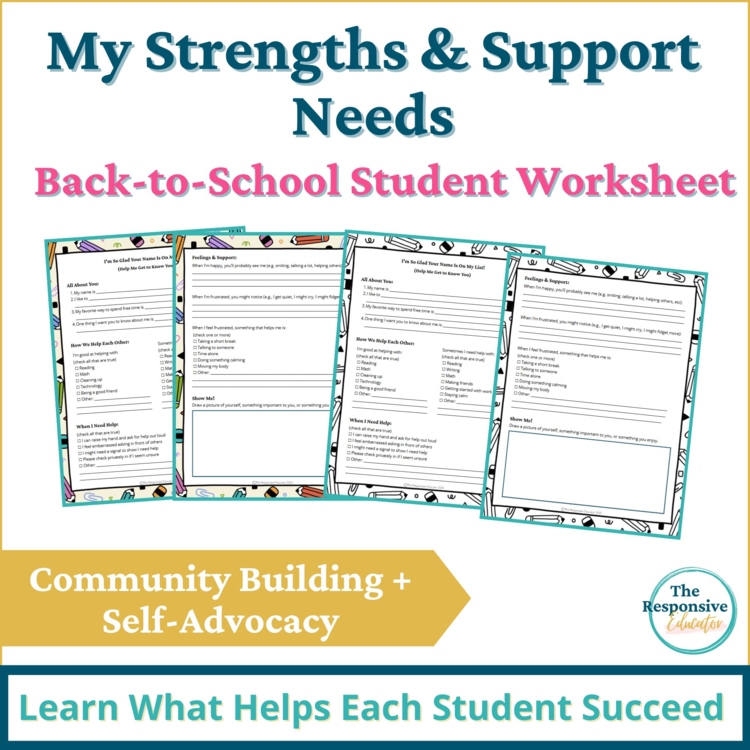
Student Back to School Worksheet Community Building Questions Self Advocacy helps teachers get to know their students while gathering information they can use to plan academic, behavioral, and social-emotional supports. Unlike a typical all-about-me activity, this two-page resource helps students describe their strengths, support needs, emotional responses, interests, and preferred ways to ask for help.
During the first few weeks of school, teachers are learning much more than student names and favorite activities. They are also trying to understand how students communicate, what helps them feel successful, when they may need additional support, and how they respond when work or social situations become difficult.
The beginning of year questions in this resource give students a structured way to share that information before challenges arise. Teachers can use their responses to plan proactive classroom supports, identify possible accommodations, and begin building trusting relationships from the start.
Why Teachers Use This Resource
A traditional all-about-me worksheet may tell you what a student likes, but it does not always tell you what that student needs in order to participate, learn, or ask for help. This student back to school worksheet combines familiar get-to-know-you questions with more meaningful prompts about strengths, support needs, emotions, and self-advocacy.
The resource can also be used as an independently completed alternative to a back to school interview. Students can share personal information privately without being expected to discuss their academic, social, or emotional needs in front of classmates.
What Students Share
Students answer questions about:
These prompts give teachers a more complete picture of each student. They also help students recognize that everyone enters the classroom with both strengths to contribute and areas where support may be helpful.
Build Classroom Community With Meaningful Questions
Classroom community building involves more than helping students learn one another’s names. Students also need to know that their strengths are valued, their needs can be communicated, and asking for help is an expected part of learning.
The included community building questions help teachers identify student interests, abilities, and support preferences. Responses can be used to plan classroom roles, find shared interests, guide private conversations, and create a classroom environment in which students understand how they can help one another.
Develop Early Self-Advocacy
Students are more likely to ask for help when they have already considered what they need and how they prefer to communicate it. This student self advocacy worksheet includes prompts that ask students how they usually request assistance and how they would like a teacher to respond when they appear unsure or frustrated.
The questions acknowledge that students may communicate their needs in different ways. Some students may feel comfortable asking aloud, while others may prefer a quiet conversation, private check-in, written message, or agreed-upon signal. Learning these preferences early can help teachers respond more effectively while encouraging students to take an active role in communicating what helps them learn.
Identify Strengths and Support Needs
The worksheet asks students to identify ways they can contribute to the classroom, including helping with reading, math, technology, cleaning, or friendship. It also gives them a private way to share areas in which they may need extra help, such as reading, writing, math, making friends, getting started with work, or staying calm.
This balanced approach prevents the activity from focusing only on student difficulties. Teachers receive useful information about where support may be needed while also learning what each student can contribute to the classroom community.
Understand Emotional Responses
Students do not always have the words to explain what frustration looks like or what helps them recover. The second page asks students to describe what teachers may notice when they feel happy or frustrated and which strategies help them calm down.
Their responses can provide an early starting point for conversations about emotional regulation and behavior support. They may also help teachers recognize that a student’s quietness, movement, facial expression, or avoidance can communicate a need before the situation becomes more difficult.
Use Student Responses to Plan Proactive Supports
Student responses can offer useful early information for general education, special education, intervention, and inclusive classrooms. Teachers may notice patterns related to task initiation, academic confidence, peer relationships, emotional regulation, or help-seeking.
Use the completed worksheets to support:
This form is not a formal assessment. It is an approachable starting point for understanding how students view their strengths, needs, emotions, and learning preferences.
What’s Included
How Teachers Use This Resource
Use this resource:
The resource is flexible for use across grade levels. Younger students may need an adult to read the questions or record their responses, while older students can complete the pages independently and use their answers as the starting point for a private teacher conference.
No Prep and Ready to Use
This student back to school worksheet is ready to print and use. Teachers can review responses individually, discuss selected answers privately with students, or use nonpersonal responses to identify interests and strengths that can help build classroom community.
Use Student Back to School Worksheet Community Building Questions Self Advocacy to move beyond surface-level introductions, strengthen student relationships, and gather meaningful information that helps you support students before challenges arise.
Please follow me on TPT for more great behavior tracking and SEL resources. And remember, if you purchase, please leave a review and TPT will give you credits toward more fabulous TPT resources!
Report this resource to Linked Through Learning
Reported resources will be reviewed by our team. Report this resource to let us know if this resource breaks our rules.
No questions yet.
Meet the Seller
Behavior Support and Interventions
I provide resources that help teachers manage classroom behavior and teach social-emotional skills effectively. With over 20 years of experience in special education, I offer practical tools and strategies to support both teachers and students in achieving their best. I have been dedicated to supporting students with special needs since 2005, specializing in both behavioral and academic interventions. My extensive experience spans teaching in self-contained classrooms from grades K-12 and assisting general and special education teachers with managing significant behavioral challenges. As a former lead of an RTI committee and a behavior specialist, I have a deep understanding of effective classroom management strategies.
Florida

AI Assisted
The seller says AI was used in making this resource, but didn't add details.
$3.00 (1)