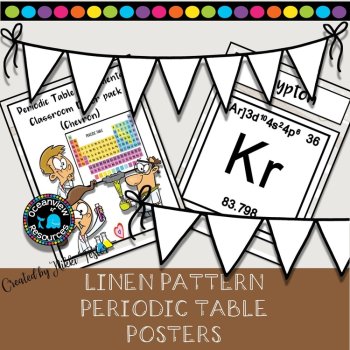
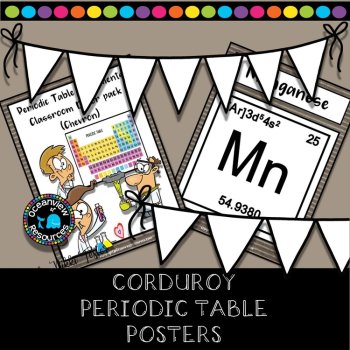
Science Posters- The Periodic Table-Brown Corduroy Design
$5.00 (1)

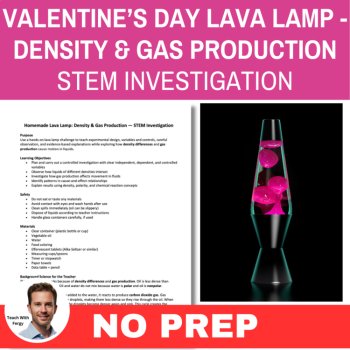
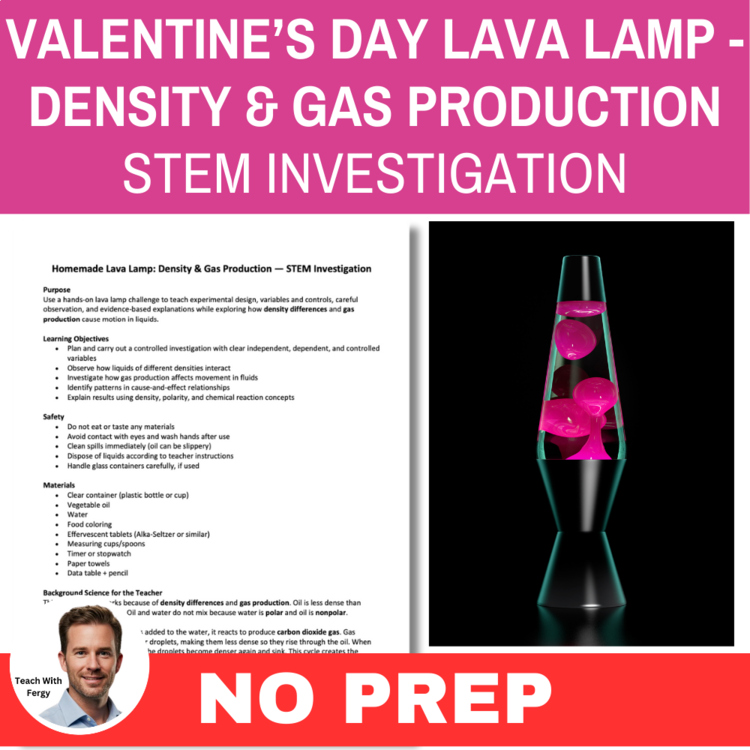
Students will investigate density, polarity, and gas production through a Valentine’s Day–themed lava lamp investigation. Using oil, water, food coloring in Valentine colors, and heart-themed effervescent tablets, students explore how chemical reactions can make liquids move in surprising ways—perfect for connecting science to a holiday they recognize.
As students add different amounts of the tablet, they observe how carbon dioxide gas bubbles temporarily change the density of the colored water, causing it to rise and fall through the oil layer like floating Valentine “hearts.” Students record observations, compare trials, and identify patterns between tablet amount, gas production, and fluid motion.
Note: This Investigation is similar to my 'Homemade Lava Lamp STEM Investigation - Density & Gas Production' but with a Valentine's Day twist.
Learning Targets
What’s Included
Teacher Guide
Setup tips, safety notes, and background explanations of density, polarity, and gas-producing reactions. Includes guidance for standardizing oil-to-water ratios, tablet amounts, timing, and observation procedures to ensure fair comparisons.
Student Packet
Hypothesis prompt, variables chart, step-by-step setup instructions, structured data tables, observation recording pages, analysis questions, and a guided CER response.
Analysis & Answer Key
Expected patterns (more tablet → more gas → increased motion), sample data, detailed explanations, common error sources, and a full model CER grounded in density and gas production.
Rubric
Assesses understanding at every stage of the lab, including background knowledge, experimental design, data collection, analysis, CER writing, collaboration, and safety.
What Students Will Learn
Why Teachers Love It:
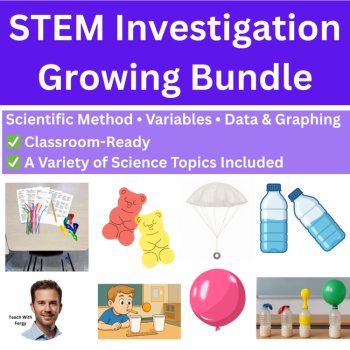
➡️ You can get this STEM as well as all my other ones in this series inside my STEM Investigations Growing Bundle. As more labs are added, the price will increase. CLICK HERE to have a look
Best For
Physical Science (density, mixtures, reactions), chemistry foundations, lab skills, CER writing, STEM challenges, or sub-friendly hands-on lessons.
Materials Needed
Clear container (plastic bottle or cup), vegetable oil, water, food coloring, effervescent tablets (Alka-Seltzer or similar), measuring cups/spoons, timer, paper towels, student packet (included).
Estimated Timing
1 class period for setup → testing → data collection → CER writing
Add 10–20 minutes for discussion questions and improvement proposals
➡️ You can get this activity inside my STEM Investigations Growing Bundle.
I also have the following STEM Labs in My Store:
NGSS alignment
MS-PS1-2, MS-PS2-2 (properties of matter, forces & interactions)
Practices: Planning & Carrying Out Investigations; Analyzing Data; Constructing Explanations; Argument from Evidence
Assessment
Use the included rubric to score experimental design, procedure consistency, observation quality, scientific reasoning, CER strength, collaboration, and safety.
Report this resource to Linked Through Learning
Reported resources will be reviewed by our team. Report this resource to let us know if this resource breaks our rules.
No questions yet.

Meet the Seller
Middle and High School Science Engaging Resources
I have been selling resources to middle and high school teachers for the last 15 years. During that time I've also been in the classroom so I know what works and what will help your students the most.
Canada
AI Assisted
I develop the ideas, plan the activities, and guide the creation of all resources. AI tools assist with writing, illustrations, and design. Every resource is reviewed, edited, and refined using my teaching experience to ensure quality, accuracy, and meaningful real-world learning.
$6.38 $7.98