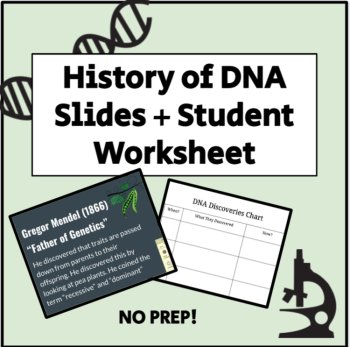
History of DNA Slides + Student Worksheet
 Ms Kiaras Science Teacher Shoppe
$4.00

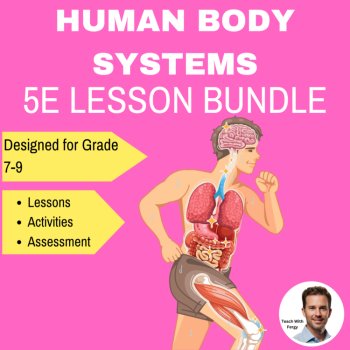
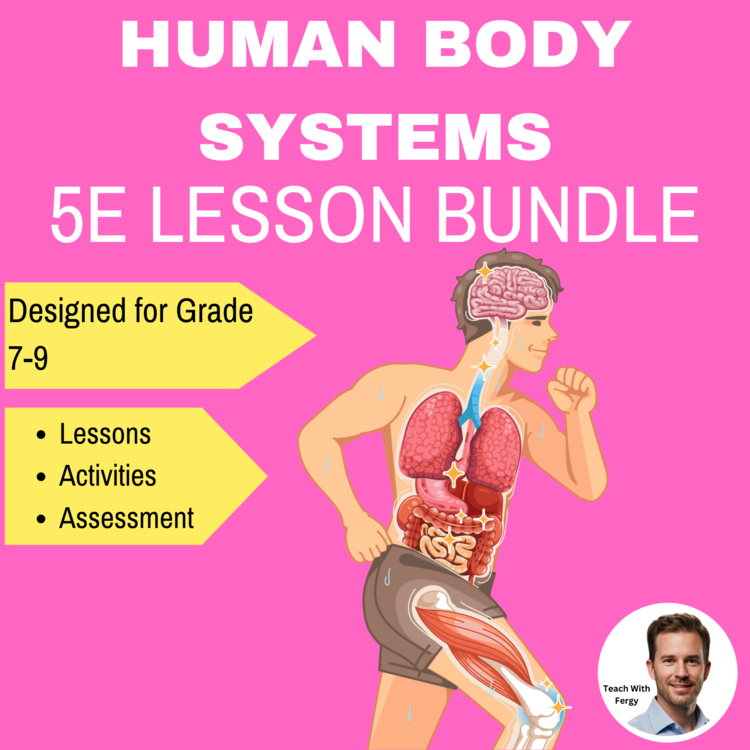
Human Body Systems - 5E Lesson Bundle | Cells, Tissues, Organs, Organ Systems
$22.08 $14.97
Get BundleHuman Body Systems Interactions - Fully editable and Complete 5E Lesson. This bundle is designed for middle school science students, but the content can be easily adapted to fit different learning levels.
Lesson Objectives:
Throughout this 5E lesson, students will learn about:
How does the 5E model facilitate learning?
What's included?
Engagement Phase - Students begin by watching the included video and answering the associated questions in the file Engagement Phase Questions.
This phase is designed to introduce the idea that the human body works as a group of interacting systems rather than separate parts. Students answer 10 video-based questions that can be used for discussion, assessment, or simply to build interest and activate prior knowledge. This is a great way to begin conversations about how different body systems work together.
Exploration Phase – Body Systems Lab Station Activity
This fully editable Lab Station Activity is meant to get your students out of their seats and engaged in the content.
In groups of 2–3, students complete the Body Systems Stations and submit their passport when finished. The stations encourage students to focus on how systems work together rather than only memorizing each system’s job. Students explore cause-and-effect relationships such as how the respiratory and circulatory systems work together to deliver oxygen, or how the nervous and muscular systems work together to create movement.
Explanation Phase
Explain – Body Systems Lesson | How Your Body Systems Work Together
Throughout the lesson, students will learn how different body systems interact to help the body carry out life processes and maintain homeostasis.
This is the instructional phase where concepts are presented to students in a clear and applicable way
The lesson can also be supported with individual body system lessons as needed, including digestive, respiratory, circulatory, nervous, muscular/skeletal, integumentary, endocrine, and homeostasis lessons. The presentations and student notes are provided in Google and Office formats for flexible classroom or online use.
Elaborate Phase
Students complete the Human Body Systems Data Graphing Investigations.
This phase involves students applying what they have learned in a new way by using data to explain body system changes, patterns, and interactions. Students may work individually or in small groups, and you can assign one, two, or all three graphing activities depending on your classroom needs. This is an excellent way for students to extend their understanding of how body systems interact using evidence and analysis.
Evaluate Phase
Body Systems in Action Project
Your students will demonstrate their understanding and evaluate their own progress through a culminating project.
In this project, students create a model, animation, or visual explanation showing how multiple body systems interact. Students are expected to explain the function of major body systems and describe how at least two body systems interact to complete a task. This gives students the opportunity to show that they understand body systems as connected and interdependent rather than isolated parts to memorize.
The following 5E lessons are currently available in My Store
Physics
• Newton's Three Laws of Motion
• Current Electricity and Circuits
• One and Two-Dimensional Motion
• Static Electricity
• Projectile Motion
• Light and its Production
• Energy, Energy Transfer, and its Forms
• Kinetic and Gravitational Potential Energy
• Electricity Production
• Friction
• Density and Buoyancy
• Sound and Hearing
• Uniform Acceleration
• How Planes Fly
• Refraction
• Work
• Power
• Magnetic Fields
• Momentum, Conservation of Momentum, and Impulse
• Forces
• Flight
• Nuclear Energy - Fission and Fusion - Middle School
• Nuclear Energy - Fission and Fusion - High School
• Simple Machines - Middle School
• Simple Machines - High School
Biology
• Cells and the Cell Theory
• Digestive System
• Photosynthesis and Cellular Respiration
• Mitosis and the Cell Cycle
• Circulatory System
• Cancer
• Photosynthesis
• Respiratory System
• Cell Membrane and Transport
• Energy Flow In Ecosystems
• The Human Eye
• Genetic Material: DNA and RNA
• Nervous System
• Plant and Animal Cells
• Carbohydrates and Lipids
• Photosynthesis and Cellular Respiration
• Cellular Organelles - Cell Structure and Function
• Human Body Systems
Ecology
• The Cycling of Matter: The Water and Carbon Cycles
• Cells and the Cell Theory
• Ecosystems
• Biodiversity
• Invasive Species
• Interactions Within Ecosystems
• Photosynthesis
• Biomes
• The Classification of Living Things
• Photosynthesis
• Ecological Succession
• Energy Flow in Ecosystems
• Plant Sexual and Asexual Reproduction
Chemistry
• Physical and Chemical Properties and Changes
• Atoms and the Atomic Theory
• Chemical Reactions
• Types of Chemical Reactions and Balancing Equations
• Molecular and Ionic Compounds
• Acids, Bases, and pH
• The Periodic Table
• Particle Theory and Matter Classification
• The Mole/Avogadro's Number
• Types of Bonds and Intermolecular Forces
• Solutions and Mechanical Mixtures
• Matter and the Particle Theory of Matter
Coming Soon:
• Nomenclature
• Intermolecular Forces
• Stoichiometry
• Gases
Earth and Space Science
• Climate Change and Global Warming
• The Moon and its Phases
• Our Solar System
• The Seasons
• Human Space Exploration
• The Life and Death of Stars
• Asteroids, Comets, and Meteors
• Solar and Lunar Eclipse
• Tectonic Plates
• Rock Cycle
Coming Soon:
• Galaxies and our Universe
Report this resource to Linked Through Learning
Reported resources will be reviewed by our team. Report this resource to let us know if this resource breaks our rules.
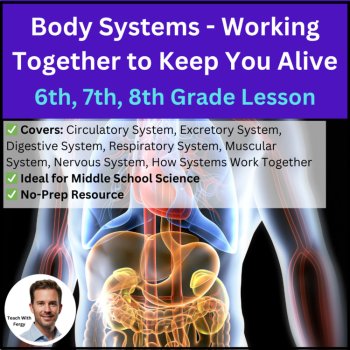
MS-LS1-3 - This lesson discuss Body Systems - Working Together to Keep You Alive. Specifically, it looks at the Circulatory System, Excretory System, Digestive System, Respiratory System, Muscular System, Nervous System, and How Systems Work Together. This lesson is intended for students in 6th, 7th
These three human body systems data graphing activities will help your students understand how heart rate changes during exercise, how breathing rate and oxygen use increase with activity, and how food energy and activity level are connected while building strong graphing and data analysis skills. T
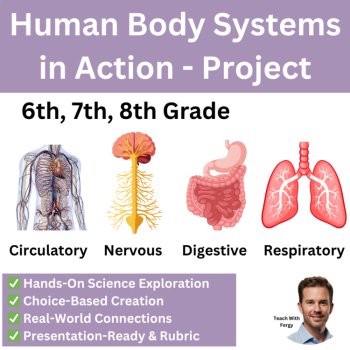
In this project which covers MS-LS1-3, you will explore how body systems work together to keep the human body healthy and functioning. Students will research the main parts and jobs of each system, discover how they depend on each other, and learn what happens when one doesn’t work properly. Student
Human Body Systems - NGSS Station Activity - MS-LS1-3Teach body systems with a no-prep station lab (MS-LS1-3): 7 stations show how systems depend on each other (circulatory, nervous, muscular), with passports, answer keys, Word and PDF Versions of all files.Perfect for middle school science classes,
No questions yet.

Meet the Seller
Middle and High School Science Engaging Resources
I have been selling resources to middle and high school teachers for the last 15 years. During that time I've also been in the classroom so I know what works and what will help your students the most.
Canada