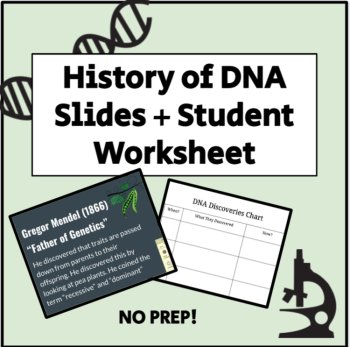
History of DNA Slides + Student Worksheet
 Ms Kiaras Science Teacher Shoppe
$4.00

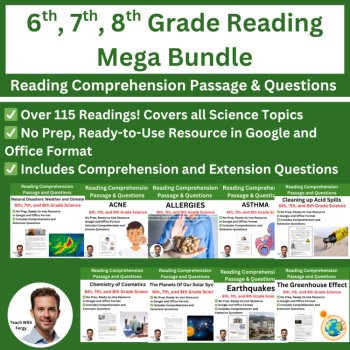
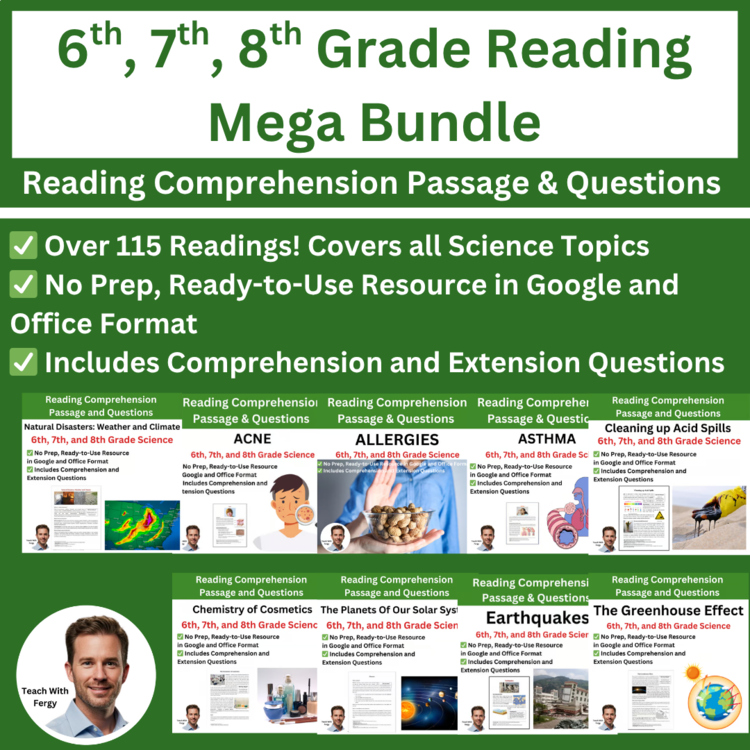
Reading Comprehension Article & Question Mega Bundle | 6th, 7th, 8th Grade
$417.63 $97.49
Get BundleReading Comprehension Passage & Questions Bundle 6th, 7th, 8th Grade - Mega bundle. This resource contains over 150 reading comprehension articles for students in grades 6, 7, and 8 and the bundle is always growing. This bundle will save you 75% vs. purchasing the resources individually.
Tackle literacy and science by having your students read and answer questions from a scientific article. Questions include knowledge (direct from the paper), thinking, connecting, application, and open-ended varieties.
✅ Clear, Student-Friendly Content - Helps students explore current science topics and applications using accessible language and relevant examples
✅ No Prep, Ready-to-Use – Print or assign digitally with Google Docs, Microsoft Word, and PDF formats for seamless classroom use.
✅ Supports Critical Thinking – Includes a variety of question types, from factual recall to deeper analysis and open-ended responses.
✅ Perfect for Grades 6-8 & Differentiation – Designed for middle school students and older learners needing additional reading support.
--------------------------------------------------
Each Reading is Google Classroom and Distance Learning Ready
Having all three options allow you to assign the reading to your students without worrying about formatting issues as all the work has already been done for you. It also allows you, as well as your students, to access everything no matter where you are or what kind of equipment is being used.
No prep, no formatting, no issues. Simply download, print (or upload to your class site), and you’re all set!
-------------------------------------
The Problem You Face - Not having the time to properly teach scientific literacy (disciplinary literacy) or improve your students reading comprehension and analysis skills.
The Solution
These fully editable, NO PREP reading comprehension articles are composed of relevant, applicable, and engaging reading activities which can be used to:
• introduce your topic
• improve your students' reading comprehension and scientific literacy skills
• improve your students' analysis skills
• provide an extension activity to students who move at a faster pace
• provide extra credit to students in need
• measure your students' literacy skills
Furthermore, these resources work very well as emergency substitute plans as they will keep your students on task and focused while you are away.
Each resource will take your students between 50-75 minutes to complete and includes some open-ended questions. An answer key is also included for your reference.
----------------------------------------------------------------------------------------------
The Following Readings Are Included PLUS Many More:
Health and Wellbeing
• Concussions
• The Common Cold
• Allergies
• Cancer
• Viruses
• The Cardiovascular System
• Vaccines
• Blood Types
• The Nervous System
• Asthma and Asthma Attacks
• Acne
• Immune System – Your Body’s Police Force
• Fracking and Its Dangers
• The Measles
• Stem Cells
• The Flu
• How Protective Equipment Keeps You Safe
• Caffeine: The Elixir of Energy
• Exercise and its Importance for Health
• Smallpox
• HIV and AIDS
• Polio
• Effects of stress on the brain
• Pesticides
• Whooping Cough
• Genetics and Gene Therapy
• Down Syndrome
• Cystic Fibrosis
• Heart Disease
• Heart Attack and Stroke
• Multiple Sclerosis
• Laser Eye Surgery
• Muscle Growth
• Diabetes
• Development of Synthetic Insulin
Ecology
• Biomes
• Invasive Species
• Urban Sprawl
• Food Webs
• Why Leaves Change Color In The Fall
• The Effects of Pollution
• Endangered Species
• Animal Adaptations
• Biodiversity
• The Water Cycle
• The Seasons and What Causes Them
• Nocturnal Animals
• Climate Change
• Oil Spills and Their Consequences
• Farming – Is Organic Really Better?
• Fracking and Its Dangers
• Why Bees Are Important
• Bioaccumulation and Biomagnification
• Ecosystems
• Mosquitoes And The Diseases They Spread
• Predator-Prey Relationship
• Physical Adaptations
• Watersheds
Chemistry
• The Chemistry of Cooking
• Water Softeners
• Chemistry of Dyeing Hair
• Smog
• Ocean Acidification
• Pollution Control Devices
• The Greenhouse Effect
• Cleaning up Acid Spills
• Rustproofing
• Chemistry of Cosmetics
• How Instant Ice Packs and Heat Packs Work
Physics and Energy
• Energy Use and Conservation
• Wind Energy Production
• Hydroelectric Energy Production
• Solar Electricity Production
• Fossil Fuel Energy Production
• Nuclear Energy - Fission and Fusion
• The Science of Roller Coasters
• Optical Phenomena
• The Northern and Southern Lights
• Car Safety
• Hydraulics
• Simple Machines
• Biofuels from Algae
Earth Science, Natural Disasters, and Weather
• Earthquakes
• Hurricanes
• Tornadoes
• How Weather Works
• Lightning
• Thunderstorms
• Why The Wind Blows
• Climate Change
• Volcanoes
• Tsunamis
• Natural Disasters: Weather and Climate
• Natural Disasters: Earth, Water, and Space
• Atmospheric Circulation
General Sciences
• Making Food Using Fermentation
• Why is the Sky Blue?
• The Limitations of Space Travel
• Artificial Preservatives
• Plate Tectonics
• How Do Ships Float?
• Effects of Everyday Forces
• The Planets Of Our Solar System
• Fossils
Biology
• Genetically Modified Organisms
• Twins - Identical and Fraternal
• The Importance of Bats
• Predator-Prey Relationship
• Biofuels from Algae
----------------------------------------------------------------------------------------------
Praise For My Reading Comprehension Resources:
"Perfect for informational text reading standards! Thanks!"
"I teach middle school science and need to include informational text in my classroom. These readings are great for independent reading for my grade level and upper-level readers. The articles address CCSS.ELA-Literacy.RST.6-8.1 (Citing specific textual evidence to support analysis of science and technical texts.) and CCSS.ELA-Literacy.RST.6-8.10 (By the end of grade 8, read and comprehend science/technical texts in the grades 6-8 text complexity band independently and proficiently.). The leveled questions allow you to subtly assign the questions to different ability students working in a group.
Topics are relevant to the students and current. Graphics draw the students into the article.
I'm going to have one printed and waiting in for my substitute folder too!
THANKS!"
"Thanks for putting together a wonderful resource."
"I teach Special Education high school science in Maryland in a special school for children with learning disabilities/Autism. I liked the readings and I think students could relate to the topics. I know these are too high a reading level for most of my students and I would read it out loud and highlight the important information together. I would not be able to use the higher order thinking questions (which I like) with these kids. For my high students (very few of these in my school :), I really like these especially how you noted where you got the information which if they were inclined, they could go back to the original source. I like that you have scaffolded the questions and I would only be able to use these with a handful of students, but I think in a regular high school classroom (I spent many years in regular ed) these are spot on. Thank you for sharing."
--------------------------------------------------
How this product will help your students:
- Improve their scientific and disciplinary literacy skills
- Improve their reading comprehension and scientific knowledge
- Give them insights into important scientific concepts
- Provide an extension activity for your faster moving/more gifted students
How this product will help you:
- Allow you to meet the NGSS, TEKS and Common Core Standards
- Provide you with a concise introduction to your topic
- Provide you with an engaging and easy to leave substitute plan which will keep your students engaged and on task
- Prove you a means of measuring your students' literacy skills
We don't spend enough time teaching scientific literacy to our students. This is either because we don't have the resources to do so effectively or we don't have the time. However, teaching our students to become scientifically literate is vital if we want them to succeed in life. We need them to know about the world they live in and about the issues they face. Even issues as simple as the common cold are misunderstood and can lead to the misuse of antibacterial drugs eventually rendering them ineffective.
It can be used as a tool in your teaching arsenal on a regular basis, an extension activity for your faster learners, left for a substitute in an emergency or planned absence or as an extra bit of information for a topic.
*****************************
If you have any questions please feel free to send me an email - devon@teachwithfergy.com
Report this resource to Linked Through Learning
Reported resources will be reviewed by our team. Report this resource to let us know if this resource breaks our rules.
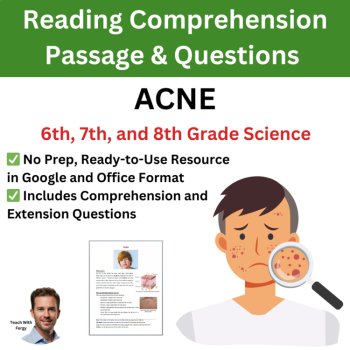
Tackle literacy and science by having your students read and answer questions from a scientific article about ACNE. Questions include knowledge (direct from the paper), thinking, connecting, application, and open-ended varieties.The reading looks at:What is acne?What are the different kinds of acne?
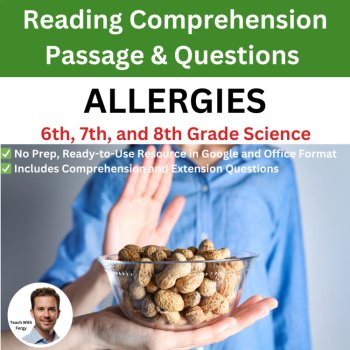
Tackle literacy and science by having your students read and answer questions from a scientific article about Allergies. Questions include knowledge (direct from the paper), thinking, connecting, application, and open-ended varieties. The reading looks atWhat are allergies?SymptomsExamples of allerg
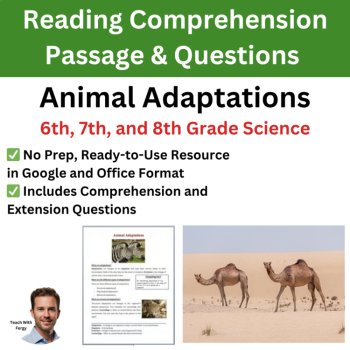
Tackle literacy and science by having your students read and answer questions from a scientific article about Animal Adaptations. Questions include knowledge (direct from the paper), thinking, connecting, application, and open-ended varieties.The Reading Looks at:- What are adaptations- The differen
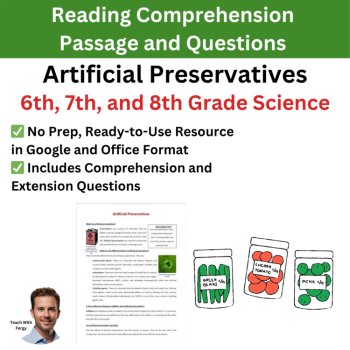
Tackle literacy and science by having your students read and answer questions from a scientific article about Artificial Preservatives. Questions include knowledge (direct from the paper), thinking, connecting, application, and open-ended varieties.This resource covers the following topics:- What ar
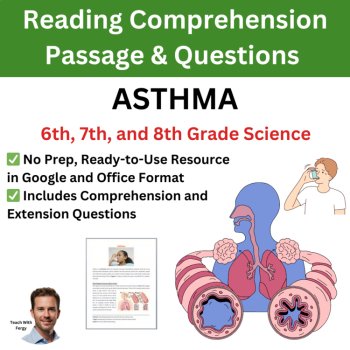
Tackle literacy and science by having your students read and answer questions from a scientific article about Asthma. Questions include knowledge (direct from the paper), thinking, connecting, application, and open-ended varieties.The reading looks at:What happens during an asthma attack?How to Avoi
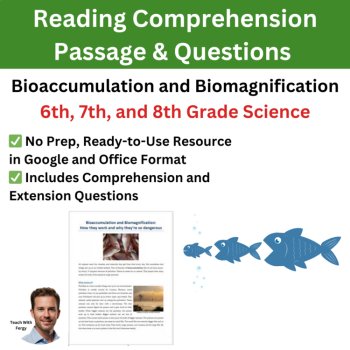
Tackle literacy and science by having your students read and answer questions from a scientific article about Bioaccumulation and Biomagnification. Questions include knowledge (direct from the paper), thinking, connecting, application, and open-ended varieties.The reading looks at:- What they are- W
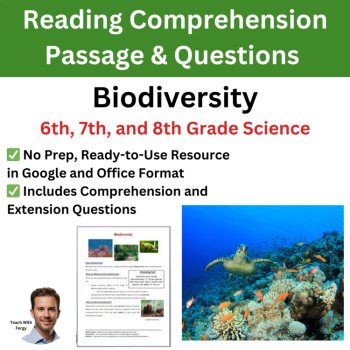
Tackle literacy and science by having your students read and answer questions from a scientific article about Biodiversity. Questions include knowledge (direct from the paper), thinking, connecting, application, and open-ended varieties.The Reading Looks at:- What is biodiversity- The effects of bio
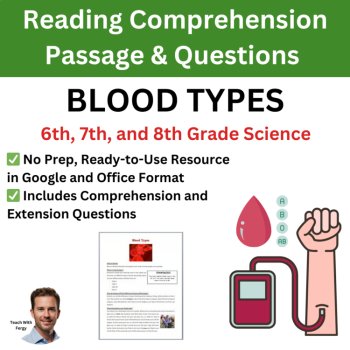
Tackle literacy and science by having your students read and answer questions from a scientific article about Blood Types. Questions include knowledge (direct from the paper), thinking, connecting, application, and open-ended varieties.This resource covers the following topics:What is bloodWhat are
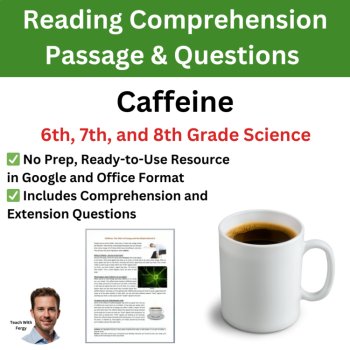
Tackle literacy and science by having your students read and answer questions from a scientific article about Caffeine. Questions include knowledge (direct from the paper), thinking, connecting, application, and open-ended varieties.This resource covers the following topics:What is caffeine? Without
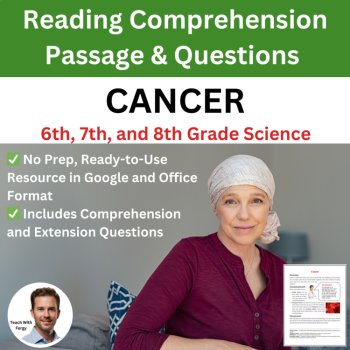
Tackle literacy and science by having your students read and answer questions from a scientific article about Cancer. Questions include knowledge (direct from the paper), thinking, connecting, application, and open-ended varieties. The reading looks at:What is cancer?Types of tumorsWhat causes cance
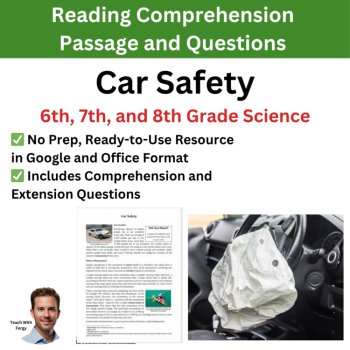
Tackle literacy and science by having your students read and answer questions from a scientific article about Car Safety. Questions include knowledge (direct from the paper), thinking, connecting, application, and open-ended varieties.Buyer Comment: "Outstanding comprehension activity. Informative,
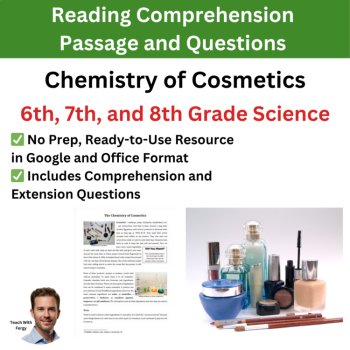
Tackle literacy and science by having your students read and answer questions from a scientific article about the Chemistry of Cosmetics. Questions include knowledge (direct from the paper), thinking, connecting, application, and open-ended varieties.The reading looks at:- Introduction- Water- Emuls
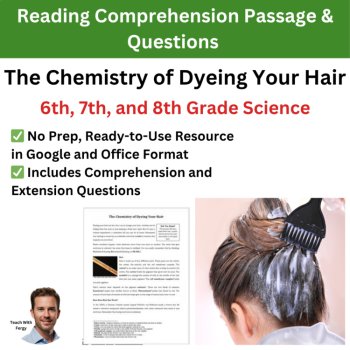
Tackle literacy and science by having your students read and answer questions from a scientific article about Chemistry of Dyeing Hair. Questions include knowledge (direct from the paper), thinking, connecting, application, and open-ended varieties.The reading looks at:- Hair- How does hair dye work
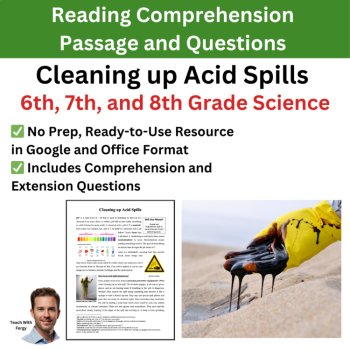
Tackle literacy and science by having your students read and answer questions from a scientific article about Cleaning up Acid Spills. Questions include knowledge (direct from the paper), thinking, connecting, application, and open-ended varieties.The reading looks at:- pH- How is an acid spill clea
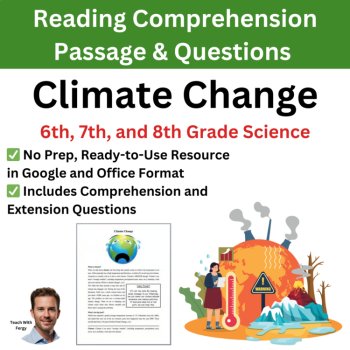
Tackle literacy and science by having your students read and answer questions from a scientific article about Climate Change. Questions include knowledge (direct from the paper), thinking, connecting, application, and open-ended varieties.The Reading Looks at:- What is Climate?- What’s the big deal?
Tackle literacy and science by having your students read and answer questions from a scientific article about Concussions. Questions include knowledge (direct from the paper), thinking, connecting, application, and open-ended varieties. The reading looks at:What is a concussion?Signs and symptomsTre
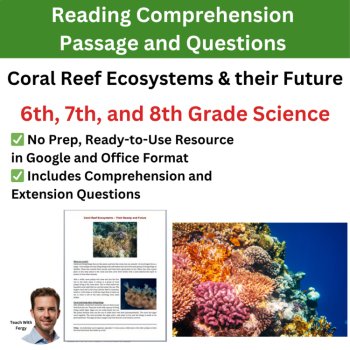
Tackle literacy and science by having your students read and answer questions from a scientific article about Coral Reef Ecosystems and their Future. Questions include knowledge (direct from the paper), thinking, connecting, application, and open-ended varieties.The reading looks at:- What are coral
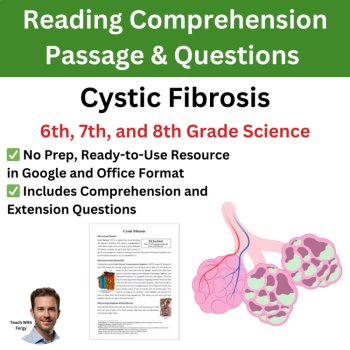
Tackle literacy and science by having your students read and answer questions from a scientific article about Cystic Fibrosis. Questions include knowledge (direct from the paper), thinking, connecting, application, and open-ended varieties.The reading looks at:What is cystic fibrosis?What causes cys
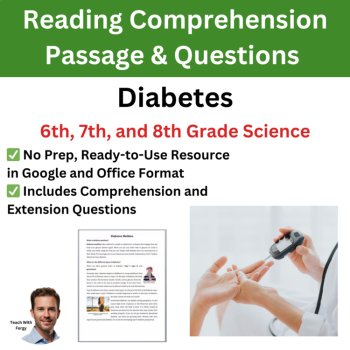
Tackle literacy and science by having your students read and answer questions from a scientific article about Diabetes. Questions include knowledge (direct from the paper), thinking, connecting, application, and open-ended varieties.The reading looks at:- What is diabetes mellitus?- What are the dif
Tackle literacy and science by having your students read and answer questions from a scientific article about Down Syndrome. Questions include knowledge (direct from the paper), thinking, connecting, application, and open-ended varieties.The reading looks at:What Down syndrome isWhat causes Down syn
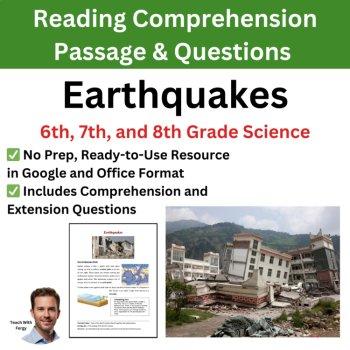
Tackle literacy and science by having your students read and answer questions from a scientific article about Earthquakes. Questions include knowledge (direct from the paper), thinking, connecting, application, and open-ended varieties.The Reading Looks at:- How earthquakes work- The dangers of eart
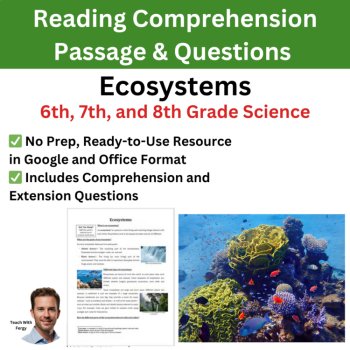
Tackle literacy and science by having your students read and answer questions from a scientific article about Ecosystems. Questions include knowledge (direct from the paper), thinking, connecting, application, and open-ended varieties.The reading looks at:- What is an ecosystem?- What are the parts
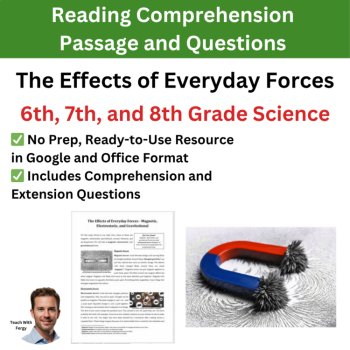
Tackle literacy and science by having your students read and answer questions from a scientific article about Effect of Everyday Forces. Questions include knowledge (direct from the paper), thinking, connecting, application, and open-ended varieties.The reading looks at:- Magnetic forces- Electrosta
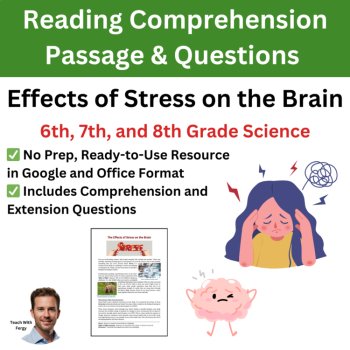
Tackle literacy and science by having your students read and answer questions from a scientific article about The Effects of Stress on the Brain. Questions include knowledge (direct from the paper), thinking, connecting, application, and open-ended varieties.The reading looks at:What stress isWhy st
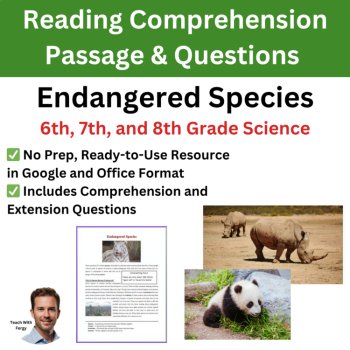
Tackle literacy and science by having your students read and answer questions from a scientific article about Endangered Species. Questions include knowledge (direct from the paper), thinking, connecting, application, and open-ended varieties.The Reading Looks at:- Why Do Species Become Endangered?-
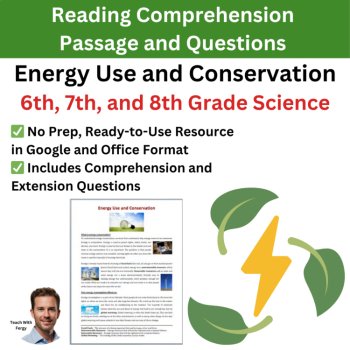
Tackle literacy and science by having your students read and answer questions from a scientific article about Energy Use and Conservation. Questions include knowledge (direct from the paper), thinking, connecting, application, and open-ended varieties.No prep, no formatting, no issues. Simply downlo
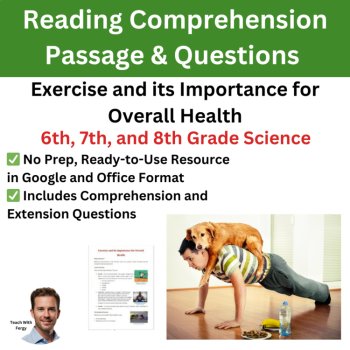
Tackle literacy and science by having your students read and answer questions from a scientific article about Exercise and it's Importance for Your Health. Questions include knowledge (direct from the paper), thinking, connecting, application, and open-ended varieties.The reading looks at:What exerc
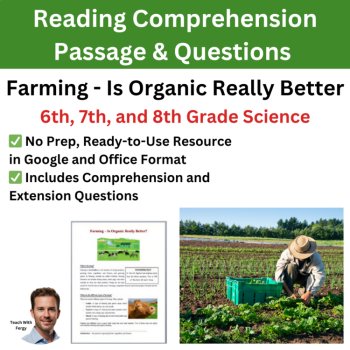
Tackle literacy and science by having your students read and answer questions from a scientific article about Farming and answering the question, Is Organic Really Better? Questions include knowledge (direct from the paper), thinking, connecting, application, and open-ended varieties.The Reading Loo
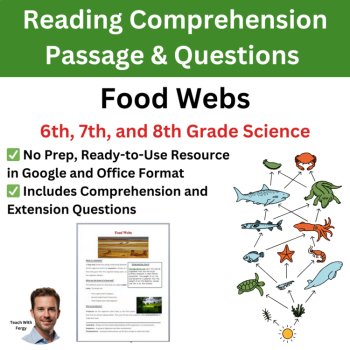
Tackle literacy and science by having your students read and answer questions from a scientific article about Food Webs. Questions include knowledge (direct from the paper), thinking, connecting, application, and open-ended varieties.The reading looks at:- What is a food web?- The levels of a food w
Tackle literacy and science by having your students read and answer questions from a scientific article about Fossil Fuel Energy Production. Questions include knowledge (direct from the paper), thinking, connecting, application, and open-ended varieties.Buyer Comment: "Fantastic activity"The readin
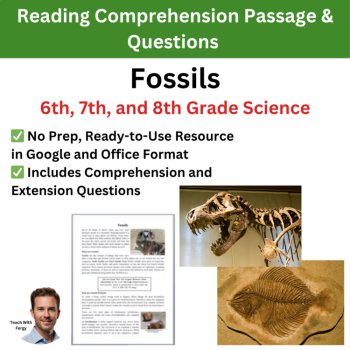
Tackle literacy and science by having your students read and answer questions from a scientific article about Fossils. Questions include knowledge (direct from the paper), thinking, connecting, application, and open-ended varieties.The reading looks at:What Fossils AreHow Fossils Are FormedPetrifica
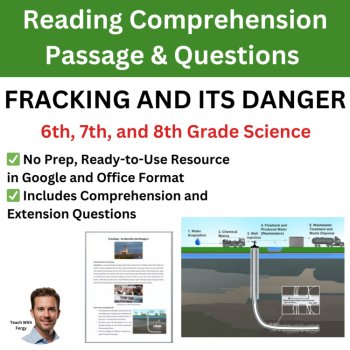
Tackle literacy and science by having your students read and answer questions from a scientific article about Fracking and its Dangers. Questions include knowledge (direct from the paper), thinking, connecting, application, and open-ended varieties.The Reading Looks at:History of FrackingHow Does Fr
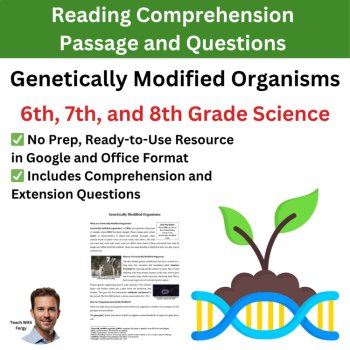
Tackle literacy and science by having your students read and answer questions from a scientific article about Genetically Modified Organisms. Questions include knowledge (direct from the paper), thinking, connecting, application, and open-ended varieties.The reading looks at:- What are genetically m
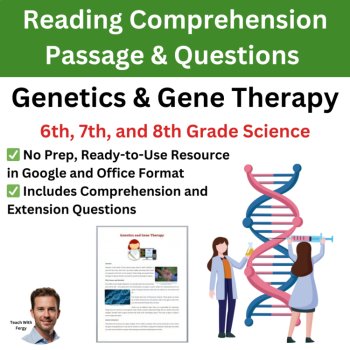
Tackle literacy and science by having your students read and answer questions from a scientific article about Genetics & Gene Therapy. Questions include knowledge (direct from the paper), thinking, connecting, application, and open-ended varieties.The reading looks at:Genetics DNA, genes, and he
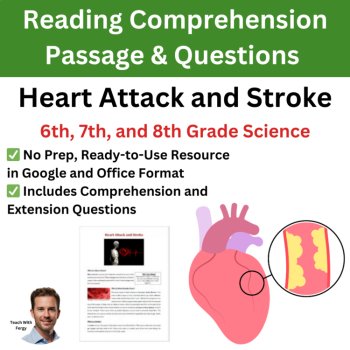
Tackle literacy and science by having your students read and answer questions from a scientific article about Heart Attack and Stroke. Questions include knowledge (direct from the paper), thinking, connecting, application, and open-ended varieties.The reading looks at:- What is a heart attack?- Why
Tackle literacy and science by having your students read and answer questions from a scientific article about Heart Disease. Questions include knowledge (direct from the paper), thinking, connecting, application, and open-ended varieties.The reading looks at:What heart disease isCauses of heart dise
Tackle literacy and science by having your students read and answer questions from a scientific article about HIV and AIDS – Causes, Stages, Spread, and Treatment. Questions include knowledge (direct from the paper), thinking, connecting, application, and open-ended varieties.The reading looks at:Wh
Tackle literacy and science by having your students read and answer questions from a scientific article about How Do Ships Float?. Questions include knowledge (direct from the paper), thinking, connecting, application, and open-ended varieties.The reading looks at:- Density vs mass vs volume vs weig
Tackle literacy and science by having your students read and answer questions from a scientific article about How Protective Equipment Keeps You Safe. Questions include knowledge (direct from the paper), thinking, connecting, application, and open-ended varieties.This resource covers the following t
Tackle literacy and science by having your students read and answer questions from a scientific article about How Weather Works. Questions include knowledge (direct from the paper), thinking, connecting, application, and open-ended varieties.The reading looks at:- Weather- Kinds of weather- What cau
Tackle literacy and science by having your students read and answer questions from a scientific article about Hurricanes. Questions include knowledge (direct from the paper), thinking, connecting, application, and open-ended varieties.The reading looks at:- What is a hurricane?- Hurricane wind- How
Tackle literacy and science by having your students read and answer questions from a scientific article about Hydraulics. Questions include knowledge (direct from the paper), thinking, connecting, application, and open-ended varieties.The reading looks at:- What is hydraulics?- Pascal’s Law- Hydraul
Tackle literacy and science by having your students read and answer questions from a scientific article about Hydroelectric Energy Production. Questions include knowledge (direct from the paper), thinking, connecting, application, and open-ended varieties.The reading looks at:- Renewable energy- Hyd
Tackle literacy and science by having your students read and answer questions from a scientific article about THE IMMUNE SYSTEM. Questions include knowledge (direct from the paper), thinking, connecting, application, and open-ended varieties.The reading looks at:What is the immune system?What are th
Tackle literacy and science by having your students read and answer questions from a scientific article about Invasive Species. Questions include knowledge (direct from the paper), thinking, connecting, application, and open-ended varieties.The reading looks at:- What is an invasive species?- How do
Tackle literacy and science by having your students read and answer questions from a scientific article about Laser Eye Surgery. Questions include knowledge (direct from the paper), thinking, connecting, application, and open-ended varieties.The reading looks at:- What is laser eye surgery?- How do
Tackle literacy and science by having your students read and answer questions from a scientific article about Lightning. Questions include knowledge (direct from the paper), thinking, connecting, application, and open-ended varieties.The reading looks at:- What causes lightning?- Lightning and Thund
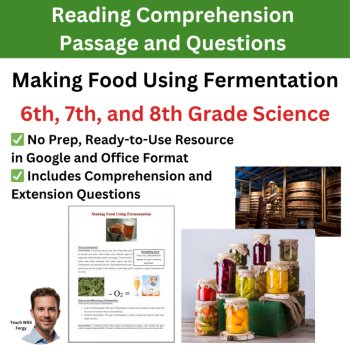
Tackle literacy and science by having your students read and answer questions from a scientific article about Making Food Using Fermentation. Questions include knowledge (direct from the paper), thinking, connecting, application, and open-ended varieties.The reading looks at:- What is fermentation?-
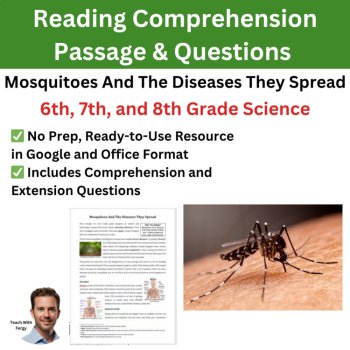
Tackle literacy and science by having your students read and answer questions from a scientific article about Mosquitoes and the Disease They Spread. Questions include knowledge (direct from the paper), thinking, connecting, application, and open-ended varieties.The reading looks at:- Infectious dis
Tackle literacy and science by having your students read and answer questions from a scientific article about Multiple Sclerosis. Questions include knowledge (direct from the paper), thinking, connecting, application, and open-ended varieties.The reading looks at:What is multiple sclerosis?What are
Tackle literacy and science by having your students read and answer questions from a scientific article about Muscle Growth. Questions include knowledge (direct from the paper), thinking, connecting, application, and open-ended varieties.The reading looks at:- What is muscle growth?- Things that aff
Tackle literacy and science by having your students read and answer questions from a scientific article about Natural Disasters: Earth, Water, and Space. Questions include knowledge (direct from the paper), thinking, connecting, application, and open-ended varieties.The reading looks at:- What is a
Tackle literacy and science by having your students read and answer questions from a scientific article about Natural Disasters: Weather and Climate. Questions include knowledge (direct from the paper), thinking, connecting, application, and open-ended varieties.The reading looks at:- What is a natu
Tackle literacy and science by having your students read and answer questions from a scientific article about Nocturnal Animals. Questions include knowledge (direct from the paper), thinking, connecting, application, and open-ended varieties.The Reading Looks at:- What are nocturnal animals?- Common
Tackle literacy and science by having your students read and answer questions from a scientific article about Nuclear Energy – Fission and Fusion. Questions include knowledge (direct from the paper), thinking, connecting, application, and open-ended varieties.The reading looks at:- A brief history-
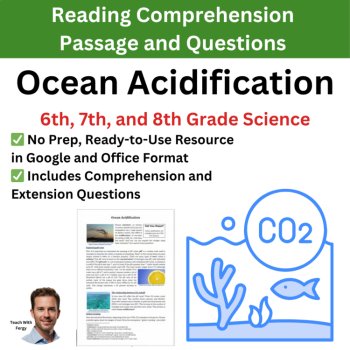
Tackle literacy and science by having your students read and answer questions from a scientific article about Ocean Acidification. Questions include knowledge (direct from the paper), thinking, connecting, application, and open-ended varieties.The reading looks at:- Explaining pH value- The relation
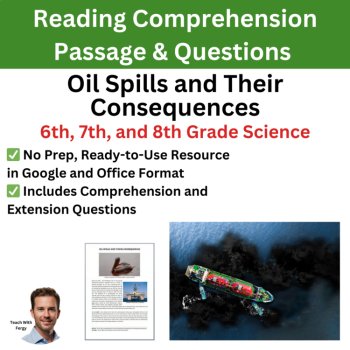
Tackle literacy and science by having your students read and answer questions from a scientific article about Oil Spills and Their Consequences. Questions include knowledge (direct from the paper), thinking, connecting, application, and open-ended varieties.The Reading Looks at:- a case study of the
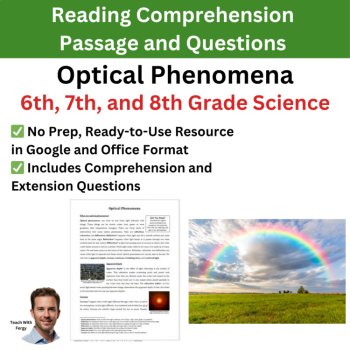
Tackle literacy and science by having your students read and answer questions from a scientific article about Optical Phenomena. Questions include knowledge (direct from the paper), thinking, connecting, application, and open-ended varieties.The reading looks at:- What are optical phenomena?- Appare
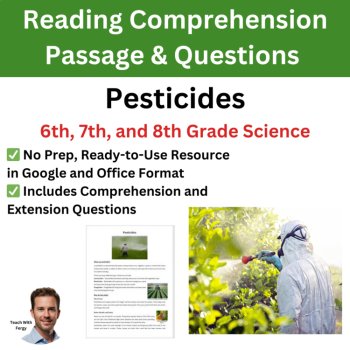
Tackle literacy and science by having your students read and answer questions from a scientific article about Pesticides. Questions include knowledge (direct from the paper), thinking, connecting, application, and open-ended varieties.The reading looks at:✅ Real-World Environmental Science: Covers...
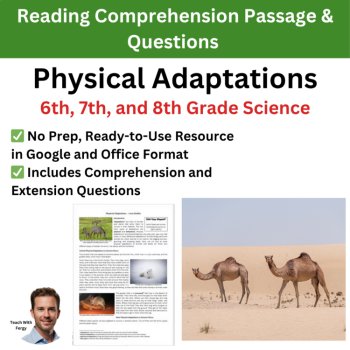
Tackle literacy and science by having your students read and answer questions from a scientific article about Physical Adaptations. Questions include knowledge (direct from the paper), thinking, connecting, application, and open-ended varieties.The Reading Looks at:- Animal Physical Adaptations in E
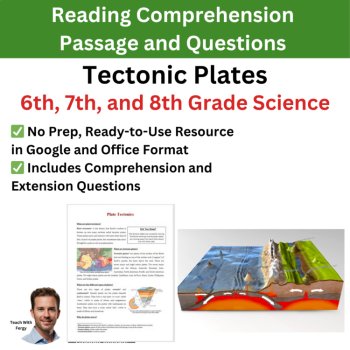
Tackle literacy and science by having your students read and answer questions from a scientific article about Tectonic Plates. Questions include knowledge (direct from the paper), thinking, connecting, application, and open-ended varieties.The reading looks at:- What are plate tectonics?- What are t
Tackle literacy and science by having your students read and answer questions from a scientific article about Polio. Questions include knowledge (direct from the paper), thinking, connecting, application, and open-ended varieties.The reading looks at:What is polio?History of polioSigns and symptomsH
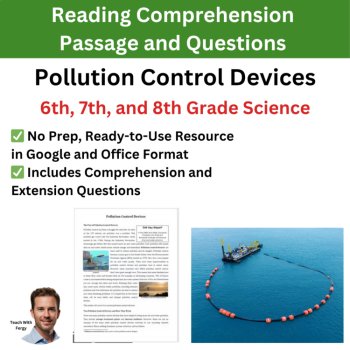
Tackle literacy and science by having your students read and answer questions from a scientific article about Pollution Control Devices. Questions include knowledge (direct from the paper), thinking, connecting, application, and open-ended varieties.The reading looks at:- The past of pollution contr
Tackle literacy and science by having your students read and answer questions from a scientific article about Predator Prey Relationships. Questions include knowledge (direct from the paper), thinking, connecting, application, and open-ended varieties.The reading looks at:- Prey and predators- Preda
Tackle literacy and science by having your students read and answer questions from a scientific article about Rustproofing. Questions include knowledge (direct from the paper), thinking, connecting, application, and open-ended varieties.The reading looks at:- What is rust?- What is affected by rust?
Tackle literacy and science by having your students read and answer questions from a scientific article about Simple Machines. Questions include knowledge (direct from the paper), thinking, connecting, application, and open-ended varieties.The Reading Looks at:- What are simple machines?- Levers- In
Tackle literacy and science by having your students read and answer questions from a scientific article about Smallpox. Questions include knowledge (direct from the paper), thinking, connecting, application, and open-ended varieties.This resource covers the following topics:What smallpox isThe histo
Tackle literacy and science by having your students read and answer questions from a scientific article about Smog. Questions include knowledge (direct from the paper), thinking, connecting, application, and open-ended varieties.The reading looks at:- What is smog?- What are the effects of smog?- Wh
Tackle literacy and science by having your students read and answer questions from a scientific article about Solar and Lunar Eclipses. Questions include knowledge (direct from the paper), thinking, connecting, application, and open-ended varieties.This resource covers the following topics:Solar Ecl
Tackle literacy and science by having your students read and answer questions from a scientific article about Solar Electricity Production. Questions include knowledge (direct from the paper), thinking, connecting, application, and open-ended varieties.The reading looks at:- Renewable energy- The Su
Tackle literacy and science by having your students read and answer questions from a scientific article about Stem Cells. Questions include knowledge (direct from the paper), thinking, connecting, application, and open-ended varieties.The reading looks at:Introduction: What Is Stem Cell Therapy?How
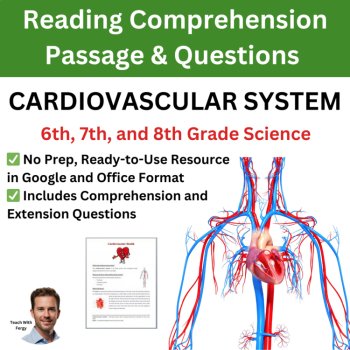
Tackle literacy and science by having your students read and answer questions from a scientific article about Allergies. Questions include knowledge (direct from the paper), thinking, connecting, application, and open-ended varieties.The reading looks at:What is the cardiovascular system?What are th
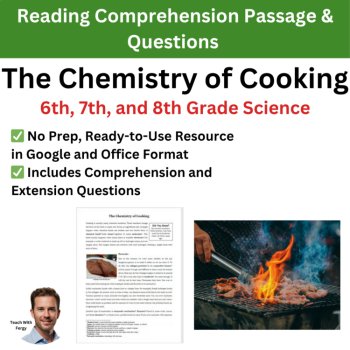
Tackle literacy and science by having your students read and answer questions from a scientific article about Chemistry of Cooking. Questions include knowledge (direct from the paper), thinking, connecting, application, and open-ended varieties.The reading looks at:- The reason we cook food- Cooking
Tackle literacy and science by having your students read and answer questions from a scientific article about The Common Cold. Questions include knowledge (direct from the paper), thinking, connecting, application, and open-ended varieties.The reading looks at:What is the common cold?What causes the
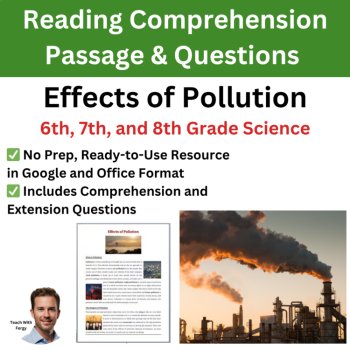
Tackle literacy and science by having your students read and answer questions from a scientific article about the Effects of Pollution. Questions include knowledge (direct from the paper), thinking, connecting, application, and open-ended varieties.The Reading Looks at:- What is pollution?- The dang
Tackle literacy and science by having your students read and answer questions from a scientific article about The Flu. Questions include knowledge (direct from the paper), thinking, connecting, application, and open-ended varieties.The reading looks at:What causes the fluHow the flu is spreadDiffere
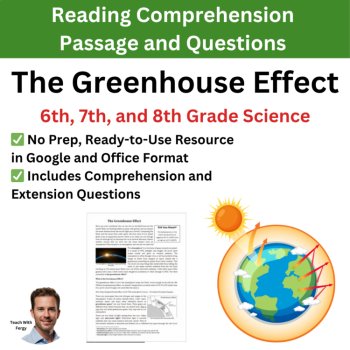
Tackle literacy and science by having your students read and answer questions from a scientific article about The Greenhouse Effect. Questions include knowledge (direct from the paper), thinking, connecting, application, and open-ended varieties.The reading looks at:- What is the greenhouse effect?-
Tackle literacy and science by having your students read and answer questions from a scientific article about the Importance of Bats. Questions include knowledge (direct from the paper), thinking, connecting, application, and open-ended varieties.The reading looks at:- Introduction to bats- Echoloca
Tackle literacy and science by having your students read and answer questions from a scientific article about The Limitations of Space Travel. Questions include knowledge (direct from the paper), thinking, connecting, application, and open-ended varieties.Buyer Comment: "Great Article! Used it for t
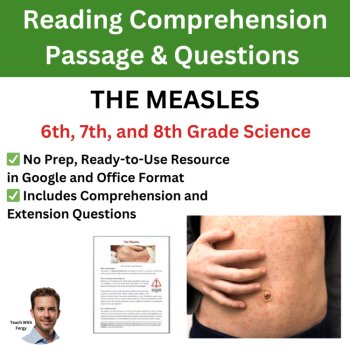
Tackle literacy and science by having your students read and answer questions from a scientific article about the Measles. Questions include knowledge (direct from the paper), thinking, connecting, application, and open-ended varieties.The reading looks at:What are measles?Why is getting measles dan
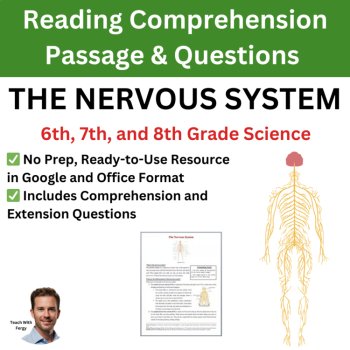
Tackle literacy and science by having your students read and answer questions from a scientific article about the Nervous System. Questions include knowledge (direct from the paper), thinking, connecting, application, and open-ended varieties.The reading looks at:What is the nervous system?What are
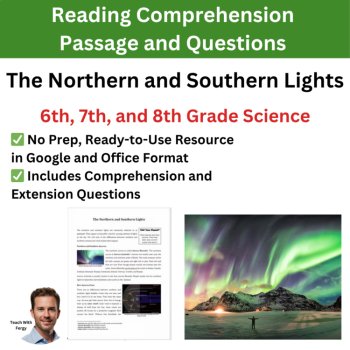
Tackle literacy and science by having your students read and answer questions from a scientific article about The Northern and Southern Lights. Questions include knowledge (direct from the paper), thinking, connecting, application, and open-ended varieties.The reading looks at:- Northern and Souther
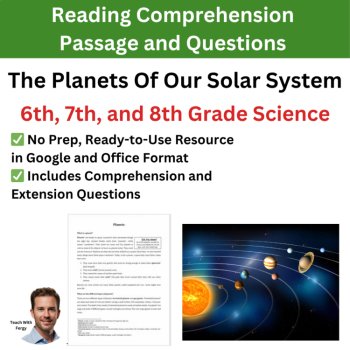
Tackle literacy and science by having your students read and answer questions from a scientific article about The Planets of our Solar System. Questions include knowledge (direct from the paper), thinking, connecting, application, and open-ended varieties.Buyer Comment: "These were awesome supplemen
Tackle literacy and science by having your students read and answer questions from a scientific article about Roller Coasters. Questions include knowledge (direct from the paper), thinking, connecting, application, and open-ended varieties.The reading looks at:- History and design- Wooden- Steel- Ho
Tackle literacy and science by having your students read and answer questions from a scientific article about the Seasons and What Causes Them. Questions include knowledge (direct from the paper), thinking, connecting, application, and open-ended varieties.The Reading Looks at:What is a season?Why d
Tackle literacy and science by having your students read and answer questions from a scientific article about the Water Cycle. Questions include knowledge (direct from the paper), thinking, connecting, application, and open-ended varieties.The Reading Looks at:- What is the water cycle?- Why Does Wa
Tackle literacy and science by having your students read and answer questions from a scientific article about Thunderstorms. Questions include knowledge (direct from the paper), thinking, connecting, application, and open-ended varieties.The reading looks at:- What is a thunderstorm?- What causes th
Tackle literacy and science by having your students read and answer questions from a scientific article about Tornadoes. Questions include knowledge (direct from the paper), thinking, connecting, application, and open-ended varieties.Buyer Comments: - "Great Resource!" - "Saved me on a sub day, than
Tackle literacy and science by having your students read and answer questions from a scientific article about Tsunamis. Questions include knowledge (direct from the paper), thinking, connecting, application, and open-ended varieties.The reading looks at:- History- How Tsunamis work- Tsunamis Today-
Tackle literacy and science by having your students read and answer questions from a scientific article about Twins - Identical and Fraternal. Questions include knowledge (direct from the paper), thinking, connecting, application, and open-ended varieties.The reading looks at:- What are twins?- Huma
Tackle literacy and science by having your students read and answer questions from a scientific article about Urban Sprawl. Questions include knowledge (direct from the paper), thinking, connecting, application, and open-ended varieties.The reading looks at:- What is urban sprawl?- What causes urban
Tackle literacy and science by having your students read and answer questions from a scientific article about Vaccines. Questions include knowledge (direct from the paper), thinking, connecting, application, and open-ended varieties.The reading looks at:What is the cardiovascular system?What are the
Tackle literacy and science by having your students read and answer questions from a scientific article about Cancer. Questions include knowledge (direct from the paper), thinking, connecting, application, and open-ended varieties. The reading looks at:What is a virus?How do viruses make you sick?Pr
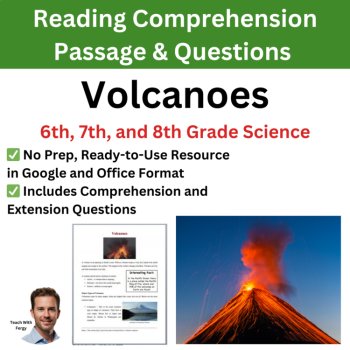
Tackle literacy and science by having your students read and answer questions from a scientific article about Volcanoes. Questions include knowledge (direct from the paper), thinking, connecting, application, and open-ended varieties.The reading looks at:- Volcano introduction- Major types of volcan
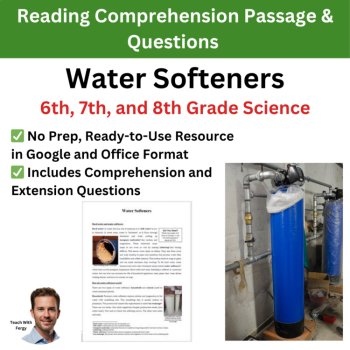
Tackle literacy and science by having your students read and answer questions from a scientific article about Water Softeners. Questions include knowledge (direct from the paper), thinking, connecting, application, and open-ended varieties.The reading looks at:- Hard water and water softeners- How d
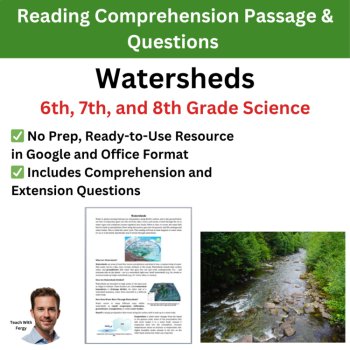
Tackle literacy and science by having your students read and answer questions from a scientific article about Watersheds. Questions include knowledge (direct from the paper), thinking, connecting, application, and open-ended varieties.The Reading Looks at:- What Are Watersheds?- How Are Watersheds D
Tackle literacy and science by having your students read and answer questions from a scientific article about Whooping Cough. Questions include knowledge (direct from the paper), thinking, connecting, application, and open-ended varieties.The reading looks at:What is whooping cough?HistorySigns and
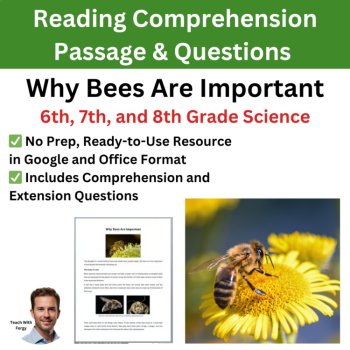
Tackle literacy and science by having your students read and answer questions from a scientific article about Why Bees Are Important. Questions include knowledge (direct from the paper), thinking, connecting, application, and open-ended varieties.The Reading Looks at:- The body of a bee- Bees help t
Tackle literacy and science by having your students read and answer questions from a scientific article about Why is the Sky Blue?. Questions include knowledge (direct from the paper), thinking, connecting, application, and open-ended varieties.Buyer Comments: - "Thank you for sharing! This was eas
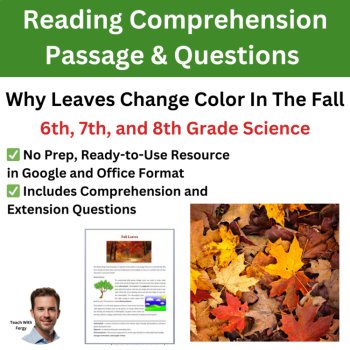
Tackle literacy and science by having your students read and answer questions from a scientific article about Why Leaves Change Color In The Fall. Questions include knowledge (direct from the paper), thinking, connecting, application, and open-ended varieties.The reading looks at:- Green leaves- Pho
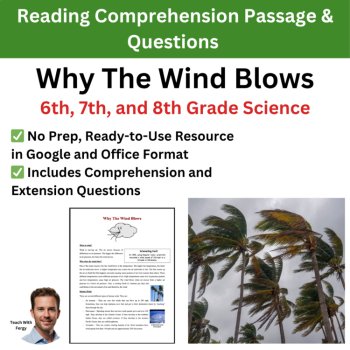
Tackle literacy and science by having your students read and answer questions from a scientific article about Why The Wind Blows. Questions include knowledge (direct from the paper), thinking, connecting, application, and open-ended varieties.The reading looks at:- What is wind?- Why does the wind b
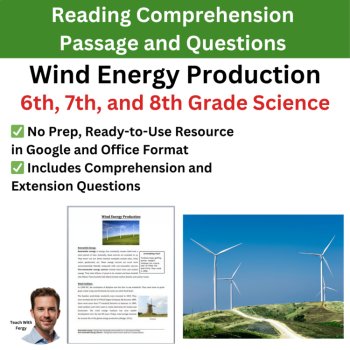
Tackle literacy and science by having your students read and answer questions from a scientific article about Wind Energy Production. Questions include knowledge (direct from the paper), thinking, connecting, application, and open-ended varieties.The reading looks at:- Renewable energy- Wind turbine
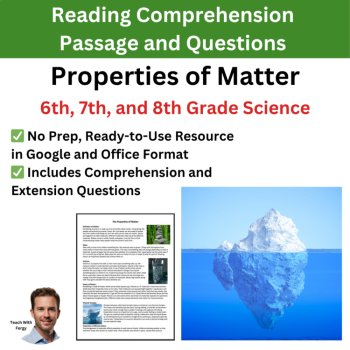
Tackle literacy and science by having your students read and answer questions from a scientific article about The Properties of Matter. Questions include knowledge (direct from the paper), thinking, connecting, application, and open-ended varieties.This resource covers the following topics:Definitio
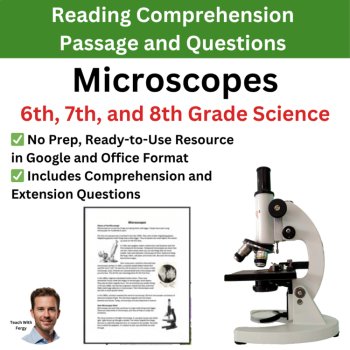
Tackle literacy and science by having your students read and answer questions from a scientific article about Microscopes. Questions include knowledge (direct from the paper), thinking, connecting, application, and open-ended varieties.This resource covers the following topics:The History of Microsc
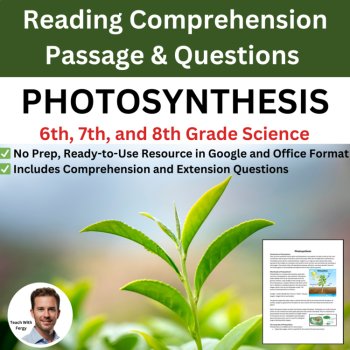
Tackle literacy and science by having your students read and answer questions from a scientific article about Photosynthesis. Questions include knowledge (direct from the paper), thinking, connecting, application, and open-ended varieties. This resource covers the following topics:Photosynthesis int
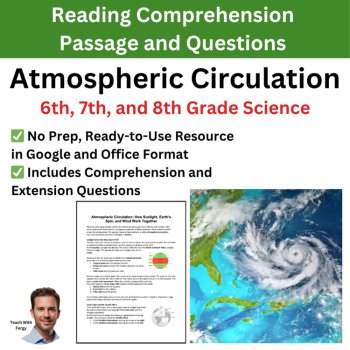
Tackle literacy and science by having your students read and answer questions from a scientific article about Atmospheric Circulation. Questions include knowledge (direct from the paper), thinking, connecting, application, and open-ended varieties.The reading looks at:Sunlight drives themMovement af
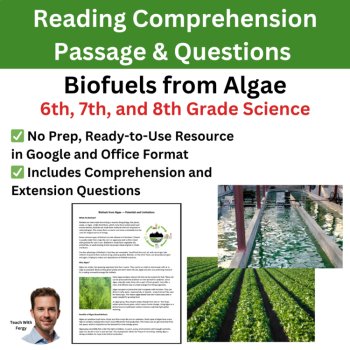
Tackle literacy and science by having your students read and answer questions from a scientific article about Biofuels from Algae. Questions include knowledge (direct from the paper), thinking, connecting, application, and open-ended varieties.The reading looks at:What are BiofuelsWhy Algae?Benefits
Tackle literacy and science by having your students read and answer questions from a scientific article about Biomes. Questions include knowledge (direct from the paper), thinking, connecting, application, and open-ended varieties.The reading looks at:The 5 Major Biomes and their Sub BiomesAquaticFr
Tackle literacy and science by having your students read and answer questions from a scientific article about Bridges. Questions include knowledge (direct from the paper), thinking, connecting, application, and open-ended varieties. When you purchase this reading, you will also get my Pasta Bridge S
Tackle literacy and science by having your students read and answer questions from a scientific article about Development of Synthetic Insulin. Questions include knowledge (direct from the paper), thinking, connecting, application, and open-ended varieties.The reading looks at:What is Diabetes?Life
Tackle literacy and science by having your students read and answer questions from a scientific article about Earth's Natural Resources - Minerals, Energy, and Groundwater. Questions include knowledge (direct from the paper), thinking, connecting, application, and open-ended varieties.This Reading L
Tackle literacy and science by having your students read and answer questions from a scientific article about How Instant Ice Packs and Heat Packs Work. Questions include knowledge (direct from the paper), thinking, connecting, application, and open-ended varieties.The reading looks at:What a Chemic
Tackle literacy and science by having your students read and answer questions from a scientific article about Species Extinction. Questions include knowledge (direct from the paper), thinking, connecting, application, and open-ended varieties.This resource covers the following topics:- What species
Tackle literacy and science by having your students read and answer questions from a scientific article about Why We Need the Moon. Questions include knowledge (direct from the paper), thinking, connecting, application, and open-ended varieties.The reading looks at:- Tidal Cycles and their Importanc
How Waves Are Used for Communication Reading Comprehension Passage and Questions. This resource is suitable for students in grades 8 and up. Tackle literacy and science by having your students read and answer questions from a scientific article. Questions include knowledge (direct from the paper), t
This grade 6–8 science reading comprehension article introduces students to the causes and effects of air pollution and why clean air matters for human health and the environment. Students learn where air pollution comes from, how it forms, and how weather conditions can make pollution better or wor
This grade 6–8 reading introduces students to the fast-growing world of artificial intelligence (AI) and how it is already shaping their lives. It explains what AI is, how machines learn, and why this technology is becoming such an important part of healthcare, education, environmental protection, a
Building a Moon Base: Why We Go, How We Live, and What Comes Next Reading Comprehension Passage and QuestionsThis middle school reading introduces students to the science and engineering behind building a moon base and why humans want to live and work on the Moon. Students learn how space agencies l
This grade 6–8 reading introduces students to the science behind deforestation and habitat destruction, exploring how the removal of forests and natural areas affects biodiversity, climate, and human communities. Students learn what drives deforestation, how it threatens plant and animal species, an
This grade 6–8 reading introduces students to the science behind colds and the flu, explaining why viruses—not cold weather—are responsible for making people sick. Students learn how illnesses spread, why people tend to get sick more often in winter, and how environmental conditions like cold, dry a
This grade 6–8 reading introduces students to the exciting science of exoplanets and how scientists are discovering worlds beyond our solar system. It explains what exoplanets are, how astronomers find them, and why some of these distant planets may have the right conditions to support life.The arti
Exploring Mars: Past, Present, and Future Reading Comprehension Passage and QuestionsThis grade 6–8 reading introduces students to the exploration of Mars and the ongoing search for life beyond Earth. Students learn what Mars is like today, why scientists believe it may have once supported life, and
This grade 6–8 science reading comprehension article introduces students to the wild and powerful side of winter, from blizzards and ice storms to polar vortexes and nor’easters. Students learn how different types of extreme winter weather form, what makes each storm unique, and how these storms imp
This grade 6–8 reading introduces students to the science behind forever chemicals—a group of human-made substances that persist in the environment and build up in the body over time. Students learn what PFAS are, how they’re used in everyday products like waterproof clothing and nonstick cookware,
From Apollo to Artemis: Exploring the Moon Reading Comprehension Passage and QuestionsThis middle school reading introduces students to the history and future of human space exploration, from the Apollo Moon landings to NASA’s modern Artemis program. Students learn how astronauts first reached the M
This grade 6–8 reading introduces students to the cutting-edge science of gene-edited pigs and xenotransplantation and how scientists are working to use animal organs to save human lives. It explains what xenotransplantation is, why there is a global organ shortage, and how gene editing is being use
This grade 6–8 reading comprehension article and questions introduces students to germ theory—the scientific discovery that microorganisms cause many diseases. Students explore how this idea revolutionized medicine, changed hygiene practices, and continues to shape public health today. From the work
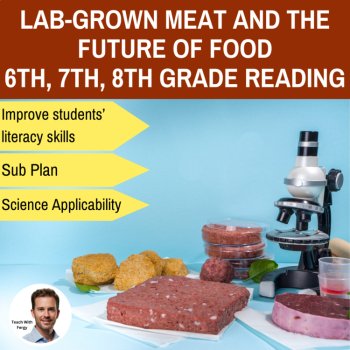
This grade 6–8 reading introduces students to the innovative science of lab-grown meat (cultivated meat) and how scientists are working to produce real meat without raising and slaughtering animals. It explains what lab-grown meat is, how it is made from animal cells, and why it is being explored as
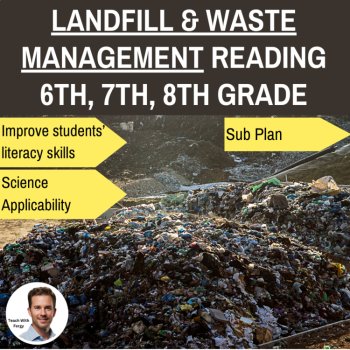
This grade 6–8 reading introduces students to the science behind landfill and waste management, examining how human-generated waste is handled, the challenges it creates, and the innovations being developed to reduce its environmental impact. Students learn how landfills work, what happens to trash
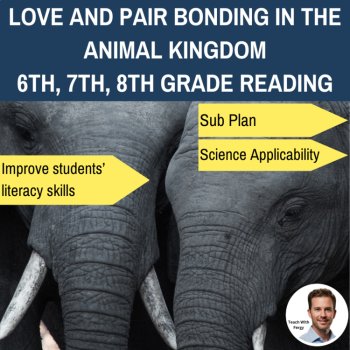
This grade 6–8 reading introduces students to the science of love and pair bonding in the animal kingdom, showing how many animals form long-term partnerships, cooperate with mates, and raise offspring together. It explains what monogamy and pair bonding mean in biological terms and why these behavi
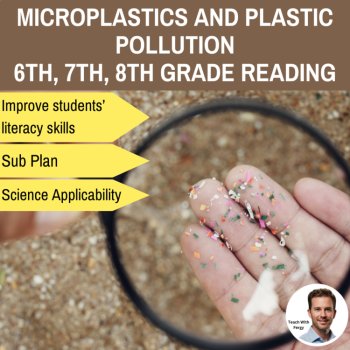
This grade 6–8 reading introduces students to the growing global problem of microplastics and plastic pollution and how tiny pieces of plastic are now found in oceans, soil, food, wildlife, and even the human body. It explains what microplastics are, where they come from, and why scientists are incr
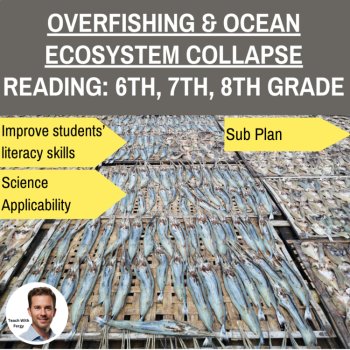
This grade 6–8 reading comprehension article introduces students to the science behind overfishing and how it contributes to the collapse of ocean ecosystems. Students learn what overfishing is, why it happens, and how it disrupts marine food webs and threatens biodiversity, food security, and coast
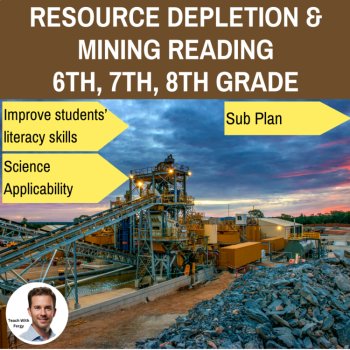
Resource Depletion & Mining is topic that helps students explore how natural resources are used, why mining is necessary for modern life, and how resource depletion affects ecosystems, communities, and economies. This reading comprehension article and questions introduces the science and environ
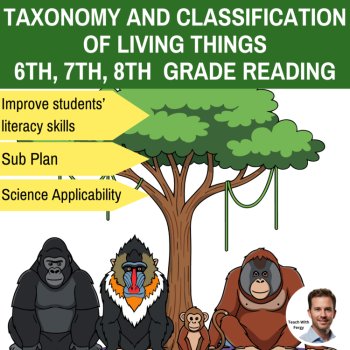
Taxonomy and the classification of living things help scientists organize Earth’s millions of species and understand how they are related. This grade 6, 7, and 8 reading explains the modern classification system—from domains and kingdoms to genus and species—and shows how tools like dichotomous keys
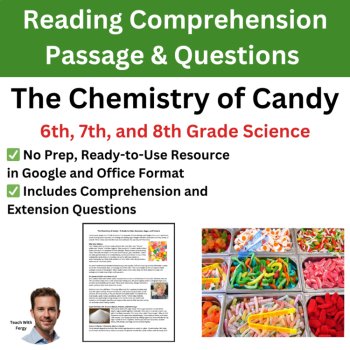
Discover how scientists engineer candy. From bright dyes and sour acids to sugar crystals and caramelizing reactions, this article shows how chemistry controls candy’s colors, flavors, and textures—turning simple ingredients into sweets. This resource covers the following topics:Why Color MattersThe
This grade 6–8 reading introduces students to the chemistry of chocolate and how phase changes explain why chocolate melts in your mouth but stays solid at room temperature. It explains how heat, particle motion, and states of matter affect everyday materials using chocolate as a familiar and engagi
Tackle literacy and science by having your students read and answer questions from a scientific article about the Coronavirus and COVID. Questions include knowledge (direct from the paper), thinking, connecting, application, and open-ended varieties.The reading looks at:What is the Coronavirus and C
This grade 6–8 reading introduces students to the growing problem of teen vaping and e-cigarette use. It explains what vaping is, why so many teens are drawn to it, and how companies use sweet flavors and discreet device designs to make vaping seem harmless. The article breaks down the science behin
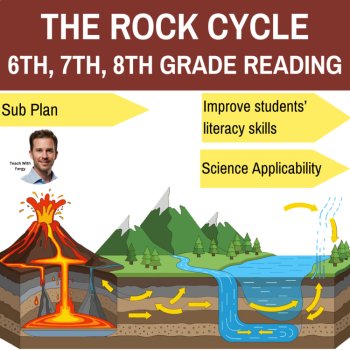
This grade 6–8 reading introduces students to the rock cycle and how Earth’s rocks are constantly being formed, broken down, and changed over time. It explains the three main types of rocks—igneous, sedimentary, and metamorphic—and how natural forces such as heat, pressure, weathering, and erosion d
Tackle literacy and science by having your students read and answer questions from a scientific article about The Science of Fear - Fight, Flight, Freeze, and Anxiety. Questions include knowledge (direct from the paper), thinking, connecting, application, and open-ended varieties.This resource cover
This grade 6–8 reading introduces students to the science of snow, snowflakes, and frost, explaining how phase changes, temperature, and heat transfer shape winter weather. Students learn how snow forms in clouds, why snowflakes have unique six-sided shapes, and how frost develops on cold surfaces a
Water Pollution: Causes, Effects, and Solutions Reading Comprehension Passage and QuestionsThis middle school reading introduces students to the causes and effects of water pollution and why clean water matters for people, animals, and ecosystems. Students learn how pollution enters rivers, lakes, o
This grade 6–8 reading introduces students to the science behind why roads are salted in winter and how salt helps melt ice to make roads safer. Students learn how water freezes, why icy roads are dangerous, and how adding salt changes the freezing point of water through a process called freezing po
This grade 6–8 reading introduces students to the science of the winter solstice, explaining why it is the shortest day and longest night of the year and how Earth’s tilt causes seasonal changes. Students learn what happens during the winter solstice, when it occurs in each hemisphere, and why dayli
Agriculture and Fertilizer Runoff Reading Comprehension Passage and QuestionsThis ecology and environmental science reading introduces students to how fertilizer runoff affects rivers, lakes, oceans, and drinking water. Students learn why crops need nutrients such as nitrogen and phosphorus, how the
This reading introduces students to the science behind how trains move, climb hills, travel around curves, and stop safely. Students learn how forces, motion, energy, and simple machines work together to make trains one of the most efficient forms of transportation. It also includes reading comprehe
This Grade 6–8 reading comprehension article and questions introduces students to the characteristics shared by living things and how scientists determine whether something is alive. Students explore why showing one life-like feature—such as growing, moving, responding, or releasing energy—is not en
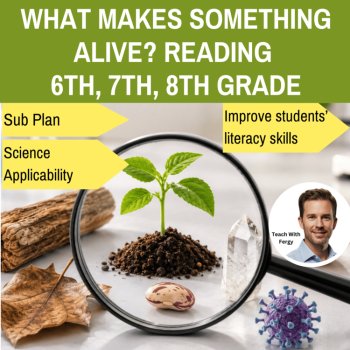
This Grade 6–8 reading comprehension article and questions helps students determine what makes something alive by comparing living, once-living, and nonliving objects at the appropriate reading level. Students learn that movement, growth, or appearance alone cannot prove that something is alive. Ins
No questions yet.

Meet the Seller
Middle and High School Science Engaging Resources
I have been selling resources to middle and high school teachers for the last 15 years. During that time I've also been in the classroom so I know what works and what will help your students the most.
Canada
$22.50 $34.75 (318)
$22.50 $33.50 (190)
$22.50 $33.00 (128)
$21.50 $35.00 (221)
$21.50 $34.00 (218)
$21.50 $31.50 (173)